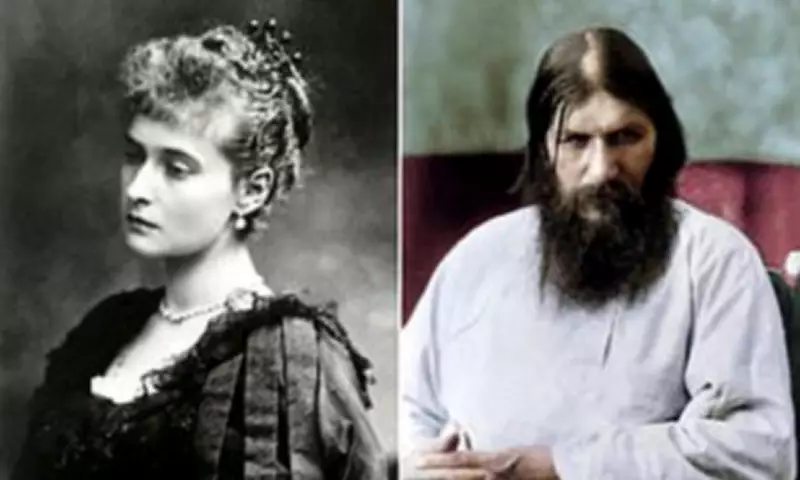
The Mystic Who Held Russia in His Grip
How could a long-haired, bearded peasant from a remote Siberian village gain such immense power over the Russian imperial family, and consequently over the entire nation? For many whose knowledge of Grigori Rasputin is limited to pop culture references, Antony Beevor's comprehensive historical account provides a detailed and chilling narrative of this enigmatic figure's life and influence.
From Humble Origins to Imperial Circles
Born in 1869 as the son of a lowly farmer, Grigori Rasputin abandoned his village life and marriage to become a wandering pilgrim. Intoxicated by religious fervor, he began dispensing what he claimed were holy wisdom and healing powers to the aristocratic women of St Petersburg. These high-born ladies flocked to his salons, utterly captivated by his presence.
One woman was so mesmerized by his penetrating eyes that she preserved his half-eaten food as a relic, tying it to her belt. Others volunteered to cut his fingernails, sewing the clippings into their dresses as sacred talismans. As one academic noted, 'When a society and political order is about to disintegrate, rulers always seek the support of the supernatural.'

The Empress's Fatal Devotion
Rasputin's most significant convert was Empress Alexandra, wife of Tsar Nicholas II. Her devotion would prove catastrophic for the Romanov dynasty. In letters later used as evidence against her, Alexandra wrote passionately: 'How tiring it is for me without you. I can rest only when you, my teacher, are seated next to me and I kiss your hands and lay my head on your blessed shoulders.'
While Beevor clarifies there was no affair, Rasputin's lecherous behavior was well-documented. He frequently sat on the beds of the Grand Duchesses and was accused of seducing or raping the nursery maid. The Empress's vulnerability stemmed primarily from her son Tsarevich Alexei's hemophilia. Whenever Alexei fell ill, Rasputin miraculously seemed to heal him, strengthening Alexandra's belief in his powers.
Political Manipulation and Wartime Corruption
Alexandra began relying on Rasputin not just for her son's health but for political advice. Her insecure husband proved easily influenced by her machinations. By 1915, she was shamelessly dismissing ministers who opposed Rasputin. When World War I erupted, his influence grew more sinister. Desperate women begged him to use his sway with the Tsar to exempt their husbands and sons from military service. Rasputin demanded sexual favors in return.
To one petitioner, he declared she must either submit to his sexual commands or never return. 'She wept and pleaded,' Beevor recounts, 'and he took her by force, even though there were people in the room next door.'
The Bungled Assassination
Something had to be done. The conspirators weren't revolutionary thugs but aristocratic noblemen: Prince Felix Yusupov, Grand Duke Dmitry, and monarchist Vladimir Purishkevich. They lured Rasputin to Yusupov's palace with promises of meeting his attractive wife Irina. There, they offered cakes laced with cyanide.
Rasputin arrived dressed flamboyantly in velvet trousers, a gold-embroidered blue satin shirt, and high boots. Initially refusing the poisoned treats, he eventually consumed several cakes with poisoned Madeira wine. Remarkably, he showed no ill effects—possibly because aged cyanide or the cakes' sugar neutralized the poison.
Frustrated, Yusupov shot Rasputin in the chest. The mystic collapsed, apparently dead. As the conspirators prepared to dispose of the body, Rasputin suddenly revived. 'He slowly opened one eye,' Yusupov recalled, 'then the other, and gave me a look of indescribable hatred.' Rasputin stumbled into the snow before Purishkevich finally shot him in the back.
Aftermath and Historical Irony
To confuse investigators, the assassins shot Yusupov's borzoi wolfhound to account for blood in the snow. Leon Trotsky later mocked the assassination as 'a moving picture designed for people with bad taste.' The body disposal was equally farcical—chains were simply thrown atop it, hoping it would wash into the Baltic Sea. Instead, it was discovered three days later.

The assassins received only mild punishments. Far from saving the monarchy as intended, Rasputin's murder marked the beginning of the end. Three months later, food shortage protests sparked the February Revolution of 1917. Tsar Nicholas II abdicated, and the royal family became prisoners in their own palace—the first step toward their 1918 massacre in Ekaterinburg.
In a poignant postscript, Empress Alexandra kept Rasputin's blood-soaked blue satin shirt as a holy relic. The following year, en route to Ekaterinburg, the imperial family passed through Rasputin's village. Daughter Maria began sketching his house until a Red Guard intervened with his rifle. This juxtaposition of the doomed Romanovs and Rasputin's birthplace creates one of many unforgettable scenes in this macabre historical tragedy.