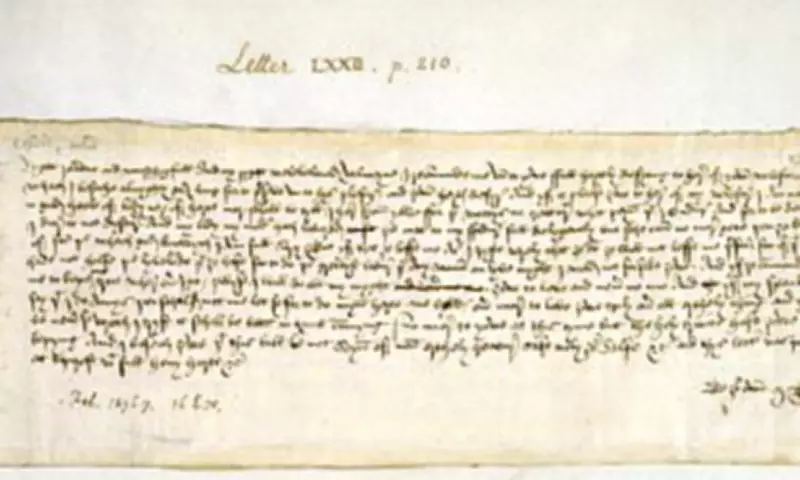
In a remarkable breakthrough, the world's oldest known love letter has been successfully decoded after 540 years, uncovering a classic human dilemma: the tension between love and financial considerations. Experts from MyHeritage employed their innovative Scribe AI tool to analyse this historic document, which dates back to February 1477.
The Discovery and Decoding Process
Penned by a woman named Margery Brews to her fiancé, John Paston III, the letter discusses dowry arrangements for their upcoming marriage. Initially, the text was challenging to decipher due to its informal style, which includes personal flourishes and inconsistent spelling typical of the period. A spokesperson for MyHeritage noted, 'Many historical letters are difficult for modern readers to interpret at first glance, but the essential information summary quickly explains the people, emotions, historical context, and significance of the document.'
Insights from the AI Analysis
The researchers input an image of the letter into Scribe AI, which swiftly revealed its true meaning. The letter was written in Topcroft in February 1477, later annotated as Feb. 1476/7. Ms Brews expresses a 'full heavy heart' because her mother failed to persuade her father to increase her dowry. Despite this, she reassures John of her unwavering love, stating she would not abandon him even if he had 'half the livelihood' he did. She also requests that he keep the letter private.

Historical Context and Significance
This love letter is part of the 'Paston letters,' an extraordinary collection of over 400 letters written by a Norfolk family over three generations. As the Pastons ascended from peasantry to junior aristocracy, these letters reflect the social mobility of the era. Many, including this one, were written by women, offering a rare glimpse into personal relationships and familial dynamics of the time.
Challenges in Interpretation
At first glance, the lettering is not easy to read. Ms Brews used the Anglo-Saxon letter thorn and various old abbreviations, such as marks indicating omitted letters. The MyHeritage spokesperson added, 'The language can feel unfamiliar to modern readers because spelling, grammar, and pronunciation were very different from the English we use now.'
Outcome and Legacy
Fortunately, the story had a happy ending for Margery and John, who married and had a son, William, in 1479. Tragically, Margery died in 1495, and John in 1503. Their descendants, traced through MyHeritage, have shared reflections on their connection to the letter. Rob Edwards, an archaeologist and descendant, remarked, 'It really reminds you that the people you are studying are very much like ourselves. They have the same feelings, and the fact that they are related really does add an extra dimension.'
Another descendant, Richard Buckworth-Herne-Soame, added, 'We still have the stubbornness.' This decoding not only illuminates a personal historical moment but also highlights the enduring nature of human emotions across centuries.