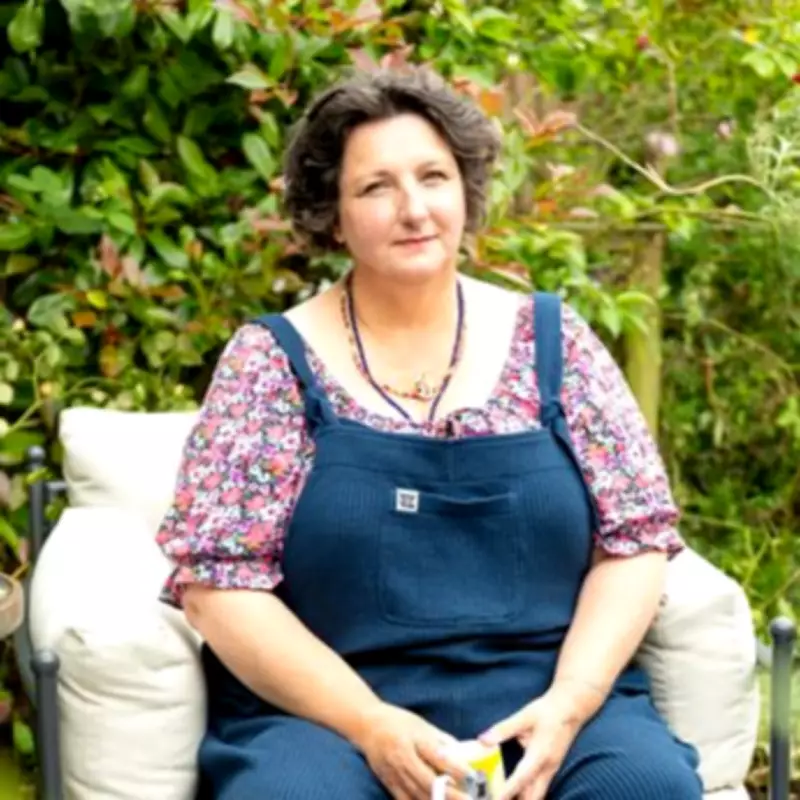
Maya Jordan's Defiant Rise from Poverty to Published Author
For most of her life, Maya Jordan believed the narrative imposed upon her: that women from her background simply do not become writers. "I once told Michael Sheen," she recalls, referencing the acclaimed actor, "that where I came from, saying you wanted to be a writer was like saying you wanted to be an astronaut." Growing up in the 1970s and 80s, Jordan was repeatedly informed that her place was "to work in the Co-op until I had a baby." While she holds no disdain for such work, she resented the world's presumption that it defined her entire potential.
A Life of Labels and Limitations
As a working-class girl, a young single mother, a carer, a mother of six, a disabled individual, and someone who relied on benefits, the stories told about Maya Jordan seemed irrevocably set in stone. The constant refrains of "Girls like you should…" and "Women like you can't…" sought to limit her horizons. However, Jordan possesses a profound aversion to being told no. Rather than accepting these external narratives, she embarked on the courageous journey of writing her own.
Now aged 55 and still residing in her council house in Powys, Mid Wales, Jordan achieved a pivotal breakthrough in 2021. She won a coveted place in A Writing Chance, a transformative initiative launched by New Writing North in partnership with Michael Sheen and The Mirror. This programme was specifically designed to discover and elevate aspiring writers from working-class and other underrepresented backgrounds, providing them with a vital platform and support to break into the creative industries.

Claiming Space and Defying Expectations
"Making a show of yourself is something else working-class women aren't meant to do," Jordan notes, "but writing my book is more than that. It's a powerful reminder to myself that I am, unequivocally, a writer." Her message to others is one of unwavering defiance. "If you have a dream but think people from your background don't become writers, don't let them make you feel small. Take up all the space. Shout and laugh too loud. Keep writing. Keep singing. Even when they tell you no."
She emphasises the critical importance of autobiographical ownership. "We need to tell our own stories, because when they tell them about us, they always get it wrong." Below, Maya Jordan shares an exclusive extract from her bestselling book, Chopsy, offering a raw and poignant glimpse into her childhood.
The Hidden Shame of Childhood Hunger
It was not until her forties that Maya Jordan realised the concept of an "emergency chicken" was not universal. This was not a live bird in the garden, but a frozen chicken kept in the freezer—"the height of luxury"—reserved for dire circumstances. While one might claim it was for unexpected guests, the impractical defrost time revealed its true purpose: it was a safeguard against becoming "seriously poor." The chicken symbolised potential—soup, stock, pie, pasta sauce—a bulwark against destitution.
"Shame swallows my words," Jordan writes, reflecting on why this shame was hers to bear. She was a perpetually hungry child in the 1970s, a time of cheese pies, sausages and mash, and Findus Crispy Pancakes. Exotic foods like pasta or aubergines were unknown; a stuffed marrow was a revolting novelty. It was a world of white bread, margarine, and frozen vegetables.
The Crushing Impact of the 1980s
Then the 1980s arrived, bringing industrial collapse and rampant free-market economics. While some amassed wealth, families like Jordan's "quietly starved." Her father lost his job and remained unemployed for years. "There's a shame to being hungry, to not having enough to eat," she confesses. "Even as a child who had no control over such things, I knew it was a secret you were not meant to tell, a story sat behind tightly shut teeth. But even if you tell no one, hunger still eats you up."

Free school dinners became her salvation. Each morning, a silver token granted her a meal of her choice—chips, burgers, doughnuts, gypsy tart. Her "council-estate pallor" often earned her extra portions from sympathetic dinner ladies. Yet, dinner at home was frequently meagre: tinned soup, toast, or budget frozen goods from Iceland. Portions were halved, and Jordan admits she was not a generous hungry child. "I gobbled mine down in a flash and waited for scraps," she writes, describing late-night raids for sugar-sprinkled bread and milk diluted with water to hide the theft.
Bullying and Institutional Indifference
The system's fragility was exposed when a bully stole her dinner token. A teacher, noticing her fatigue and thin frame, intervened, but the solution further stigmatised her. Free school meal children were stripped of choice, relegated to a compulsory "meat and two veg" dinner. The shame was compounded when, at age 50, Jordan read Lynne Voyce's Common People, which described eating flour-and-water pancakes during the miners' strike. "I burst into tears," she recalls. "I'd never seen my secret written down before. I didn't know we were allowed to tell."
The Lingering Trauma and a Modern Crisis
This historical shame fuels Jordan's present-day anxiety. "Even though I now have enough, I still fear hunger," she states, turning her gaze to contemporary Britain. She cites the staggering figure of one million children in 21st-century Britain living in destitution—a Victorian term denoting a lack of basic food, clothing, or housing—with 4.3 million in low-income families. "Will they feel the same, these children?" she asks. "Will they lie, when asked at school? Will they be too tired to play, too tired to concentrate, only longing for lunch?"
Born in Liverpool but raised in Kent, Jordan was a "weird, gangly, working-class kid" constantly told she was "too loud, too brash, talking too much." Her family life was punctuated by rows about money, ending in tears and slammed doors. Financial strain manifested in the dreaded visits from the "Provi man"—the Provident Financial agent. Initially a source of biscuits and Christmas hampers filled with exotic tinned goods, he soon became a figure of terror, hammering on doors when loans could not be repaid, forcing the family to hide behind the sofa.
Material Poverty and Social Humiliation
The poverty was visceral. Jordan's school shoes were cheap patent pumps from the market, their soles wearing through to create a hole. Too ashamed to ask for new ones amidst the Provi man's visits, she lined them with cardboard from a Weetabix box. The ultimate humiliation came when a teacher, intending kindness, presented her with a bin bag full of second-hand clothes in front of her entire class. Forced to carry the bag all day, she was mercilessly taunted with nicknames like "Bag" and "Povo."
"I was aware that I smelled," Jordan writes painfully. "I washed myself all the time... but my school uniform was often not clean and there wasn’t enough of it; I had the one set for the week." The donated clothes, clean and smelling of fabric softener, only highlighted her deprivation.
A Testament to Resilience and Voice
Maya Jordan's journey, culminating in her book Chopsy, is a powerful testament to resilience. Her story, emerging from a council house in Wales to the shelves of bookshops nationwide and featuring in the Tracy Emin exhibition at The Tate Modern, challenges stereotypes and gives voice to the often-silenced realities of poverty. It is a clarion call to tell one's own story, to defy the narratives that seek to confine, and to remember that, even when told no, the act of writing—and living—on one's own terms is the ultimate rebellion.