Are We in the 6,000th Year? Viral 1818 Bible Chronology Sparks End-of-Age Debate
1818 Bible Chronology Suggests We Are in a Pivotal Year

A centuries-old biblical timeline, highlighted in a viral social media post, is sparking fresh discussion about whether humanity has entered a pivotal year of divine judgment, renewal, or reset.

The Viral Timeline from an 1818 Bible

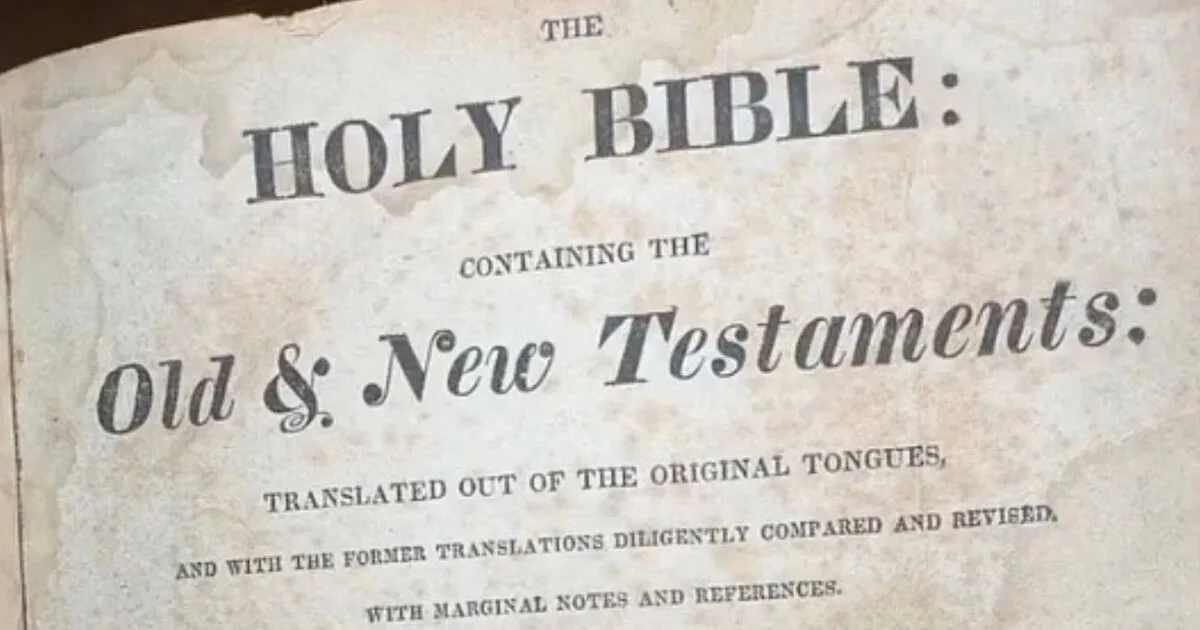
Kaylah Hodgins shared a video on Instagram focusing on chronological tables found in a Bible published in 1818. This edition contained the Old and New Testaments along with the Apocrypha, a collection of ancient writings whose scriptural status has long been debated.

According to the calculations printed in that Bible, the world was created in 4004 BC. The chronology lists 3,974 years from Adam to the birth of Christ, and then a further 1,815 years from Christ's birth to the Bible's publication year in 1818.

Combined, these figures total 5,789 years from Creation to the early 19th century. Hodgins then extended this count by adding the years since the Bible was printed, arriving at roughly 6,000 years from Creation to the present day.

The Significance of the 6,000-Year Milestone

This milestone carries weight in certain Jewish and Christian traditions, which view history through a framework modelled on the seven days of Creation. In this interpretation, the world experiences six 'days' – equating to 6,000 years – of human labour and turmoil.

This period is believed to be followed by a seventh 'day' of rest, often associated with a messianic reign or a millennial age of peace. Reaching the end of the sixth 'day' is therefore seen by some as a major turning point, marking the close of humanity's current era and the dawn of a new, divinely guided phase.

Supporters of this view clarify that it does not necessarily predict a sudden planetary destruction. Instead, they describe it as a dramatic transition, which could mean the end of an age of human dominance, a period of global moral reckoning, or a profound spiritual transformation.

Scholarly Caution and Historical Origins

Biblical scholars, however, urge significant caution when interpreting such timelines. Most emphasise that the Creation date printed in these old Bibles reflects one historical interpretation, not a universally accepted doctrine.

The specific date of 4004 BC was developed by James Ussher, a 17th-century Irish Archbishop and renowned biblical scholar. His famous Ussher chronology meticulously calculated the timeline by adding the lifespans of biblical figures and the dates of key events like the Flood. He even pinpointed the first day of Creation to October 23, 4004 BC.

Centuries later, Bibles published in the 18th and 19th centuries, including the 1818 edition, often included chronological tables at the front derived from Ussher's work. Modern theology generally treats Ussher's chronology as symbolic rather than literal, a perspective underscored by scientific evidence that places Earth's age at approximately 4.5 billion years.

Many churches also reject date-based end-times speculation, noting that such calculations have repeatedly failed throughout history.

A Modern Cultural Conversation

Despite scholarly reservations, the viral video has ignited a broad conversation. The discussion extends beyond believers to include historians and curious social media users exploring the intersection of faith, numerology, and history.

Online, many commenters are sharing screenshots of old family Bibles, debating whether different editions give slightly different totals, or questioning the significance of the 6,000-year framework altogether.

For some, it serves as a humbling reminder of humanity's small place in the vast span of time. For others, it acts as a symbolic countdown that lends urgency to moral or spiritual reflection.

While the Bible itself does not explicitly state that reaching 6,000 years marks the end of human history, apocalyptic interpretations of Ussher's timeline have persisted for centuries. For many today, the milestone's power lies less in literal prophecy and more in the cultural and spiritual resonance of imagining the world on the edge of a new age.