Golden Globes 2026: Political Sparks Fizzle as Glaser's Opening Monologue Steals Show
Golden Globes 2026: Politics Muted After Glaser's Opening

The 83rd Golden Globes ceremony on Sunday night opened with a politically charged monologue from host Nikki Glaser, setting expectations for an evening of pointed commentary. In a surprising turn, however, the subsequent hours saw the event largely steer clear of overt politics, with former President Donald Trump's name notably absent from the speeches of most presenters and winners.

A Blistering Opening Sets the Stage

Comedian Nikki Glaser, hosting for the second consecutive year, launched the ceremony with a series of sharp jabs aimed at Donald Trump and his second administration. While she avoided mentioning him directly, her allusions were unmistakable. Referencing the 'A-listers' in the audience, she quipped, 'And by A-listers, I mean people who are on "a list" that has been heavily redacted,' a clear nod to the largely unreleased Epstein files in which Trump has been implicated.

Glaser extended her satire to the Justice Department, awarding it the fictional 'Golden Globe for best editing' for the extensive redactions in the few Epstein documents released. She also targeted broadcaster CBS, mocking its hiring of Bari Weiss as editor-in-chief of CBS News with the line, 'Yes, CBS News: America's newest place to see BS news. We needed another!'

Muted Politics and Subdued Protests

Despite the fiery start, political references dried up almost completely after the monologue. The most direct critique came from Amy Poehler, who, while accepting an award for her podcast, lovingly mocked fellow nominee NPR's Up First, potentially alluding to attacks on public broadcasting.

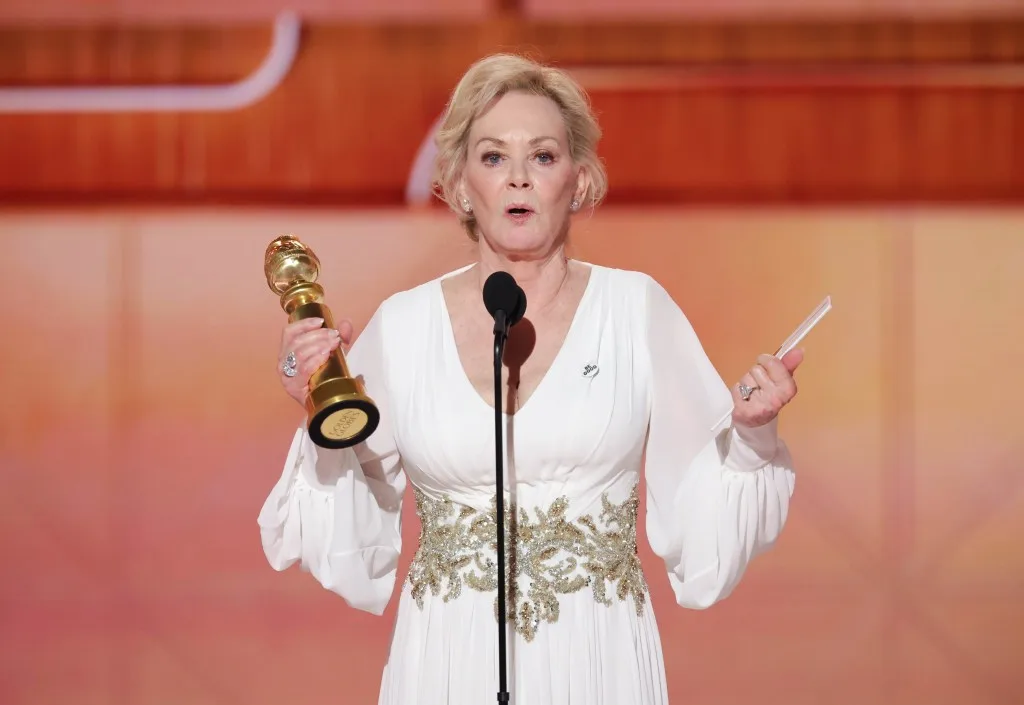
A subtle, visual protest emerged on the red carpet and in the audience. Stars including Mark Ruffalo, Natasha Lyonne, and Wanda Sykes wore pins reading 'Be Good' and 'ICE Out'. This was a muted demonstration against the US Immigration and Customs Enforcement agency under the Trump administration, specifically protesting its presence in cities like Los Angeles and the deaths of Renée Macklin Good and Keith Porter during operations.

The low-key nature of the protest meant its message was likely lost on most television viewers, underscoring the ceremony's overall apolitical shift.

Winners and Notable Snubs

The night belonged to cinematic and television achievements. The Leonardo DiCaprio-starring epic 'One Battle After Another' led the film categories, securing nine nominations and winning Best Picture in the Musical or Comedy category. It also earned Paul Thomas Anderson awards for Best Director and Best Screenplay.

In drama, 'Hamnet' won Best Picture, with its star Jessie Buckley taking home Best Actress. Other major film winners included Timothée Chalamet for 'Marty Supreme' (Best Actor, Musical/Comedy) and Stellan Skarsgård for 'Sentimental Value' (Best Supporting Actor).

Television saw 'The Pitt' win Best Drama Series, while 'The Studio' triumphed in the Musical or Comedy category. The limited series 'Adolescence' won its category, with Stephen Graham and Erin Doherty winning acting awards. Ricky Gervais won for Best Stand-Up Comedy Special for 'Mortality'.

Significant snubs included the 'Wicked: For Good' sequel missing out on Best Musical or Comedy, and Sydney Sweeney failing to secure a nomination for 'Christy'. Bradley Cooper’s film 'Is This Thing On?' and Kathryn Bigelow's 'A House of Dynamite' received zero nominations.

The lifetime achievement Cecil B. DeMille Award was presented to Dame Helen Mirren, announced prior to the ceremony. The 2026 Globes also formally incorporated podcasting into its awards, with 'Good Hang' winning the inaugural Best Podcast category.