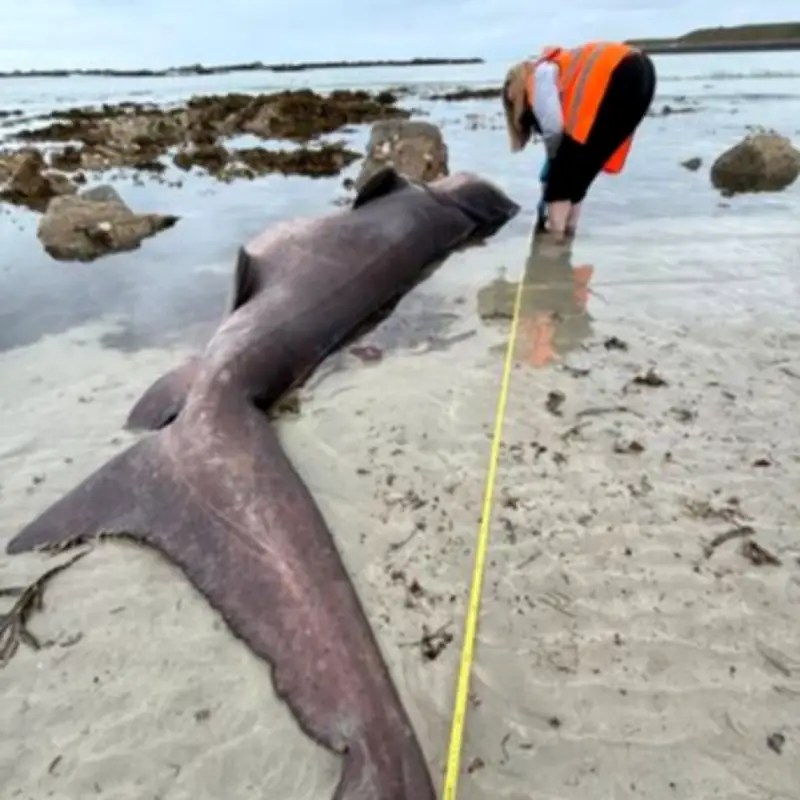
Scientists and residents were left perplexed after a massive 14-foot (4.2-meter) shark washed ashore on the island of Jersey, with experts unable to determine the cause of death. The Smalltooth sand tiger shark, scientifically known as Odontaspis ferox, weighed a staggering 1,316 pounds (596.9 kilograms) and was discovered on June 7 by astonished beachgoers at Greve D'Azette beach.
First Recorded Appearance in Jersey
This species had never been recorded in Jersey before, though it has been present in British waters since 2023. The shark initially displayed signs of life when it became stranded, prompting beachgoers to contact authorities. However, the situation took a tragic turn when the tide carried the shark back out to sea before it washed ashore again on June 8, this time lifeless. The discovery was made by a Durrell veterinary nurse.
Response and Investigation
The Jersey Coastguard and British Divers Marine Life Rescue were the first responders, but the Government of Jersey Marine Resources was called in when the shark reappeared. The Department for Infrastructure retrieved the shark for further analysis. A post-mortem examination was conducted by New Era vets to determine the cause of death.
In a statement, a spokesperson for the Government of Jersey Marine Resources said: "A post mortem was performed on the shark by New Era vets to look for cause of death. No obvious signs were found. The shark showed no signs of fisheries interaction or entanglement."
The spokesperson added: "The shark is a Smalltooth sand tiger shark (Odontaspis ferox). This species has not been found in Jersey since records began. However, it has been recorded washed up on the UK shoreline. We would like to thank all those involved. Especially BDMLR, Jersey Coastguard, Durrell, New Era vets, and the Department for Infrastructure for their diligent responses."
Mystery Remains Unsolved
Despite thorough examination, specialists were unable to establish how the shark perished, leaving the cause of death a mystery. The incident has sparked interest among marine biologists, who hope further studies may shed light on the health and movements of this rare species in British waters.