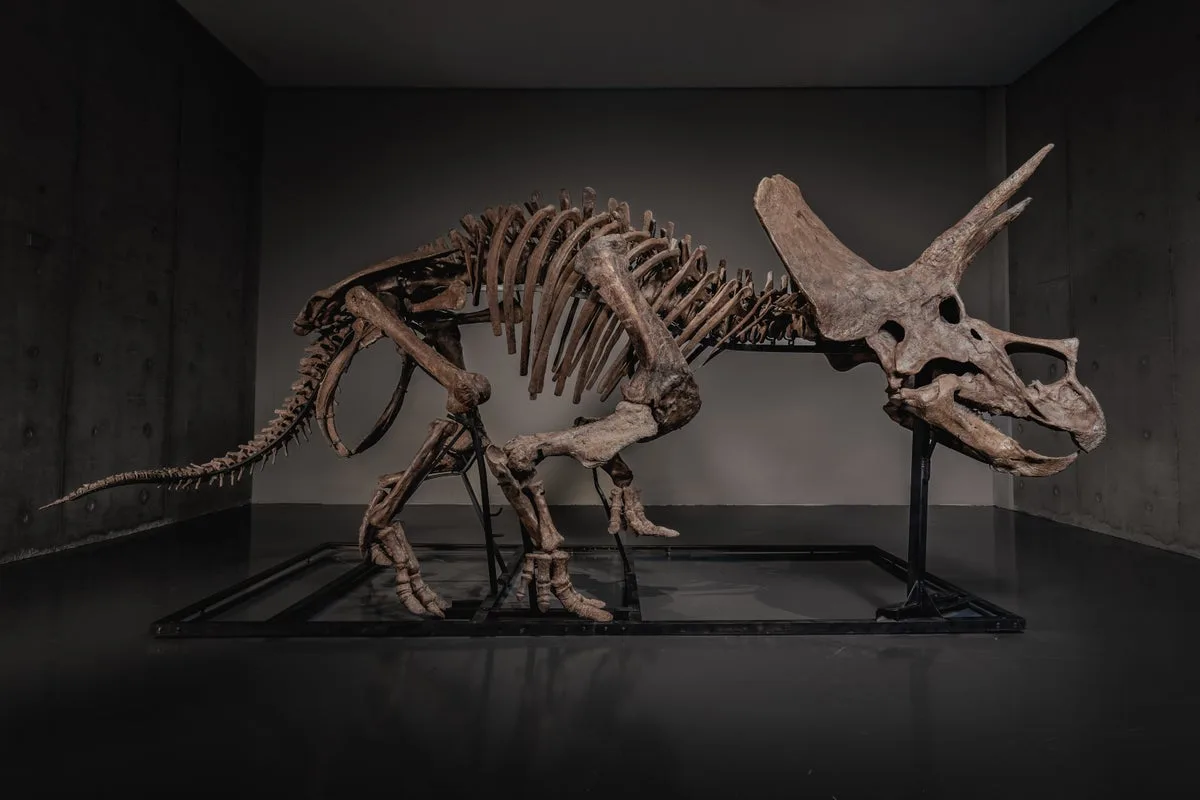
A triceratops skeleton that was a fixture in a Wyoming museum for decades is set to be auctioned online, reflecting a surging market for dinosaur fossils. Named 'Trey', the fossil will be available for bids from 17 to 31 March on Joopiter, the auction platform founded by Pharrell Williams, with a pre-sale estimate of $4.5 million to $5.5 million.
Dating back over 66 million years to the late Cretaceous period, Trey was discovered near Lusk, Wyoming, in 1993. The 17-foot-long herbivore welcomed visitors at the 1995 grand opening of the Wyoming Dinosaur Center in Thermopolis, where it remained on loan until 2023. Following a private sale, it is now in Singapore for private viewings until the end of March.
Palaeontologist Andre LuJan, who helped prepare Trey for auction, noted its unique cultural appeal: 'Trey has this cultural aspect that a lot of fossils that go to auction these days simply don’t have. This one is connected to people and undoubtedly has inspired young children who’ve seen it to pursue a career in palaeontology.'

The dinosaur fossil market has boomed recently, with the stegosaurus 'Apex' selling for $44.6 million in 2024 and a young dinosaur skeleton fetching over $30 million in July, far exceeding its estimate. Caitlin Donovan of Joopiter said the trend indicates a shift from traditional art to items with 'cultural resonance'.
However, some palaeontologists worry that important specimens could be lost to science if they enter private collections. Kristi Curry Rogers of Macalester College said public museums are 'getting totally priced out of an exploding market'. LuJan expressed hope that Trey will end up in a museum, noting that many buyers now loan fossils long-term to institutions.