Robert Capa: The Inventor of Modern War Photography Style Revealed
A remarkable new exhibition at the Museum of the Liberation of Paris offers an unprecedented glimpse into the working methods of Robert Capa, the legendary war photographer who revolutionised the field. Through candid film footage and extensive research, the show reveals how Capa not only documented conflict but also meticulously crafted his own public image and photographic approach.
Unseen Footage Captures Capa in Action
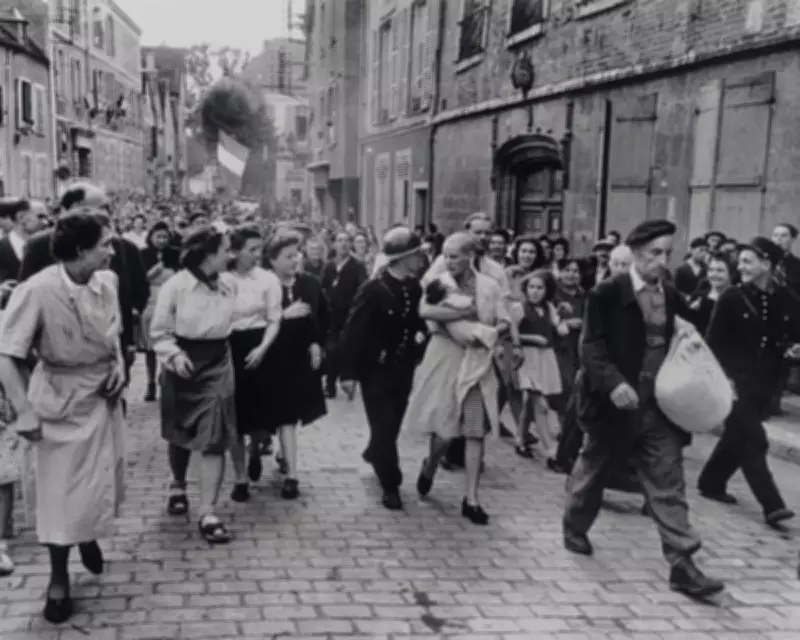
The museum's researchers undertook a painstaking process to reconstruct Capa's movements during the liberation of Paris on 25 and 26 August 1944. Starting with 30 contact sheets containing approximately 500 photographs, they meticulously cross-referenced each image with US army footage filmed in the same locations. The result was startling: clear footage of Capa working amidst the chaos, sprinting, crouching, and spinning to capture the action with his three cameras.
Sylvie Zaidman, the museum director, emphasised the significance of this discovery. "He invented a style, fashioned our whole perception of war photography," she said. "Immediate, unposed, immersed in action. He said: 'If your photographs aren't good enough, you're not close enough.' And here we see him actually doing it."

From Budapest Émigré to Global Icon
Born Endre Friedmann in Budapest in 1913, Capa arrived in Paris in 1933 as a Jewish exile and vocal anti-fascist. Realising that finding work might be difficult, he reinvented himself as Robert Capa, creating what Zaidman describes as "a character" that would become the archetype of the war photographer: "American, typically. Intrepid, if not reckless – taking crazy risks for the one big shot. Hard drinking, poker playing, womanising, cynical. That was Capa. But it was fabricated."
The exhibition traces this transformation through photographs, magazines, articles, cameras, and personal objects. It includes his first published photos of Leon Trotsky in Copenhagen in 1932 and highlights his early work in Paris, where his circle included fellow photographers such as Henri Cartier-Bresson and André Kertész.
Documenting Conflict with Humanity
Capa's photographic career took a decisive turn during the Spanish Civil War, where he arrived in late July 1936 with his companion Gerda Taro. His early shots from this period already demonstrated a profound humanity, capturing both soldiers under fire and civilians caught in air raids with equal force. His most celebrated image, The Falling Soldier, published in September 1936, remains one of the most astonishing war photographs ever taken.
During World War II, Capa's work for publications like Life and Picture Post cemented his reputation. His terrifying, out-of-focus shots from Omaha Beach on D-day and his coverage of the liberation of Paris became iconic. After the war, he co-founded the Magnum photo agency and continued to work extensively, though he was killed in 1954 in Vietnam by stepping on a landmine.
A Personal Connection to Paris
The liberation of Paris held particular significance for Capa, who had described the city as "a magnificent city" where he discovered "love, good wine and fine cuisine." The exhibition footage shows him not only as a photographer but occasionally stepping out of that role, such as when he helped negotiate the surrender of German soldiers at the Palais Bourbon.
Zaidman summarised Capa's approach: "He photographed not war but the actors and the victims of war. Like him, his pictures had to speak." The exhibition seeks to place his iconic images in their personal and historical context, offering what she calls "a tighter focus" on the man behind the camera.
Robert Capa: War Photographer opens on 18 February at the Musée de la Libération de Paris and runs until 20 December, providing a comprehensive look at how this pioneering figure reshaped visual journalism and our understanding of conflict.