Rijksmuseum Reveals Painting as Early Rembrandt Work
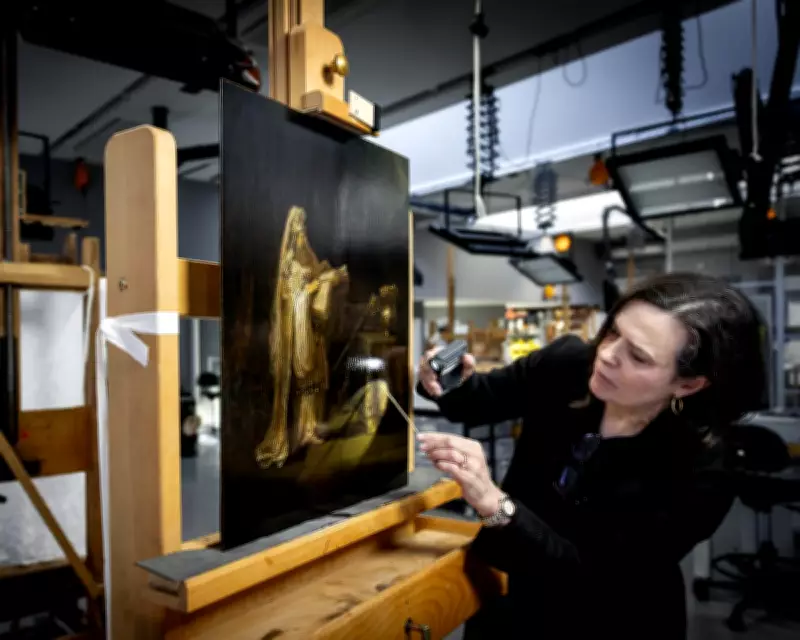
A 17th-century painting that hung unrecognised on the wall of a private home for decades has been definitively identified as an authentic work by Rembrandt van Rijn, catapulting its potential value from thousands to millions of pounds. The Rijksmuseum announced this remarkable rediscovery on Monday, following two years of meticulous expert analysis and advanced technological scanning.
From Workshop Attribution to Masterpiece Recognition
Since the 1960s, Vision of Zacharias in the Temple, dated 1633, had been attributed to Rembrandt's "workshop," suggesting it was created by a lesser-known contemporary artist such as Jan Lievens or Salomon Koninck. This attribution was primarily based on lower-resolution photographs rather than direct examination of the artwork itself. However, the Rijksmuseum's comprehensive investigation has overturned this long-standing assumption, confirming the painting as the work of the Dutch master.
Taco Dibbits, the general director of the Rijksmuseum, recounted how the museum was approached several years ago by a couple who had inherited the modest-looking painting from their father. "It was really very dark," Dibbits noted. "But when it had been restored, I came in to see it and it really looked like the gold was bursting off it – which, of course, is remarkable because he painted with yellow and not with gold. This is what makes the artist a true artist … It is classic Rembrandt."

Scientific Authentication and Historical Context
The authentication process involved cutting-edge techniques, including macro X-ray fluorescence scans that revealed typical compositional changes consistent with Rembrandt's style. Analysis of the wooden panel confirmed the painting's date as 1633, aligning it with Rembrandt's early period. Additionally, the paint pigments were matched to other verified works by Rembrandt from the same era, providing further compelling evidence.
Jonathan Bikker, a curator of 17th-century Dutch painting at the Rijksmuseum and co-author of an academic article in the Burlington Magazine about the attribution, described the find as extraordinary. He explained that the painting was discredited in 1969 by scholar Horst Gerson and later researchers in the Rembrandt Research Project, largely due to reliance on inadequate photographic evidence rather than physical inspection.
"It was as if there was a grey veil over the painting," Bikker said. "They had already started with the conservation treatment, and they just wanted to know who it was by so their restorer could look at other paintings. If it was by Jan Lievens, he could look at Jan Lievens."
Ownership and Exhibition Details
The owners, who have requested anonymity but are understood to be European, revealed that their father purchased the painting from the Amsterdam art dealer P de Boer in 1961. Despite initial skepticism, the couple humorously speculated about its origins, noting the prominent signature. "'Look how big that signature is. It has to be by Rembrandt! It says Rembrandt in big letters!'" Bikker recalled. "But it was also a surprise for them that it was a real Rembrandt, because as soon as the father had bought it, it had been de-attributed."
The painting depicts the biblical story of the high priest Zechariah, who is visited by the archangel Gabriel and told that he and his wife will have a son, John, later known as John the Baptist. The artwork uniquely shows only a bright light in one corner and the priest's face in disbelief, rather than depicting an angel directly.
Financial Implications and Museum Collection
While the Rijksmuseum declined to comment on the specific value of Vision of Zacharias in the Temple, it is noteworthy that paintings attributed to the "workshop of Rembrandt" typically fetch tens or hundreds of thousands of euros. In stark contrast, the museum recently acquired a Rembrandt for €175 million (£153 million), highlighting the dramatic financial impact of this rediscovery.

With the addition of this newly authenticated masterpiece, the Rijksmuseum will now display 25 Rembrandts from Wednesday onwards, solidifying its status as home to the world's largest collection of the artist's works. This exhibition not only celebrates a significant art historical find but also underscores the importance of ongoing research and technological innovation in the field of art authentication.