Pet Shop Boys' Visual Legacy: A 40-Year Journey of Artistic Rebellion
As Pet Shop Boys celebrate the release of their monumental 600-page book, Pet Shop Boys: Volume, the iconic duo reflects on four decades of groundbreaking visuals that have defined their career. From snubbing the Queen to battling censorship over a naked trampolinist, Neil Tennant and Chris Lowe share untold stories of artistic control and pop innovation.
Inspiring a Generation: The Early Visual Impact
In 1988, a young Wolfgang Tillmans tore an A0 poster for Pet Shop Boys' album Introspective from a Hamburg building site, captivated by its abstract colour bars. Meanwhile, in Doncaster, teenager Alasdair McLellan admired Chris Lowe's sportswear style on the Suburbia single cover, citing it as a key influence in his visual education through pop music and magazines like Smash Hits and NME. Both would later collaborate with the duo, with Tillmans directing the video for Home and Dry in 2002 and McLellan for Loneliness in 2024, showcasing how Pet Shop Boys' aesthetics have inspired artists across generations.
Total Artistic Control: Defying Industry Norms
From their inception, Pet Shop Boys leveraged a contract clause granting them total artistic control, allowing bold visual choices. Designer Mark Farrow, who met the northern duo in a London office full of "southern gays," recalls the lucrative 1980s music industry, where CD profits funded extravagant packaging. Farrow's minimalist design for their debut album, Please, featured white space with tiny typography and faces, starkly contrasting the era's brash sleeves. This control extended to performances; on Top of the Pops, they stood motionless, ignoring frantic producers and even 300 teddy bears in a German TV segment.

Royal Snubs and Bottom Slaps: Defying Expectations
In 1987, Pet Shop Boys caused a scandal by refusing to wave at Queen Elizabeth II and Prince Philip during the Royal Variety Performance. Tennant explains, "We don't wave. It looks lame," leading them to skip the finale entirely. Their mothers were furious, and Carry On star Barbara Windsor, who appeared in their film It Couldn't Happen Here, smacked their bottoms, calling them "naughty boys." Lowe admits, "It's one of those things I just can't do," comparing it to awkward waves on game shows.
Censorship and Queer Sensibilities: Pushing Boundaries
Pet Shop Boys' visual daring often clashed with conservative norms. In 1994, Tennant came out in Attitude magazine, posing with an undone Issey Miyake shirt, a rare foray into overt sexuality. Earlier, Bruce Weber's video for Being Boring featured a naked man on a trampoline, horrifying EMI America, who later censored it without their knowledge. Tennant argues this reflected a queer sensibility, though they resisted labels, preferring ambiguity. "We went through the late 80s totally undefined," he says, noting how complexity remains core to their culture.
Awkward Aging and Side-Stepping Pop Stardom
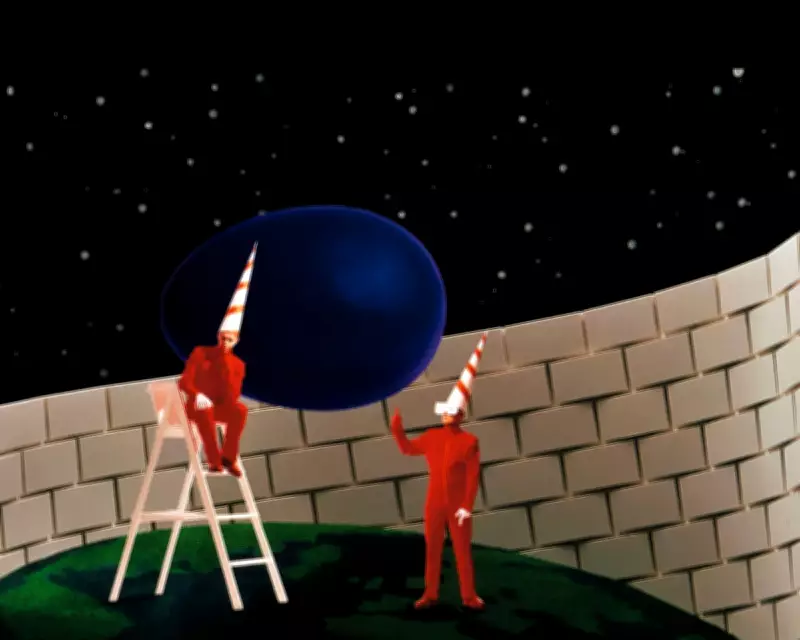
Facing turning 40 in 1993, Pet Shop Boys embraced odd costumes, like orange suits and dunces' hats for Can You Forgive Her?, to "side-step the pop-star thing." Managerial fears of ridicule were dismissed with Adam Ant's mantra, "Ridicule is nothing to be scared of." Their most left-field moment came with Tillmans' Home and Dry video, composed of grainy mouse footage from Tottenham Court Road tube station. When the record company protested, "This is not a video," the duo stood firm, embodying their ethos of challenging audiences.
Dreamworld and Obscure: Evolving Live Experiences
Their greatest hits tour, Dreamworld, launched in 2022, continues to draw crowds to venues like the Royal Opera House, featuring masked, stock-still performances that force audiences to engage differently. Conversely, the Obscure series at London's Electric Ballroom showcases B-sides and album tracks, curated from Lowe's 4-hour-42-minute playlist, with Tennant adding "a couple" as a "special treat." These shows promote Volume while avoiding book signings, which Tennant finds "unnerving."

As they exit a London restaurant, bumping into designer Peter Saville, Tennant emphasises that their legacy is not meticulously plotted but "improvised and instinctive." Pet Shop Boys: Volume, published by Thames & Hudson, encapsulates this journey, proving that in pop, visuals can be as revolutionary as the music itself.