Lowry's Untold Story: The Complex Truth Behind the Working-Class Hero Myth
Fifty years after the death of LS Lowry, a landmark BBC Two documentary, LS Lowry: the Unheard Tapes, unveils a treasure trove of previously undiscovered audio recordings. These tapes, recorded with fan Angela Barrett between 1972 and 1976, shatter long-held perceptions of the artist as a working-class hero, revealing a more nuanced and contradictory figure.
The Unheard Tapes and a New Perspective
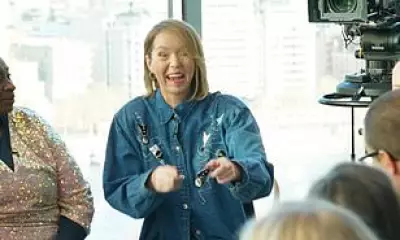
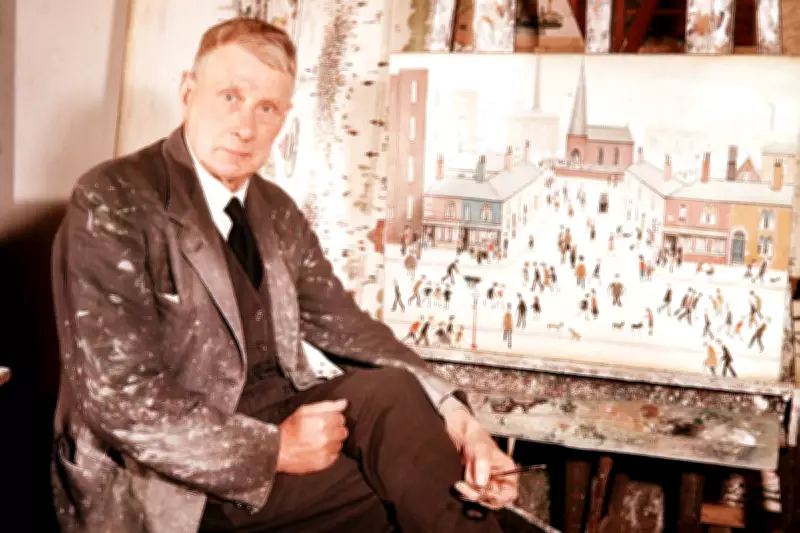
Sir Ian McKellen lip-syncs to Lowry's own words in the documentary, bringing to life the painter's obsessive compulsion to depict industrial Manchester. "All the little figures. It's like a disease. You can't stop it," Lowry confesses, highlighting his relentless focus on the spindly crowds of early 20th-century workers. This programme delves into both Lowry's personal story and broader UK attitudes toward art and heritage, offering a fresh lens on his legacy.
When Lowry died in 1976, his estate was valued at £289,459. In a striking contrast, his painting Going to the Match sold for £7.8 million in 2022, the same year Barrett's tapes were found. This sale benefited the Salford arts centre named after him, located where the mills he famously painted once stood.

Debunking the Working-Class Hero Image
While Lowry's matchstick-legged figures and smoky factories are instantly recognisable, the documentary challenges the idea that he depicted his own milieu. Historian Michala Hulme notes that Lowry was born into comfort in 1887 in Victoria Park, a leafy Manchester suburb. His father worked as an estate agent's clerk, the family employed a maid, and Lowry received private education. He began art classes at 18, much to his parents' bewilderment.
A move to Pendlebury in 1909, amid textile mills, initially horrified him but later captivated his artistic eye. His early works were unremarkable, though sketches of his mother showed sharp character. Art historian Leslie Primo argues that Lowry saw "the extraordinary in the ordinary," capturing people's daily routines without political intent.
Political Views and Artistic Detachment
Lowry's interviews reveal a conservative stance at odds with his perceived empathy. "There was no political significance in [my art] at all," he tells Barrett, insisting the workers he painted were "quite happy" and "accepted their lot." He explicitly states, "I'm not a communist. I'm an out and out conservative," and even grumbles when Barrett identifies as a socialist.
His art, such as Home from the Pub (1924) and The Cripples (1949), captures scenes with clinical detachment rather than shared joy or solidarity. Artist Tony Heaton, who uses a wheelchair, praises The Cripples for its confrontational honesty, but Lowry's overall approach marks him as an outsider observing from a distance.
Life as a Rent Collector and Personal Struggles
For 42 years, Lowry worked full-time as a rent collector, painting only in his spare time. This job allowed him to sketch the working class but positioned him as a feared authority figure, further alienating him from the communities he depicted. The art world initially dismissed him as a "Sunday painter," and he lived with his parents until their deaths in the 1930s.
His mother's death in 1939 triggered a breakdown, reflected in his painting of her empty bedroom. During World War II, he served as a fire-watcher, expressing indifference to danger. Lowry never married, leaving scant record of romantic life apart from portraits of a woman named Ann, possibly a fictional composite. He bluntly tells Barrett, "I never was in love," hinting only at a lost possibility.
Rising Fame and Changing Times
Postwar, Lowry's reputation grew as Britain sought to redefine its identity. He was appointed an official artist for Queen Elizabeth II's coronation in 1953 and became a Royal Academician in 1962. His work gained recognition as a unique record of a fading industrial era, even as Manchester's terraces were replaced by tower blocks he despised.

Lowry couldn't have predicted the modern prices for his art or the gallery built in his honour. In a poignant moment, he tells Barrett, "Someday you may be walking down a street, look into a junkshop window, you'll see a picture upside down, marked cheap, 30 shillings, and it'll be mine." Her reply, "Well, I'll go in and buy it," underscores the enduring fascination with his complex legacy.