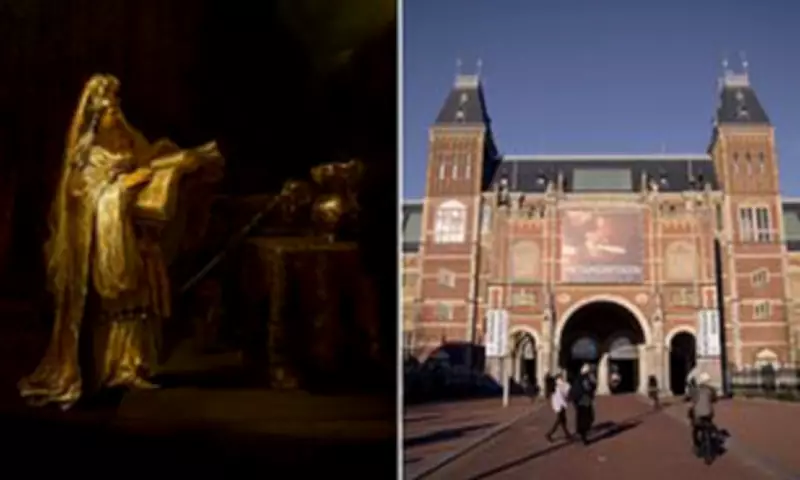
Lost Rembrandt Masterpiece Authenticated After 65-Year Mystery
An early Rembrandt painting, long dismissed as inauthentic, has been definitively authenticated following an extensive two-year analysis. The remarkable discovery began when the painting's current owner contacted the Rijksmuseum in Amsterdam with a simple question about whether the artwork might be Dutch in origin.
From Rejection to Rediscovery
Rembrandt's Vision of Zacharias in the Temple, created in 1633 when the artist was just 27 years old, faced rejection in 1960 when experts concluded it was not a genuine work by the Dutch master. Subsequently sold to a private collector the following year, the painting disappeared from public view for 65 years before resurfacing through a remarkable email inquiry.
The current owner's simple question about the painting's Dutch origins prompted the Rijksmuseum to undertake a comprehensive re-examination. "We always hope to find a new Rembrandt, but this happens rarely," explained Rijksmuseum director Taco Dibbits, who oversees the world's largest collection of Rembrandt works. "It was amazing that this painting - that we didn't know of - came to us via somebody who sent an email to say 'could this be a Dutch painting?', who really didn't know what he had."

Biblical Scene and Artistic Significance
The painting depicts a significant biblical moment from the New Testament: Archangel Gabriel's visit to high priest Zacharias in Herod's Temple in Jerusalem to announce that he would father John the Baptist. While the angel remains unseen in the composition, Rembrandt masterfully indicates the divine presence through a dramatic light source shining from the upper right corner.
Rembrandt van Rijn, the 17th-century painter widely regarded as one of the greatest Dutch artists, created this work during his early Amsterdam period. With over 300 authenticated paintings displayed in museums worldwide, each new discovery adds significantly to our understanding of his artistic development.
Scientific Authentication Process
Researchers at the Rijksmuseum employed a sophisticated combination of technological analysis and stylistic examination to confirm the painting's authenticity. Two curators, Jonathan Bikker and Petria Noble, led the investigation that ultimately secured the work's place among Rembrandt's most significant early creations.
"1633 is really Rembrandt's early Amsterdam career and he's really interested in Bible stories and in history books," explained Noble. "So everything fitted in terms of the material aspects, the stylistic aspects... It was a wonderful experience."
The authentication process revealed several compelling factors:
- The painting's construction and layered technique matched Rembrandt's distinctive methods
- Advanced scans revealed compositional changes characteristic of Rembrandt's working process
- The specific paints and application techniques corresponded with other authenticated Rembrandt works
- The dramatic light-and-dark contrast exemplified Rembrandt's signature chiaroscuro style
Art Historical Context and Value
In their analysis published in The Burlington Magazine, the curators compared Vision of Zacharias to Rembrandt's Jeremiah Lamenting the Destruction of Jerusalem from 1630. They noted that both works demonstrate "Rembrandt's fascination with God speaking through dreams and visions and the effect it has on humans."
While the painting's value extends beyond mere financial estimation, recent auction results provide context for its significance. Rembrandt's Young Lion Resting (1638-42) sold for over $17.8 million at a New York auction earlier this month, suggesting that the newly authenticated work could command tens of millions of pounds if ever offered for sale.
The curators emphasized that the painting "takes its place as a significant and dramatic work from the artist's early years," representing a crucial period in Rembrandt's artistic development when he was exploring biblical narratives and historical themes with increasing sophistication.

Public Display and Legacy
Following its authentication, the painting has been placed on long-term loan to the Rijksmuseum and will be available for public viewing. This remarkable rediscovery not only adds another masterpiece to Rembrandt's catalog but also demonstrates how modern technology combined with traditional art historical expertise can resolve long-standing mysteries in the art world.
The authentication of Vision of Zacharias in the Temple represents a triumph of scholarly investigation and technological analysis, returning a lost masterpiece to its rightful place in art history after more than six decades of obscurity.