The Kyotographie exhibition at Japan House, London, presents a darkly atmospheric pairing of two Japanese photographers: Kawada Kikuji, now 93, and the younger Iwane Ai. The free show begins with slow-burning suggestions of fire: a box of Lucky Strike cigarettes with a crackling, curled surface, and Coca-Cola bottles sinking into a dark bed of crushed ashes. Kawada captured these images with a 4x5 plate camera, reprinted on washi paper, their textures and dense blackness evoking obliteration. They are vestiges of American culture in the wake of American violence, found in the wreckage of Hiroshima after atomic destruction.
Kawada Kikuji's Revolutionary Hiroshima Images
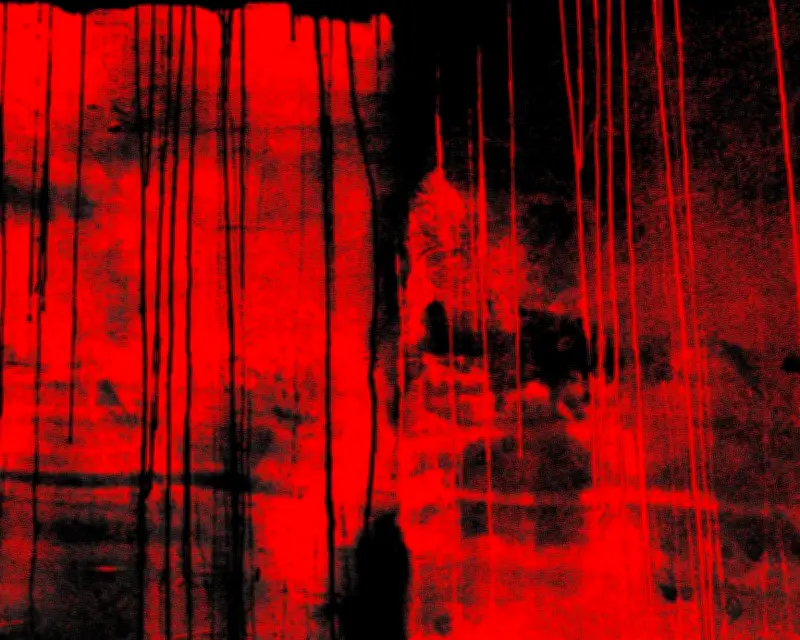
Kawada is a revered figure among photography enthusiasts; his photobook Chizu (The Map), collecting his tense, ruminative Hiroshima impressions made in his 20s, has sold for up to £25,000. A series of seemingly abstract images depicts stains on the walls of the Genbaku (A-Bomb) Dome, all that remained of bodies. Kawada was 12 when the atomic bomb hit Hiroshima. His approach to capturing one of history's worst scenes of mass destruction was detached, indirect, impressionistic, and fragmented. It is a story about proximity to trauma and survival, veering away from truth, as the reality is impossible to comprehend. These were revolutionary photographs that still feel new in their search to express the inexpressible.
Atmosphere and New Works
The dimly lit, subterranean gallery cocoons visitors in an elegiac, brooding atmosphere. Kawada is drawn to images tracing the Earth's extremities: the sky, horizon, water, burning suns, and scorching fires. The best part of the show, Vortex, is a three-channel projection of digital images from Kawada's recent Instagram posts. The ambient images jump between projections, reappearing in new orders, creating affinities and dissonances. They are too fleeting to hold, like a mirage. The experience feels like swimming against the current, ultimately requiring surrender to the atmosphere.

Iwane Ai's Poetic Connection
Iwane Ai, a younger female photographer, is connected to Kawada by themes of environment, loss, and belonging, and by a spectral, poetic atmosphere. Her section begins with Kīpuka: Paia Mantokuji Soto Mission (2015), a curving panoramic UV print glowing red and blue, depicting dozens of larger-than-life hands raised in the air, some holding sticks. It shows members of the Japanese community in Hawaii performing traditional Bon dances, a Buddhist ritual to honour ancestors that originated in Fukushima. The image wraps around the viewer, flowing with the heat and energy of lava, paying homage to 360-degree commemorative images of Japanese funerals in Hawaii from the 1930s, made with a hand-wound Kodak Cirkut camera. The Hawaiian term kīpuka refers to an oasis in a bed of new lava, folding destruction into renewal. The threat of the volcano links life on both islands. Passing between the hands, one is in the middle of celebration and revolt, hands thrown up in protest and defeat, calling out for mercy. Communities in Hawaii and Fukushima have experienced catastrophic natural wrath multiple times: earthquakes, eruptions, tsunamis. This is also a story of survival.
Phantoms and Transcendence
Humanity feels small and blighted in both artists' works, and phantoms are everywhere. Iwane creates spectral portraits by projecting old archival pictures onto sugarcane fields and photographing them, embedding them in the landscape. Another series features glowing, glittering visions of cherry blossoms in Tohoku, among Japan's most photographed subjects, but Iwane makes them interesting and somehow more transcendental, imagining Japanese ogre-like oni figures from folklore as guardians of nature among the trees. The ineffable beauty of the cherry blossoms is seared with deep sadness. In a final personal body of work, presented as a two-channel slideshow, Iwane recalls photographs taken before she was a professional. Twenty years ago, under a cherry tree in spring, she learned that her sister had taken her own life.
Kyotographie: Kawada Kikuji x Iwane Ai is at Japan House, London, until 18 October.