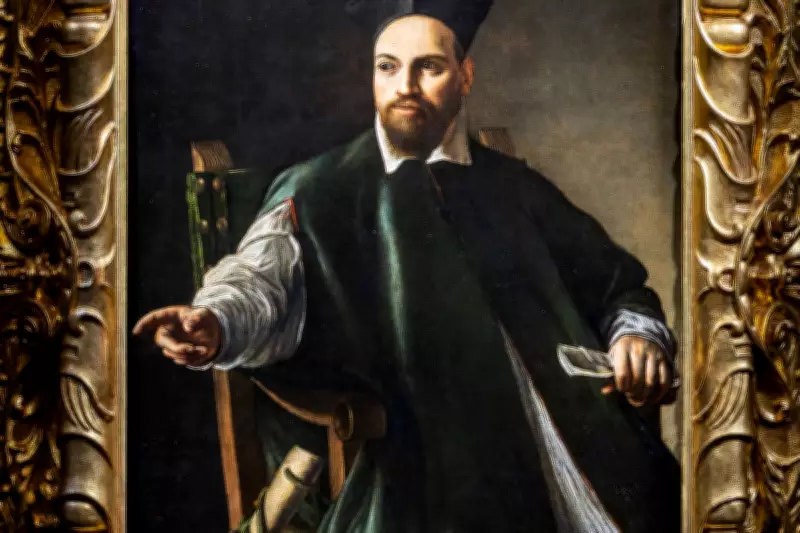
In a landmark cultural acquisition, Italy has secured a rare portrait by Baroque master Caravaggio for 30 million euros, representing one of the most substantial state investments ever made for a single artwork. The Italian Culture Ministry confirmed the purchase on Tuesday, following over a year of negotiations with a private collection.
Historic Acquisition for National Heritage
The portrait, painted around 1598 and attributed to Caravaggio in 1963, depicts Maffeo Barberini, a nobleman who would later ascend to become Pope Urban VIII. This significant work captures Barberini in his thirties, dressed as a cleric of the Apostolic Chamber during a pivotal moment in his rise to power.
Culture Minister Alessandro Giuli described the painting as "a work of exceptional importance" in an official statement. He emphasized that this acquisition marks a turning point in Caravaggio's modern rediscovery and significantly strengthens the presence of his works within Italian public collections.

Art Historical Significance
The "Portrait of Monsignor Maffeo Barberini" gained prominence through art critic Roberto Longhi's influential 1963 article, "The True 'Maffeo Barberini' of Caravaggio." Longhi hailed the painting as "one of the founding moments of modern portraiture," noting how Caravaggio introduced unprecedented psychological intensity through his revolutionary techniques.
Caravaggio, born Michelangelo Merisi, transformed painting at the dawn of the 17th century with his dramatic use of light and shadow, which became fundamental to the Baroque style. Despite being one of the world's most studied artists, the number of his authenticated works remains remarkably limited, making this acquisition particularly significant.
Strategic Cultural Investment
This purchase follows Italy's recent acquisition of Antonello da Messina's "Ecce Homo" and forms part of a broader governmental initiative to enhance the national cultural heritage. The strategy aims to make art historical masterpieces accessible to both scholars and the general public, preserving Italy's artistic legacy for future generations.
The portrait will join the permanent collection at Rome's Palazzo Barberini, where it will be displayed alongside other Caravaggio masterpieces. This includes "Judith Slaying Holofernes," another significant work purchased by the Italian state in 1971, creating one of the world's most important concentrations of Caravaggio's art.
This 30-million-euro investment underscores Italy's commitment to cultural preservation and demonstrates how strategic acquisitions can enrich public collections while celebrating the nation's unparalleled artistic heritage.