The Enigmatic Portrait That Captivated a Nation
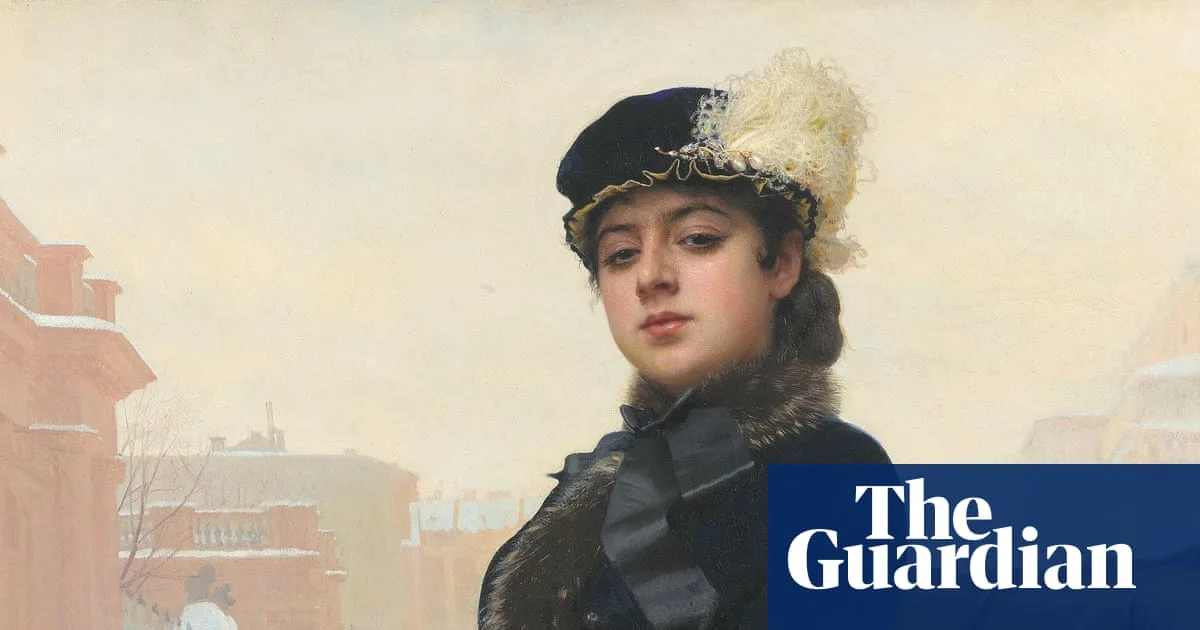
Portrait of an Unknown Woman by Ivan Kramskoy stands as one of Russia's most iconic artworks, causing scandal in imperial times before becoming a staple of Soviet popular culture. This painting, endlessly reproduced on prints, embroideries, and even chocolate boxes, holds a mysterious allure that transcends generations. In Britain, many might recognise her from various editions of Anna Karenina, where she often graced the covers, embedding herself in literary history.
From Scandal to Soviet Symbol
Ivan Kramskoy, a celebrated Russian portraitist, began his career as a provincial retoucher before gaining admission to the Imperial Academy of Arts in St Petersburg. He later led the Revolt of the Fourteen, a protest over artistic freedom, which evolved into the peredvizhniki or Wanderers group. In 1883, Kramskoy painted Neizvestnaya, hoping it would join Pavel Tretyakov's collection, but it was rejected due to its controversial depiction.
Contemporary reviewers harshly criticised the woman in the portrait, seated alone in an open carriage against a misty St Petersburg backdrop. Her beauty was overshadowed by an air of arrogance, and her fashionable attire—a velvet hat, trimmed coat, and gold bracelets—was deemed inappropriate for a society lady. Critics labelled her "a cocotte in a carriage" and "a costly camellia," leading Tretyakov, from a conservative merchant background, to avoid acquiring what he saw as a "monstrous offspring of the great metropolis."
After changing hands among collectors, including Ukrainian sugar magnate Pavel Kharitonenko, the painting eventually entered the Tretyakov Gallery post-revolution, despite Tretyakov's wishes. Following World War II, the Soviet state promoted cultural life through cheap reproductions, making the Unknown Woman a runaway hit. She became a symbol of mystery and bourgeois elegance in a prudish, symbol-heavy society, hanging in nearly every Soviet flat.
A Cinematic Discovery Unveils a Personal Tragedy
In Joachim Trier's film Sentimental Value, which swept European film awards and earned multiple Bafta and Oscar nominations, the portrait appears in a scene about an hour in, sparking intrigue for those familiar with its history. This discovery led to an investigation into its meaning within the film, revealing a deeper, untold story of life imitating art.
Production designer Jørgen Stangebye Larsen explained that this was not the portrait's first appearance in Trier's work. In Oslo, 31 August (2011), it briefly appears in a family home. In Sentimental Value, set in the same Oslo house from the early 1900s to present day, the portrait resurfaces in a 1930s flashback, tied to a young woman's tragic life of resistance, torture, and eventual suicide.
The portrait in the film is not a Soviet reproduction but a loose copy painted by Hedvig Broch, a close friend of Larsen's stepmother. Broch, who dreamed of being an artist since childhood, was forced by her father to pursue a "real" profession, studying sociology instead. Later, her husband made her choose between art school and their marriage, leading her to abandon her studies.
Broch became a trusted figure in Larsen's childhood, with her daughter Tiril recalling their close bond. At age 50, Broch finally returned to painting, creating her own version of Kramskoy's portrait, which transformed the arrogant demi-mondaine into a more melancholy and vulnerable figure. Tragically, between the two films, Broch took her own life, mirroring the themes in Trier's narratives.
The Unintentional Echoes of Art and Memory
When asked if this was life imitating art, Trier revealed he knew nothing of the portrait's history, stating its use was unintentional. He quoted Goethe's Faust: "man merkt die Absicht und man ist verstimmt" (you work out what their intention is and it breaks the spell). This highlights how art can unconsciously reflect real-life tragedies, with memory surviving through intentional acts rather than planned symbolism.
The story of Portrait of an Unknown Woman thus spans from imperial scandal to Soviet ubiquity, and now to a poignant cinematic connection, underscoring the enduring power of art to evoke hidden narratives and personal loss.