
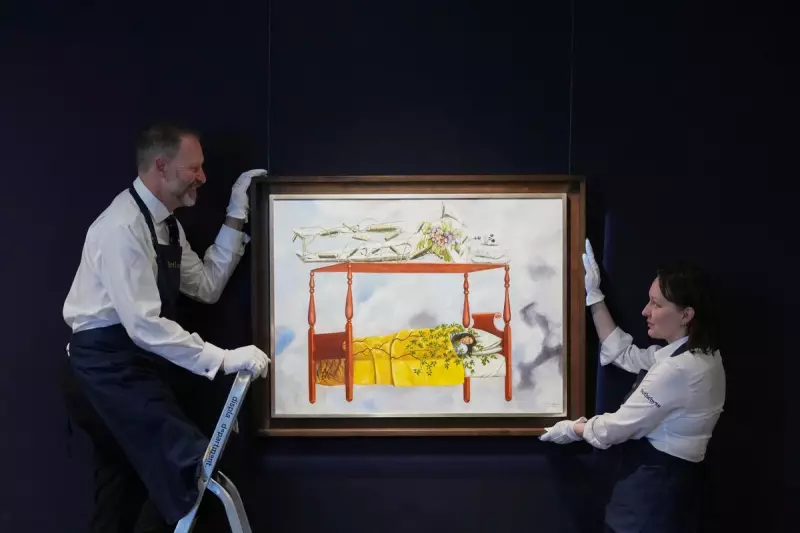
A remarkable self-portrait by Mexican artist Frida Kahlo could rewrite art history when it goes under the hammer later this month, with experts predicting it might become the most expensive work ever sold by either a female or Latin American artist.
The Record-Breaking Potential
Sotheby's New York will auction Kahlo's painting 'El sueño (La cama)' on 20 November 2025, with the prestigious auction house estimating its value between $40 million and $60 million. This staggering figure could easily surpass the current record of $44.4 million held by American artist Georgia O'Keeffe.
The painting's sale follows another significant Kahlo achievement, when a different self-portrait sold for $34.9 million – already establishing a record for a Latin American artist. This new auction represents an opportunity to substantially raise that benchmark.
Symbolism and Political Context
Created in 1940, 'El sueño (La cama)' features distinctive symbolic elements that characterise much of Kahlo's work. Rather than incorporating a traditional Day of the Dead skeleton, the painting depicts a Judas figure positioned on the bed's canopy, representing purification.
Despite the painting being presented alongside works by surrealist artists and containing elements that might align with surrealism, Kahlo herself rejected the movement. The artist, a committed communist, considered surrealism bourgeois and never identified with the artistic grouping.
Concerns About Art as Investment
As anticipation builds around the potentially record-shattering sale, art historians have voiced concerns about the implications of such high-value transactions. There is growing apprehension that when artworks command these extraordinary prices, they often disappear from public view.
Many fear these masterpieces become investment assets rather than cultural treasures accessible to the public. This trend means significant works may be acquired by private collectors and stored away, denying art enthusiasts and scholars the opportunity to study and appreciate them.
The upcoming auction represents not just a potential financial milestone but also raises important questions about the preservation and accessibility of culturally significant artwork in an era of increasingly expensive art market transactions.