Living History: Dominican Friars Continue Spiritual Mission Beside Leonardo's Masterpiece
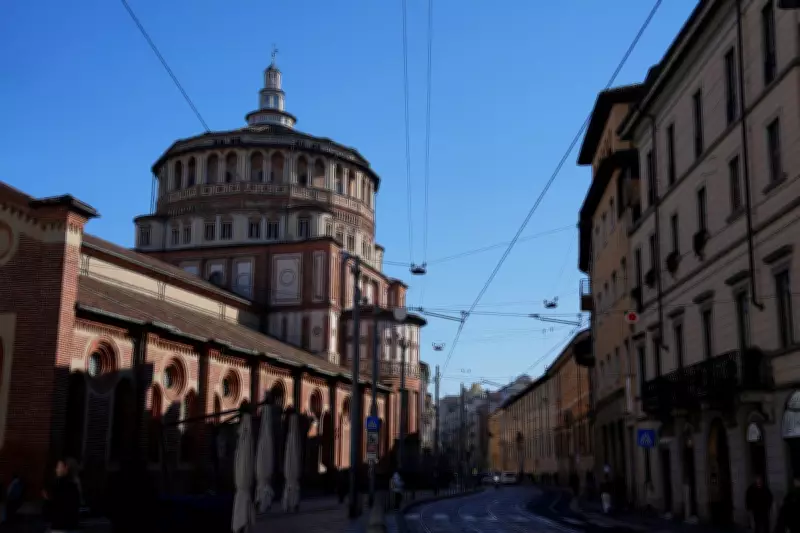
Within the historic walls of Santa Maria delle Grazie in Milan, Dominican friars maintain a living spiritual community just steps away from one of the world's most celebrated artistic treasures: Leonardo da Vinci's "The Last Supper." While thousands of visitors flock to see the Renaissance masterpiece each year, a dozen priests and nine novices continue the order's centuries-old traditions of prayer, study, and ministry.
A Sacred Space Transformed
The Rev. Paolo Venturelli, a Dominican friar residing at the convent, approaches Leonardo's masterpiece with reverence and distance. "From there, the painting looks as though it were painted in the middle of the refectory," said Venturelli, who prefers viewing from across the room that once served as his order's dining hall. "It unleashes all kinds of human and spiritual reactions."
Originally commissioned by Ludovico Sforza in the 1490s, "The Last Supper" occupies the convent's former refectory where monastic communities once gathered for meals and prayer. Following the Napoleonic suppression of religious houses in the 18th century, the space passed into state control and now operates as the Cenacolo Vinciano museum under Italy's Regional Directorate of Museums of Lombardy.

"We don't go often because we have to ask permission to enter," Venturelli explained, noting that preservation rules limit all visitors, including friars, to just 15 minutes inside. "It no longer belongs to us."
Daily Life in a Historic Setting
Dressed in their iconic white robes or winter brown hooded capes, the Dominican friars remain visible presences within the basilica complex. While many tourists focus exclusively on Leonardo's painting, some visitors like Maria Teresa Bruzzi from Genoa make a point of exploring the broader site. "We came to see Leonardo's Last Supper but we also wanted to see the church because it's quite special," Bruzzi noted during a February visit. "This is a Renaissance church that combines two styles and was very important for the Sforza family."
The basilica maintains daily operations, offering Mass and confession services even when the adjacent museum closes on Mondays. "Confessions are very much sought after and we maintain this service for the citizens of Milan but also for all visitors," explained the Rev. Llewellyn Muscat, prior of the Dominican community. The friars accommodate multiple languages, with Venturelli hearing confessions in Italian, Muscat in English, Italian, and Maltese, and others offering services in French and German.
Centuries of Intellectual Tradition
Dominicans first arrived at Santa Maria delle Grazie during its 15th-century construction, continuing an earlier Milanese presence dating back to their devotion to Saint Catherine of Siena. Frescoes depicting her alongside Saint Catherine of Alexandria testify to the order's longstanding intellectual tradition, with the latter considered patron saint of philosophers.
"Reading is part of our identity," Muscat emphasized, pointing to the convent's halls lined with bookshelves just steps from tourist pathways. While the friars follow no rigid daily schedule, their lives revolve around study, prayer, and ministry. Some celebrate regular Mass, assist nearby parishes, oversee novitiate programs, teach at Catholic institutions, or collaborate with the convent's cultural center organizing conferences and events.
Spiritual Connection Beyond Art
The placement of "The Last Supper" within a Dominican convent was no historical accident. Venturelli noted that most Dominican refectories traditionally featured this biblical scene, while Muscat described the painting's enduring spiritual significance. "For us, it does not awaken an emotion about something that belongs to the past," he reflected. "It is like a continuation in which we eat together with Jesus and his apostles, as though his words are also spoken to us."
For Muscat, the masterpiece resonates on multiple levels: artistic, historical, and spiritual. "'The Last Supper' is a call to my personal conscience and a call to the conscience of the order," he said. "Because here in the Grazie there are no individuals, but a community that works and welcomes."

The friars' current refectory lies deep within the convent's labyrinthine corridors, a quiet space featuring several square tables rather than the long table depicted in Leonardo's painting. While appreciating their current dining arrangements, Muscat acknowledged the community's historical connection to the original space. "It's nice," he said of their current refectory, before adding thoughtfully, "maybe one day the old refectory will belong to us again."