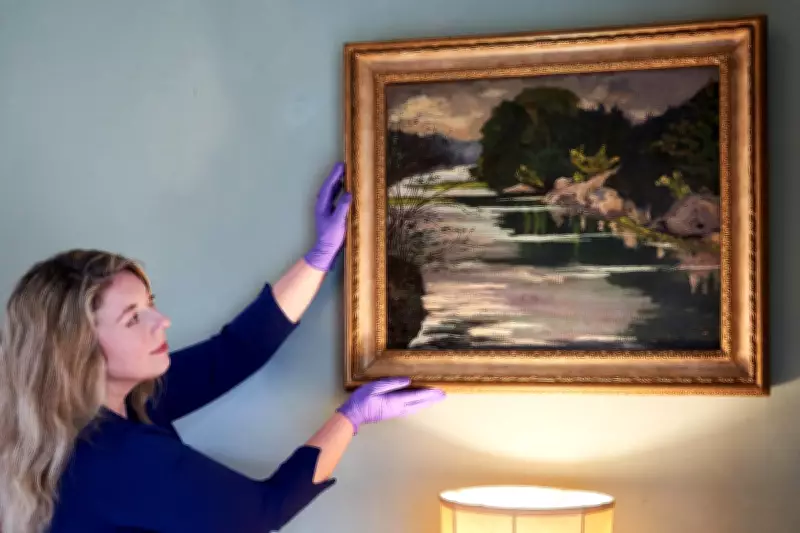
A previously unseen painting by wartime prime minister Sir Winston Churchill is poised to make its UK debut this weekend, offering a rare glimpse into the artistic pursuits that provided solace from his political burdens. The landscape work, titled Quiet Waters, will be the centrepiece of a new exhibition at Churchill's former family home, Chartwell in Kent, which opens to the public on Saturday.
An Artistic Sanctuary from Political Strain
The exhibition, organised by the National Trust, will feature not only Churchill's paintings but also intimate artefacts from his creative process. Among these items is his well-worn, paint-spattered white cotton coat, which he habitually donned while producing over 500 artworks. His steel-framed glasses and other personal effects will also be on display, illustrating how art served as a therapeutic escape from the pressures of leadership.
The Story Behind 'Quiet Waters'
Quiet Waters was originally gifted by Churchill to his close friend Lord Beaverbrook in 1959, in celebration of Beaverbrook's 80th birthday. The painting is currently on loan from the Beaverbrook Canadian Foundation, allowing it to be showcased in the UK for the very first time. This tranquil landscape exemplifies Churchill's dedication to capturing serene scenes, a stark contrast to the tumultuous era he navigated as prime minister.

Katherine Carter, the property curator at Chartwell, emphasised the significance of these artefacts. "Churchill once remarked that 'the muse of painting came to my rescue,'" she noted. "For him, art was a vital means of retreating from the relentless stresses of public and political life. At Chartwell, visitors can explore how painting became his antidote to pressure and frustration."
Personal Artefacts and Creative Rituals
Churchill's painting overcoats, typically crafted by his tailors on Savile Row, were integral to his artistic routine. Notably, the only self-portrait he ever created depicts him wearing his signature white overall, underscoring the garment's role in his creative identity. These items, along with his brushes and palettes, will be exhibited to provide a tangible connection to his private moments of reflection.
A Modern Resonance in Historical Context
Ms Carter further highlighted the contemporary relevance of Churchill's artistic journey. "In today's world of constant notifications and high-pressure lifestyles, Churchill's relationship with painting feels remarkably modern," she observed. "This display reminds us that he was not merely a historical figure but an individual who, like many people today, turned to art to recharge, reflect, and maintain resilience."
Additional Highlights and Historical Connections
The exhibition will also feature a print of a painting by Sir Alfred Munnings, a renowned equestrian artist and former president of the Royal Academy. Munnings played a pivotal role in Churchill's artistic development by encouraging him to exhibit his works at the Royal Academy. This mentorship ultimately led to Churchill being honoured as the only amateur artist to receive the title of Honorary Academician Extraordinary.
The Chartwell exhibition, managed by the National Trust, will remain open to visitors until November 1, offering an extended opportunity to delve into this lesser-known aspect of Churchill's legacy. Through Quiet Waters and the accompanying artefacts, the display paints a vivid portrait of a statesman who found peace and purpose at the easel, away from the corridors of power.