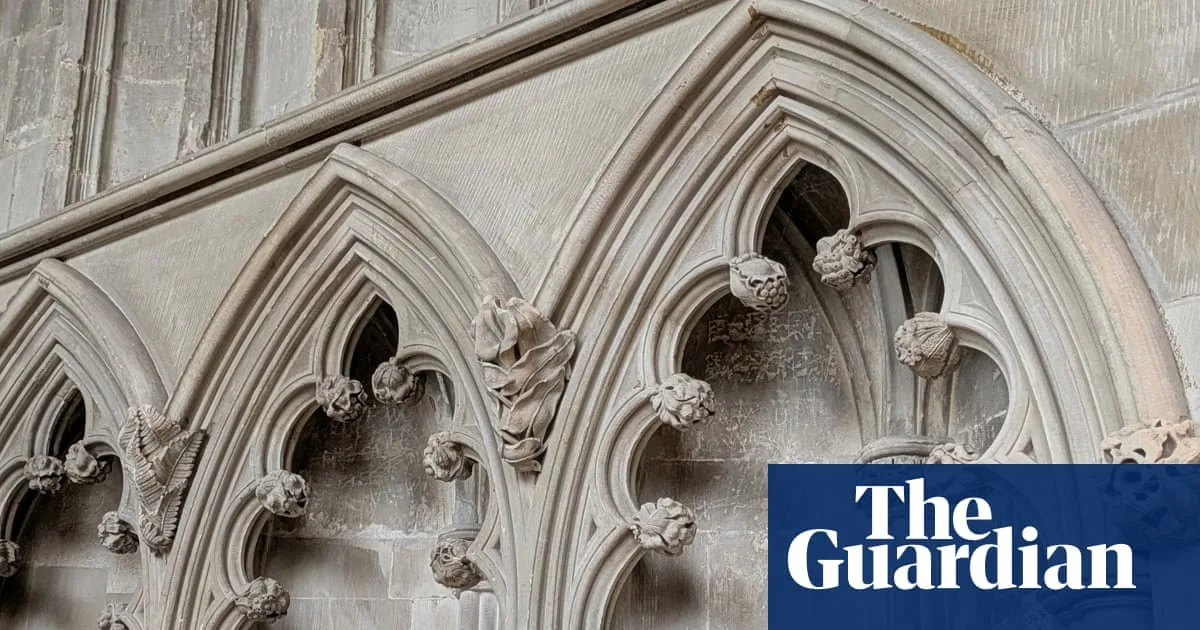
St Albans Cathedral's Lady Chapel, a quiet sanctuary within the bustling Hertfordshire city, houses a remarkable collection of botanical stone carvings that date back to a Victorian restoration. The chapel, built with Totternhoe clunch limestone quarried in Bedfordshire, features intricate foliage, flowers, and fruit adorning its arches, thanks to the work of London-based ecclesiastical sculptor John Baker.
Baker, known for his naturalistic masonry, was commissioned in the late 19th century to recreate decorative capitals, bosses, and corbels that had been lost over time. To ensure accuracy, he asked local women to bring in plants as models, resulting in carvings that include elm samaras, polypody ferns, passion flower tendrils, and cuckoo pint, alongside fruits such as plums, pears, pomegranates, and peaches from Hertfordshire's orchards.
Among the most striking carvings are Himalayan and South American orchids—Coelogyne cristata, Odontoglossum vexillarium, and Cattleya mendelii—which were grown in St Albans by Frederick Sander, known as the 'Orchid King' and royal orchid grower to Queen Victoria. The chapel thus serves as a historical record of local flora collected by women and set in local stone.

Outside the chapel, a veteran cedar of Lebanon planted in 1803 near the Chapter House echoes Baker's carving of two cones nestled in cedar needles, possibly modelled on a specimen from that very tree. The carvings offer a unique glimpse into the city's botanical heritage and the collaborative effort behind the chapel's restoration.