New BBC Documentary Explores JMW Turner's Neurodivergence
BBC doc explores Turner's neurodivergence

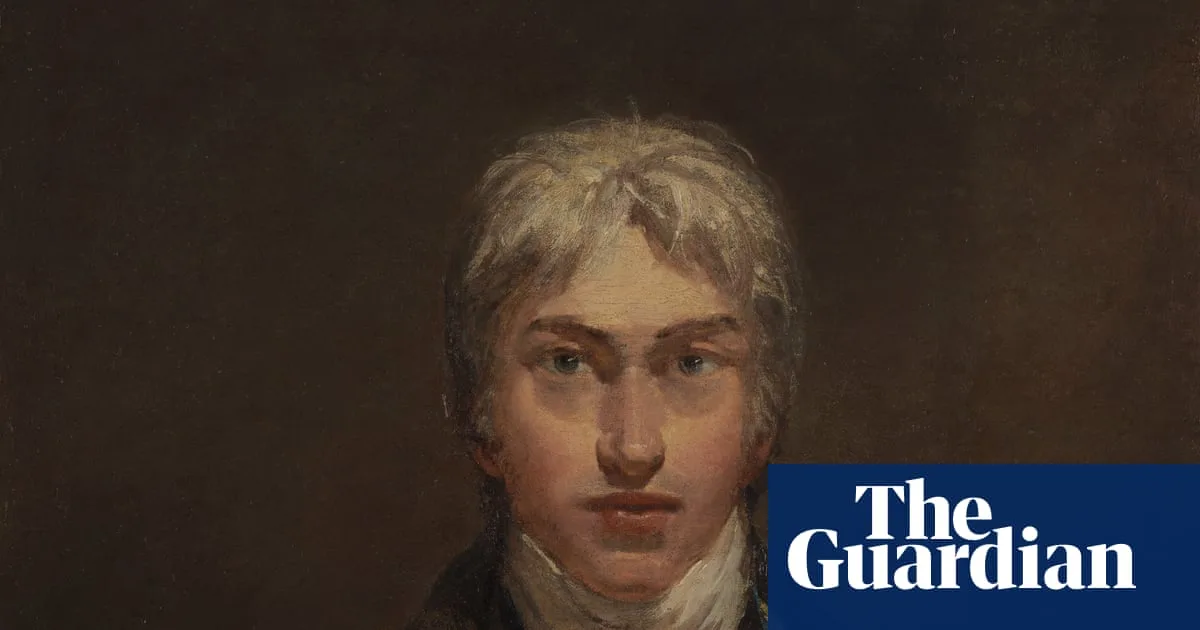
A new BBC documentary is set to revolutionise our understanding of JMW Turner, one of England's most celebrated painters, by exploring the possibility that his extraordinary artistic vision was influenced by neurodivergence.

Unlocking Turner's Mind Through His Sketchbooks

The documentary, titled Turner: the Secret Sketchbooks, delves into an unprecedented 37,000 sketches, drawings and watercolours to construct what experts are calling the most comprehensive psychological portrait of the artist ever attempted. Despite Turner being widely regarded as England's greatest painter, many aspects of his personality have remained mysterious until now.

Among the prominent figures contributing to this groundbreaking investigation are actor Timothy Spall, who previously portrayed Turner in Mike Leigh's film Mr Turner, alongside artists Tracey Emin and John Akomfrah, Rolling Stones musician Ronnie Wood, psychotherapist Orna Guralnik and naturalist Chris Packham.

Evidence of Neurodivergent Traits

Chris Packham, who serves as an ambassador for the National Autistic Society, pointed to several characteristics in Turner's work that suggest neurodivergent thinking. Packham highlighted Turner's exceptional attention to detail and his capacity for hyperfocus - a state of intense, prolonged concentration commonly associated with conditions such as ADHD and autism.

"I see affinities there in terms of my own autistic thinking and approach to various things," Packham observed. "Turner was clearly a man who, today, we would say had focused interest. I'm still happy to call it obsession."

Packham emphasised how Turner repeatedly returned to various locations throughout his career, suggesting the artist was probably never satisfied with what he had achieved. The naturalist also noted Turner's meticulous vision, particularly evident in his earlier, less impressionistic work, where he captured every stone, brick and window with remarkable precision.

Childhood Trauma and Turbulent Inner World

Turner's difficult childhood provides crucial context for understanding his artistic development. He was just eight years old when his five-year-old sister died, and his mother, Mary, is believed to have had a psychiatric disorder that caused dangerous temper outbursts. She was eventually admitted to Bethlem hospital, a mental asylum, where she died in 1804.

Despite these challenging beginnings in the gritty heart of Georgian London, Turner became a young star of the art world. He enrolled at the Royal Academy of Arts at only 14 and exhibited his first work there just a year later.

Psychotherapist Orna Guralnik interprets Turner's paintings as expressions of "a tumultuous, turbulent inner world that was quite hidden from his outside expression". She suggests that the artist's innate talents combined with his childhood experiences created "this incredible force" that drove his artistic output.

Turner as Climate Change Documentarian

The documentary also presents the compelling argument that Turner may have been the first artist to document climate change. Packham notes that "he was born in the age of sail and died in the age of steam", with this rapid technological transformation clearly apparent in paintings like The Fighting Temeraire and Rain, Steam and Speed.

Dr Amy Concannon, the Manton senior curator of historic British art at Tate Britain, points to Keelmen Heaving in Coals by Moonlight and Snow Storm – Steam-Boat off a Harbour's Mouth as evidence of Turner's fascination with changing industrial infrastructure, labour practices and pollution.

While Turner wouldn't have understood climate change as we do today, he had a keen interest in meteorology and studied atmospheric effects meticulously for his pictures. Experts suggest that some of his more colourful sunsets may have been inspired by the aftermath of the 1815 eruption of Mount Tambora, which Packham describes as having "basically precipitated climate change over a foreshortened period".

The Turner & Constable exhibition opens this month at Tate Britain, where approximately 300 sketchbooks from the Turner bequest continue to offer new insights into the artist's mind and methods.