
From Narco-Symbols to Artistic Critique: The Legacy of Escobar's Hippos
In a powerful artistic response to Colombia's troubled past, a new exhibition in Bogotá is transforming Pablo Escobar's infamous hippopotamuses into symbols of political critique. The show, titled "Microdoses to Tame the Inner Hippopotamus," brings together twenty Colombian artists who use various mediums to examine the lasting impact of narco-culture and excess.
The Photographer Who Witnessed Escobar's Excess Firsthand
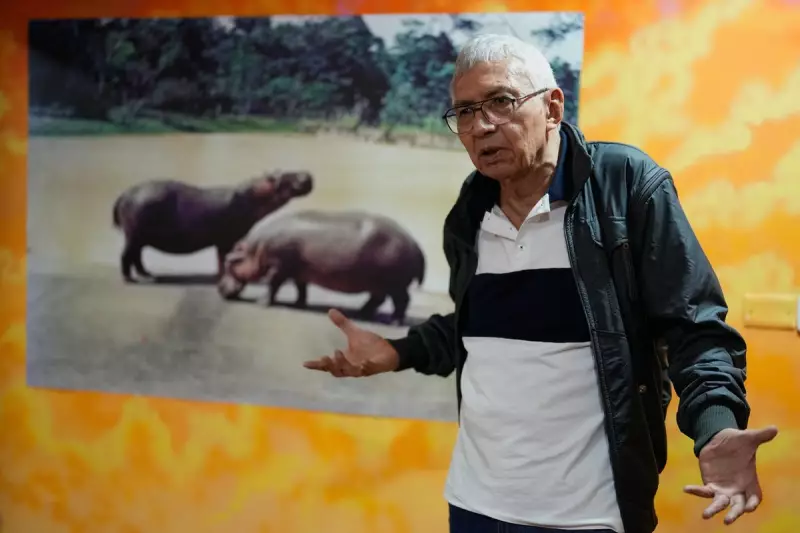
Among the participating artists is Édgar Jiménez, 75, who once served as Escobar's personal photographer. Jiménez contributes "Adam and Eve," his intimate portrait of two original hippos that the drug lord imported from the United States during the 1980s. The photographer recalls taking the picture from just four metres away without protection, unaware these same animals would later attack and kill a camel.
Jiménez was responsible for documenting all creatures at Escobar's Hacienda Nápoles in northeast Colombia. "The hippos were bought from a zoo in the United States that buys and captures animals from Africa," he remembers. Escobar continued expanding his unusual collection until his death in 1993, after which the hippo population exploded to over 160 animals, now officially classified as an invasive species.
Artistic Responses to Narco-Culture's Paradoxes
Exhibition curator Santiago Rueda explains the project doesn't aim to moralise but invites viewers to consider how such paradoxical symbols can fuel political discourse. The exhibition features diverse works including oil paintings, graffiti, photographs, and perhaps most remarkably, psychoactive mushrooms cultivated in hippo dung.
One standout piece is Carlos Castro's tapestry "The Great Narco Ark" ("La gran narco arca"), depicting Escobar alongside wild animals descending two by two from a military aircraft - a direct allusion to Noah's Ark. Rueda emphasises that the critique extends beyond Escobar himself to address "the narco-madness, the excess, the luxury" that continues influencing aesthetics globally.
Another provocative work features a hippo nicknamed "El Gordo" (The Fat One) with a fictional reward of $264,000 for its capture. Artist Manuel Barón describes this as "a parody of the drug cartels of the era... from the time when they were searching for Pablo Escobar and all the drug traffickers."
Perhaps the most scientifically intriguing contribution comes from Camilo Restrepo, who discovered that hallucinogenic mushrooms could grow directly in hippo waste. Restrepo highlights the profound irony: "It's very contradictory that, due to the failure of the war on drugs, so much money accumulates in the hands of drug traffickers that they can bring in an entire zoo, and then the hippos remain living in Colombia." He notes the additional paradox that their waste supports mushrooms that "dissolve the ego," unlike cocaine which elevates it.
The exhibition opened on Thursday at Casa Échele Cabeza, a project managed by nonprofit Acción Técnica Social that focuses on drug regulation and harm reduction. Through these diverse artistic interpretations, Colombian creators continue wrestling with the complex legacy of narco-culture and its unexpected ecological consequences.