Ancient Egyptian Book of the Dead Unveiled in Brooklyn Exhibition
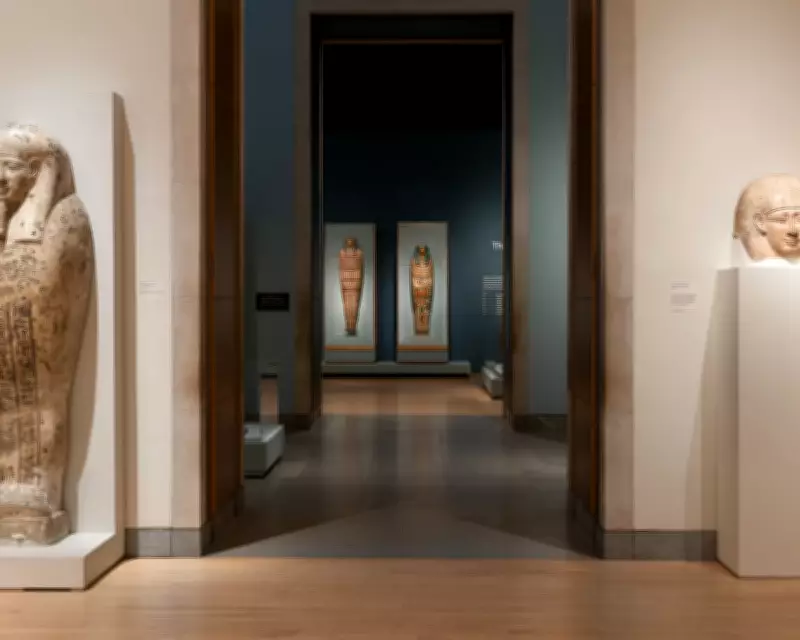
A rare and complete gilded copy of the ancient Egyptian Book of the Dead is now on public display at the Brooklyn Museum in New York, captivating visitors with its intricate details and historical significance. This 2,000-year-old scroll, used to guide the deceased through the perilous journey to the afterlife, stands out as one of only about ten known gilded papyri from Egypt.
Journey to the Afterlife
In ancient Egyptian belief, reaching eternal paradise was fraught with dangers, including a final judgment where the heart was weighed against a feather by the god Osiris and 42 other deities. Failure meant the soul would be devoured by Ammit, a fearsome goddess with parts of a lion, hippopotamus, and crocodile. To aid in this journey, Egyptians developed around 160 incantations, collectively known today as the Book of the Dead, a term coined by 19th-century German professor Dr. Karl Richard Lepsius.
Rarity and Preservation
Egyptologist Yekaterina Barbash, who worked on the exhibition, noted that this particular scroll is exceptionally rare due to its gilded elements and completeness, indicated by blank sheets at both ends. "This particular book of the dead is gilded and complete, both of those are incredibly rare," she said, adding that she had never seen a gilded papyrus in her decades of research.

The scroll dates between 340 BC and 57 BC and has a complex history, having been brought to America in the 19th century by British doctor Henry Abbott. It eventually ended up at the Brooklyn Museum in 1948 after being owned by the New-York Historical Society.
Conservation Efforts
A three-year conservation project led by experts including Ahmed Tarek and museum conservators Lisa Bruno, Sara Bone, and Josephine Jenks was crucial in preserving the fragile papyrus. "It's kind of like if you took shredded wheat and had it flattened, it's just really brittle," Bruno explained. The team used gels to moisten the scroll and carefully separated it from an acidic backing, then remounted it on ultra-thin Japanese kozo-fiber paper.
Significance of Gold and Scribe Variations
The gilding on parts of the papyrus, such as crowns and sun disks, highlights their importance and connects to ancient Egyptian beliefs about gold as a symbol of eternity and divinity. "Gold doesn't tarnish, so for them it was linked to eternity and the divine," Barbash said.
Each copy of the Book of the Dead was unique, with variations in dimensions, text selection, sequence, and even spelling, reflecting scribal creativity and religious insight. "Scribes would sometimes provide alternative texts in the same version of a book," Barbash noted, describing the human touch evident in the scrolls.
Public Reaction and Exhibition Details
The exhibition, titled Unrolling Eternity: The Brooklyn Books of the Dead, has drawn awe from visitors and experts alike. "People who have come to the museum so far are in awe, as am I," Bruno said. Barbash added, "Everything is so fine about it, it's like lace, a spider's web. It's so fragile and intricate and beautiful." The exhibition is currently open at the Brooklyn Museum, offering a rare glimpse into ancient Egyptian culture and artistry.