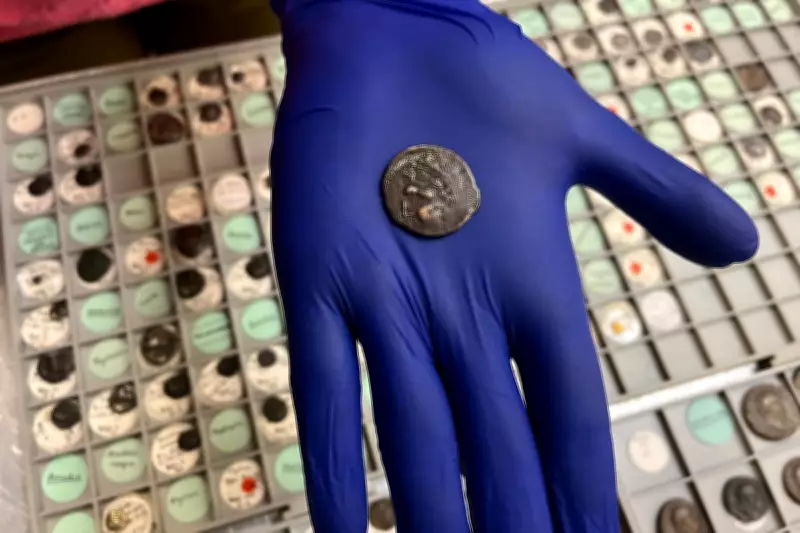
An ancient coin, employed as bus fare in Leeds during the 1950s, has been authenticated as originating from the Carthaginians in Cadiz, Spain, with its creation dating back to the 1st century BC. This remarkable artefact was initially handed to a local bus driver before being acquired by James Edwards, the former chief cashier with Leeds City Transport. Edwards later gifted the coin to his grandson, Peter, who preserved it in a wooden chest for more than seven decades.
Archaeological Confirmation and Historical Significance
Archaeologists from the University of Leeds have confirmed the coin's Carthaginian origin, noting that it features the face of the god Melqart, who bears a resemblance to the Greek hero Herakles. This discovery underscores the coin's historical value and its unexpected journey through time.
Family Legacy and Public Donation
Peter, now 77 years old, expressed a strong desire for the coin to be thoroughly studied by experts. This led to its generous donation to Leeds Museums and Galleries, where it has been integrated into the Leeds Discovery Centre's collection. The coin's story highlights how ancient artefacts can surface in contemporary contexts, bridging past and present.

The identification process involved detailed analysis by specialists, who emphasized the coin's rarity and its role in illustrating trade and cultural exchanges in ancient times. This find not only enriches local heritage but also provides insights into the broader historical narratives of the Carthaginian civilisation.