Time Hoppers: The Silk Road Brings Islamic History to Life for Young Audiences
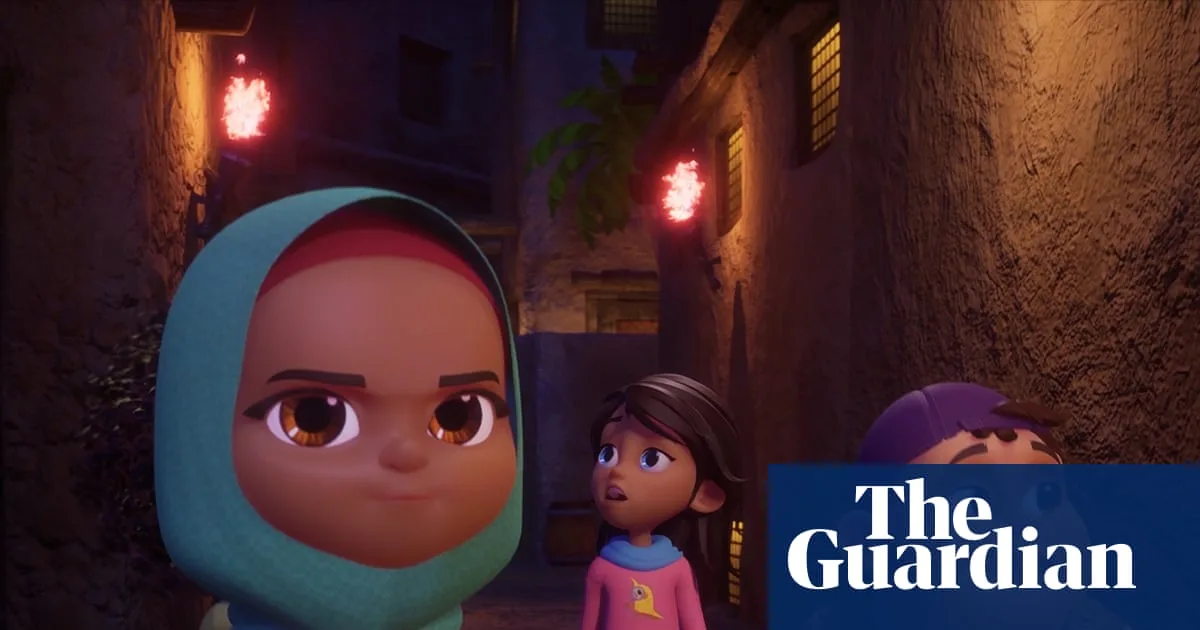
In a cinematic landscape where diversity often falls short, Time Hoppers: The Silk Road emerges as a vibrant animated feature that transports children on a thrilling adventure through time. Created by the husband-and-wife team of Michael Milo and Flordeliza Dayrit from their home in Edmonton, Canada, this film blends fast-paced action with educational insights into the medieval Islamic world.
A Journey Through History and Science
The story follows four young protagonists—Abdullah, Aysha, Khalid, and Layla—who accidentally discover a time-travel device in a laboratory. They soon find themselves pursued by a rogue alchemist, leading to a cat-and-mouse chase across cities, countries, and centuries. Their mission is twofold: retrieve the device and protect key historical figures from interference.
"What we're trying to do is make learning about that era fun and interesting," explains Milo. The film introduces children to influential scientists and scholars such as Al-Khwarizmi, known as the father of algebra, Ibn al-Haytham, a pioneer in optics, and Mansa Musa, the wealthy ruler of the Malian empire. It also highlights lesser-known figures like Maryam al-Astrulabi, a 10th-century Syrian woman who developed the astrolabe.
Dayrit emphasizes the importance of representation, stating, "We wanted to showcase that it's not only men that were scholars or scientists—there were also a lot of women who were at the forefront." From the outset, the creators aimed to craft a story accessible to all children, not just Muslim audiences, fostering curiosity about diverse histories.
Roots in Education and Representation
The project originated not in film but in education, evolving from an ebook into a game and an unreleased television series. It is part of a broader ecosystem developed through Muslim Kids TV, a platform founded by Milo and Dayrit nearly two decades ago. "We've been making content for kids for close to 20 years," says Milo. "And we knew that Muslim kids are really underrepresented."
Both creators converted to Islam independently in 1995 and married the following year, with their faith journey shaping their work. Muslim Kids TV began as content for their own children but grew into a mission to create stories where Muslim children could see themselves as heroes. Dayrit notes, "For us, it was really important to have a story where, first and foremost, the kids were the heroes." This focus ties into broader themes of visibility and possibility, especially in contexts where Islamophobia and negative media portrayals are prevalent.
"When you're constantly hearing that, in the news and in everyday life, you start to believe that you don't belong in these spaces," Dayrit reflects. "It's important for them to know they belong." The film counters such messages by reframing history, working with researchers to ensure accuracy in architecture, costume, and historical details, introducing young audiences to a wider cast of figures than typical school curricula.
Commercial Success and Future Plans
The film's release strategy has proven successful, starting with a limited run that expanded due to strong audience turnout. In the United States, it screened in 660 theatres, selling over 35,000 tickets, while in the United Kingdom, it expanded from 200 to 299 theatres. The team is already developing a sequel, driven by grassroots community engagement and local champions spreading the word.
Dayrit asserts, "What we're showing the film industry is that Muslim stories are not niche. They can be globally relevant and commercially viable." With aspirations to become the Disney of the Muslim world, the creators remain focused on empowering children. "We want them to feel proud and feel they can make a difference," Dayrit says, summarizing the film's message as: "Hands are for helping, words are kind, and ideas are brave."
Time Hoppers: The Silk Road is now on release, offering a fast-moving adventure that educates and inspires, proving that stories from diverse backgrounds can captivate audiences worldwide.