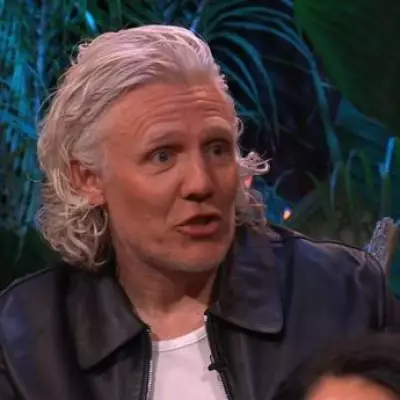
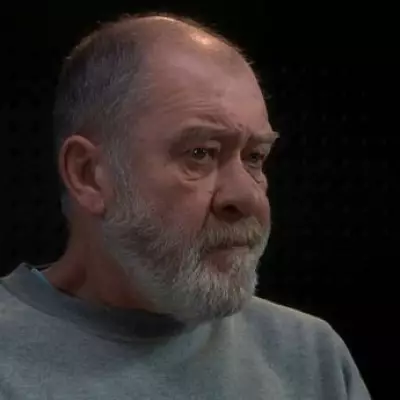
In a special edition of the Daily Mail's Queens, Kings and Dastardly Things podcast, hosts Robert Hardman and Professor Kate Williams welcomed historian Alice Loxton to dissect the Oscar-nominated film Hamnet. The discussion focused on separating historical fact from creative fiction in this acclaimed cinematic adaptation.
Film Overview and Critical Reception
Directed by Chloé Zhao and based on Maggie O'Farrell's celebrated 2020 novel, Hamnet reimagines the life of William Shakespeare, portrayed by Paul Mescal, and his wife Anne Hathaway, played by Jessie Buckley under the name Agnes. The narrative centres on the couple's profound grief following the loss of their only son to the plague in 1596. Both the novel and film draw inspiration from the unverified theory that this personal tragedy influenced Shakespeare's creation of his iconic play Hamlet, which debuted around 1600.
The film has garnered widespread critical praise, with Irish actress Jessie Buckley receiving particular acclaim for her moving performance as the grieving wife. Many industry observers predict she could secure an Oscar for her portrayal, adding to the film's prestige and cultural impact.

Historical Accuracy Under Scrutiny
While the podcast panel broadly commended the film's vivid depiction of Elizabethan England, historian Alice Loxton identified a glaring historical inaccuracy that she found difficult to overlook: the minimal representation of religion in the characters' lives.
Loxton expressed her concerns clearly, stating, 'I thought there was quite an absence of faith in these characters' lives. Agnes totally relies on nature and the natural world. During times of crisis, like plague, what would have been more prevalent in these people's lives would be the church. They'd have gone there and prayed.'
She elaborated further, noting that neither the book nor the film adequately highlights this aspect. 'If you go to Stratford today, there's an enormous church there, and the Guild Chapel. The Shakespeare school is right next to that chapel.' The presence of such prominent religious structures at the heart of Shakespeare's Stratford suggests that the couple would have been deeply involved in church life, a reality largely absent from the film's narrative.
Religion's Fleeting Presence
Religion makes only a brief appearance in the film, during a scene where Shakespeare and Agnes are compelled into a shotgun wedding in a church after she becomes pregnant. This limited depiction stands in stark contrast to the historical context of Elizabethan England, where religious observance was a central and often enforced part of daily life.
Professor Kate Williams concurred with Loxton's assessment, describing the sidelining of Christianity as a striking historical oversight. She explained, 'Elizabeth I was prosecuting people [for being impious]. You had to go through the motions, Catholics were being prosecuted and executed. You had to be very careful, you did need to go to church.'
Throughout the film, Agnes is portrayed as a mystical, almost witch-like figure, possessing the ability to foresee the future and armed with an array of ancient herbal remedies. In one poignant moment after Hamnet's death, Agnes declares, 'I will go to church, but not say a word,' which Loxton interprets as an overt protest against faith, further emphasising the film's nuanced but limited engagement with religious themes.
Podcast Availability and Broader Implications
The full Hamnet episode of Queens, Kings and Dastardly Things is available for listening on various podcast platforms, including Apple and Spotify, as well as on YouTube. This discussion not only sheds light on the film's artistic choices but also raises important questions about how historical narratives are adapted for modern audiences, balancing creative licence with factual integrity.