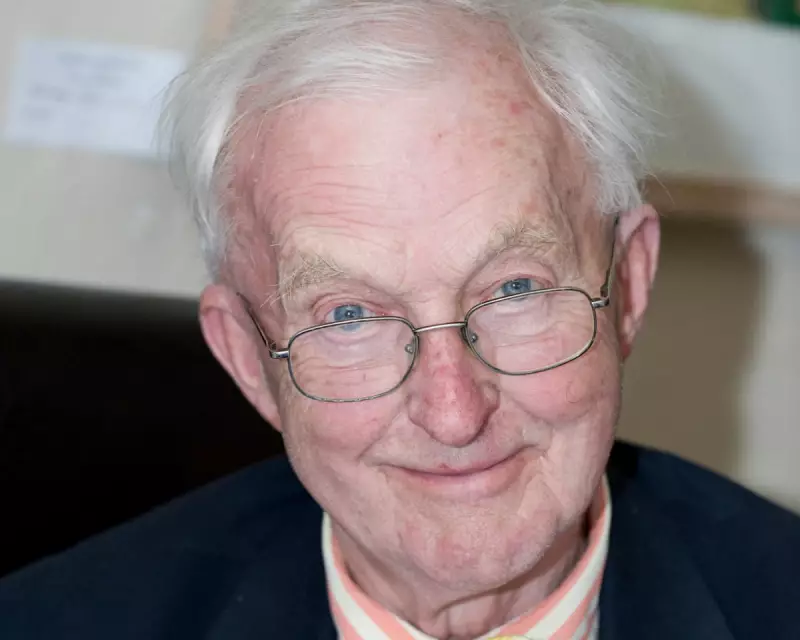
The life of Tommy Gee, a progressive colonial service administrator who played a pivotal role in expanding Uganda's education system after independence, has been celebrated following his death at the age of 100.
A Life of Service in East Africa
Tommy Gee served as a colonial administrator in Uganda during the 1950s and 1960s, where his sympathies with the local population frequently put him at odds with the wider expatriate community. Born in Nottingham, he was the son of Tom, a butcher, and Beatrice. After attending High Pavement Grammar School, he earned a mathematics degree from Brasenose College, Oxford.
Following service in the Royal Navy at the end of the Second World War, where he rose to become chief navigator on HMS Glasgow, Gee passed the civil service exams and was posted to Uganda. His initial role was as an assistant district commissioner, later advancing to district commissioner for the kingdom of Bunyoro and then secretary to the legislative council in Kampala.

Championing Africanisation and Educational Reform
Gee was a staunch proponent of Africanisation, a stance that created friction with colleagues who believed the British Empire would endure for much longer. His outspoken nature nearly cost him his job when he vocally opposed the deportation of the King of Buganda to London. He was only reprieved after the secretary of state, Alan Lennox-Boyd, publicly agreed with his position.
When Uganda gained independence in 1962, the new prime minister, Milton Obote, personally asked Gee to remain in the country. Appointed as a permanent secretary in the ministry of education on a three-year contract, Gee was tasked with dramatically increasing school numbers. Through enterprising solutions, including enlisting western volunteers to work in Ugandan classrooms until local teachers could be trained, he oversaw a doubling in the number of secondary schools from 21 to 42 in just three years. For this achievement, he was appointed OBE in 1965.
An International Legacy in Higher Education
Returning to the UK, Gee worked as a principal at the Ministry of Overseas Development before accepting a role to establish the newly formed Institute of Development Studies at the University of Sussex, where he became its administrative director.
His international impact continued when, in 1969, he travelled to Fiji to write a report on the viability of establishing a University of the South Pacific. The project was successful, and he served as the university's registrar from 1970. Later in his career, he became registrar of the Papua New Guinea University of Technology in 1985, a position he held for three years.
In retirement in Keymer, West Sussex, Gee served as a Liberal Democrat county councillor. After relocating to Suffolk in 1996, he worked as a prison visitor in Norwich. Described as having a perpetual twinkle in his eye, he remained open to change throughout his life. At 85, after a lifetime in the Church of England, he became a Quaker. Demonstrating his enduring spirit of adventure, he journeyed up the Amazon with his son Nathaniel at the remarkable age of 98.
He married Anne Smith in 1948, whom he met at a ball at Brasenose College. She died in 2010. Tommy Gee is survived by their children Nathaniel, Simon, and Sarah, eight grandchildren, and seven great-grandchildren.