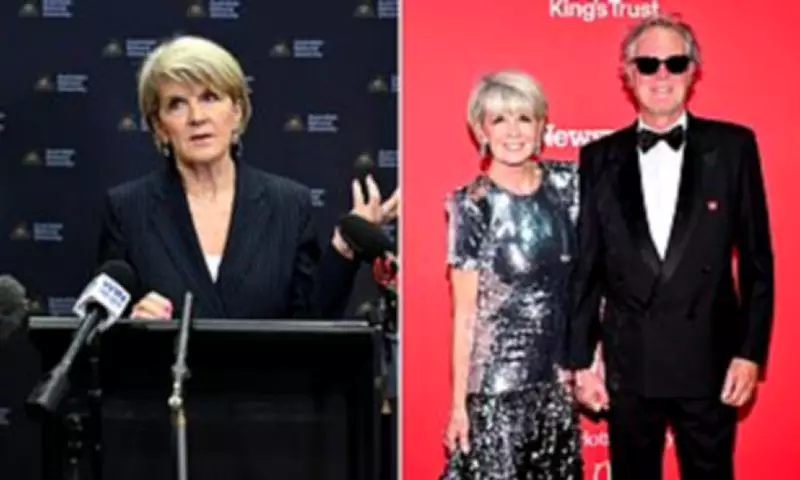
Former Australian foreign minister Julie Bishop will no longer be permitted to appoint her successor as chancellor of the Australian National University (ANU) when her tenure concludes later this year, following an unprecedented intervention by the higher education regulator.
Regulatory Intervention
The Tertiary Education Quality and Standards Agency (TEQSA) has stepped in after months of turmoil at the Canberra-based university, which has been plagued by concerns over governance, internal culture, and leadership. This marks the first time the regulator has directly intervened in the appointment of a university chancellor, a move widely interpreted as a rebuke of Bishop's leadership.
Under a voluntary undertaking accepted by TEQSA last week, Bishop will be stripped of her role in selecting the next chancellor, breaking with long-standing practice. Her term ends in December 2026, but the selection process for her successor will be tightly supervised by the regulator.

Background of Turmoil
The shake-up follows a year of escalating controversy at ANU, including the abrupt departure of vice-chancellor Genevieve Bell after just 18 months, public allegations of bullying and intimidation raised in a Senate inquiry, and mounting doubts over the university council's ability to handle senior appointments independently.
Bishop, who became chancellor in January 2020, has faced sustained criticism from staff, unions, and politicians over her leadership during a $250 million cost-cutting drive that triggered mass redundancies and sweeping restructures, leading to plummeting staff morale.
Selection Process Changes
Under the agreement, a selection panel with a majority of independent members will oversee the search for the next chancellor. The panel will recommend a preferred candidate to the ANU Council, which retains formal appointment power under the Australian National University Act 1991. TEQSA itself will take an active role in designing and supervising the process.
The regulator stated: "The next Chancellor will have a key role in setting the strategic direction and culture of the ANU. We are satisfied the terms of the undertaking will ensure the selection process has the integrity and independence required to have the trust and confidence of the ANU community and other stakeholders."
Political and Community Response
Senior Albanese frontbencher and ACT Senator Katy Gallagher expressed the government's support for the regulator's decision. "In response to concerns raised by ANU staff, students and the broader ACT community, ACT federal Labor representatives want to make clear we support the voluntary undertaking to appoint a new chancellor, as agreed between the ANU and the independent higher education regulator, TEQSA," Gallagher said in a statement.
The ongoing unrest prompted Education Minister Jason Clare to refer the ANU to TEQSA for a regulatory compliance assessment, which is still underway. The voluntary undertaking has broken a stalemate that had frozen the chancellor search while governance failures were probed.
Bishop has repeatedly denied all allegations of bullying and toxic leadership and has refused to stand aside, insisting she enjoys the full confidence of the ANU Council and is obligated to serve out her term. The new framework requires consultation with staff, students, and other stakeholders to ensure the selection panel understands the attributes the next chancellor should possess.