Kenya's Rare Gem School Pioneers Dyslexia Education Model for Africa
In a quiet corner of Kenya, an extraordinary educational institution is quietly rewriting the rules for teaching children with learning disabilities. Rare Gem Talent School, established in 2012, has developed a pioneering approach that could serve as a blueprint for inclusive education across the African continent.
A Multi-Sensory Revolution in the Classroom
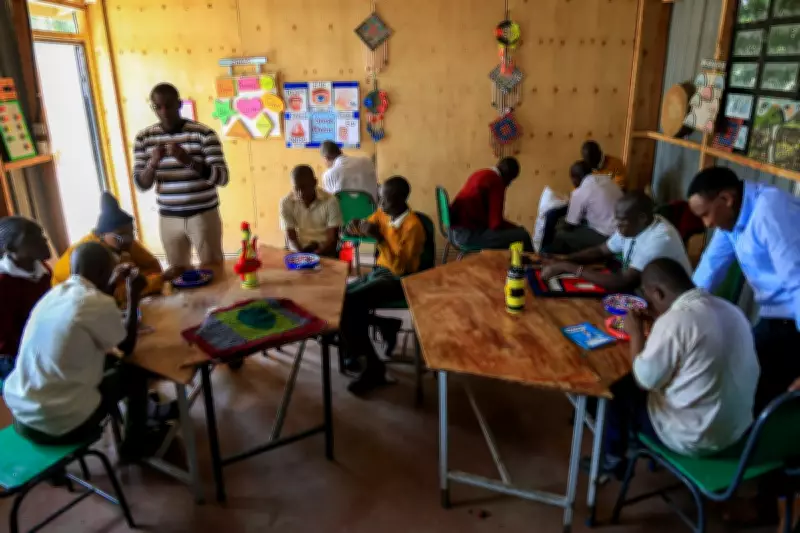
Unlike traditional Kenyan classrooms where teachers typically stand and lecture, Rare Gem's educators employ hands-on, multi-sensory lessons specifically designed for students with dyslexia. "You teach step by step until the learner gets what you're teaching, not a lecture method where the teacher stands in front," explained Dorothy Kioko, a teacher at the school. "You have to have additional knowledge on how to handle them with patience."
Dennis Omari, a special needs educator, describes this as a "multi-sensorial approach to reading" that addresses the core challenges dyslexic learners face. These innovative methods include visual techniques like coding word sounds with colors, auditory approaches such as teaching spelling patterns through song, and tactile strategies using objects to represent word construction.

Addressing Africa's Hidden Educational Crisis
Dyslexia affects approximately 10% of learners worldwide, creating significant barriers to literacy that are particularly acute in Kenya's booming youth population. Despite Kenya's remarkable success in increasing overall educational access—with primary school enrollment jumping from 5.9 million in 2002 to 10.2 million in 2023—students with learning disabilities have been largely left behind.
"If they are identified early and intervention given early, they improve their skills and learn to identify their talents—and they complete school," said Phyllis Munyi, founder of Rare Gem, who started the school after her own son faced unaddressed learning challenges from dyslexia.
From Discrimination to Empowerment
The school's impact is perhaps best illustrated through the experiences of its students. Jason Malak Atati, a current student, recalled that at his previous school, "teachers didn't understand me. This school is much better."
Geoffrey Karani, a former student who now serves as an art teacher at Rare Gem, remembers the discrimination he faced elsewhere: "In other, normal schools, there was a lot of discrimination, a lot of bullying." Today, Karani sees mentorship as a crucial part of his role: "I'm not only teaching, I'm showing kids that I've been on the same journey."
A Scalable Model for Inclusive Education
What makes Rare Gem particularly significant is its practical approach to curriculum adaptation. Rather than creating an entirely bespoke educational program, the school uses Kenya's core curriculum with strategic tweaks to meet the learning needs of students with dyslexia and other challenges. "The curriculum was not designed as a standalone... nor is it limited to dyslexia," Munyi emphasized.
This approach suggests that expanding educational access for children with learning disabilities doesn't require dramatic overhauls of national education systems. The school charges tuition fees of $180 per term—less than high-end private schools but significantly more than government schools—highlighting the financial barriers that still exist.
Overcoming Stigma and Building Awareness
Stigma and lack of awareness, particularly among parents, remain significant obstacles to early intervention. According to nonprofit organization So They Can, while 11.4% of Kenyan children have special needs, only about 250,000 such students are enrolled in educational institutions nationwide.
From its humble beginnings with fewer than 10 learners, Rare Gem now hosts approximately 210 students, primarily those with dyslexia but also accommodating children with other learning challenges including autism. The school's growth demonstrates both the pressing need for specialized education and the potential for such models to scale effectively.

As Africa continues to develop its educational infrastructure, institutions like Rare Gem Talent School offer valuable insights into how to create inclusive learning environments that recognize and nurture diverse learning styles, potentially transforming educational outcomes for millions of children across the continent.