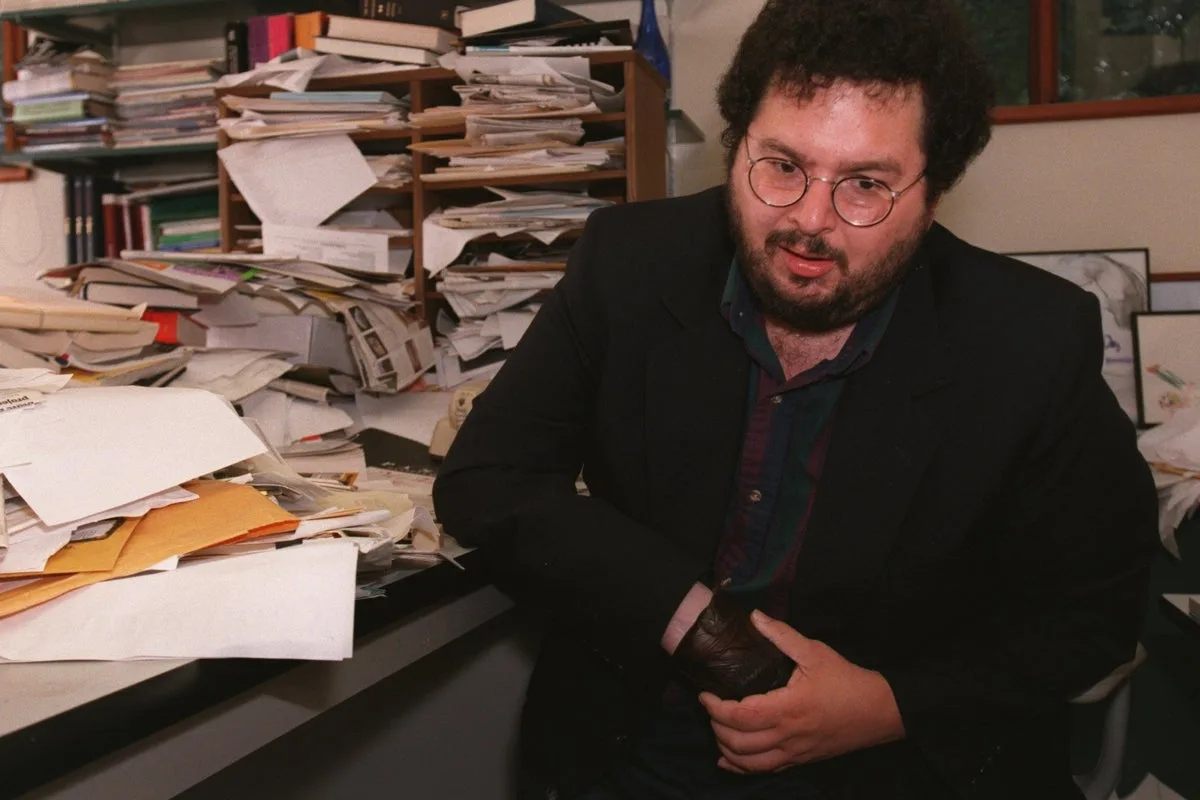
Yale Professor Suspended Over Epstein Email Recommending 'Good-Looking Blonde' Student
Yale University has taken decisive action against a prominent computer science professor following the release of documents revealing his correspondence with the late financier Jeffrey Epstein. Professor David Gelernter, aged 70, will not teach classes while the university conducts a thorough review of his conduct, specifically regarding an email in which he described a Yale undergraduate as a "v small good-looking blonde" while recommending her for a job with Epstein.
Revelations from Epstein Document Release
The troubling email exchange emerged from the trove of Epstein-related documents released by the U.S. Justice Department in late January. These documents show Gelernter and Epstein corresponding on various topics including business and art between 2011 and 2012. In October 2011—several years after Epstein had pleaded guilty to soliciting prostitution from an underage girl—Gelernter wrote to Epstein about having an "editoress" in mind for a position, specifically describing the Yale senior in physical terms that have raised serious concerns about professional boundaries.
Professor's Unapologetic Defense
According to reports from the Yale Daily News, Gelernter defended his message in an email last week to Jeffrey Brock, dean of Yale's School of Engineering & Applied Science. The professor argued that Epstein was "obsessed with girls"—"like every other unmarried billionaire in Manhattan; in fact, like every other heterosex male"—and claimed he was merely keeping "the potential boss's habits in mind."
"So long as I said nothing that dishonored her in any conceivable way, I'd have told him more or less what he wanted," Gelernter wrote to Brock, according to the student newspaper. "She was smart, charming & gorgeous. Ought I to have suppressed that info? Never!" He added emphatically: "I'm very glad I wrote the note."
University's Immediate Response
Yale University responded swiftly to the revelations, notifying students in Gelernter's computer science class that he would not be teaching on Tuesday. In an official statement, the university declared: "The university does not condone the action taken by the professor or his described manner of providing recommendations for his students. The professor's conduct is under review. Until the review is completed, the professor will not teach his class."
Yale's Office of Public Affairs & Communications confirmed the suspension and provided Brock's letter to students, though the university declined to release a copy of Gelernter's email to the dean. Gelernter himself has not responded to multiple attempts to contact him through emails and public phone listings.
Professor's Continued Defense and Background
In a message sent through Yale's course management system, Gelernter again defended his emails to Epstein and confirmed they were the reason for his teaching suspension. According to Hearst Connecticut Media Group, which first reported the message, Gelernter explained he was recommending the student for a job with Epstein's private bank and that the student had requested the recommendation. He claimed neither he nor the student knew at the time that Epstein was a convicted sex offender.
"The university's Smoking Gun is a personal, private email, dug out of the dump of Epstein files," Gelernter wrote, according to Hearst. "(If someone handed you a stack of other people's private correspondence, would you dive in and read them? Of course not. Gentlemen and ladies don't read each other's mail. (Courtesy 101.))"
Epstein's Criminal History and Gelernter's Academic Standing
Jeffrey Epstein served jail time in Florida during 2008 and 2009 after pleading guilty to state charges of soliciting prostitution from someone under 18. He died by suicide in a jail cell in 2019 while awaiting trial in New York on federal charges accusing him of sexually abusing dozens of girls.
Gelernter, who has been on the Yale faculty since 1982, is known for significant contributions to computer science, particularly in parallel computation and the development of the Linda programming system. His 1991 book "Mirror Worlds" is credited with foreshadowing the World Wide Web and inspiring the Java programming language. The professor gained public attention in 1993 when he suffered extensive injuries from a mail bomb sent by "Unabomber" Theodore Kaczynski, who conducted a 17-year bombing campaign that killed three people and injured 23 others.
Gelernter now joins a growing list of individuals in the United States and Europe—including prominent politicians—facing scrutiny due to connections revealed in the Epstein files. The university's review will determine whether further disciplinary action will be taken against the professor, whose unapologetic stance has sparked debate about professional ethics in academic recommendations.