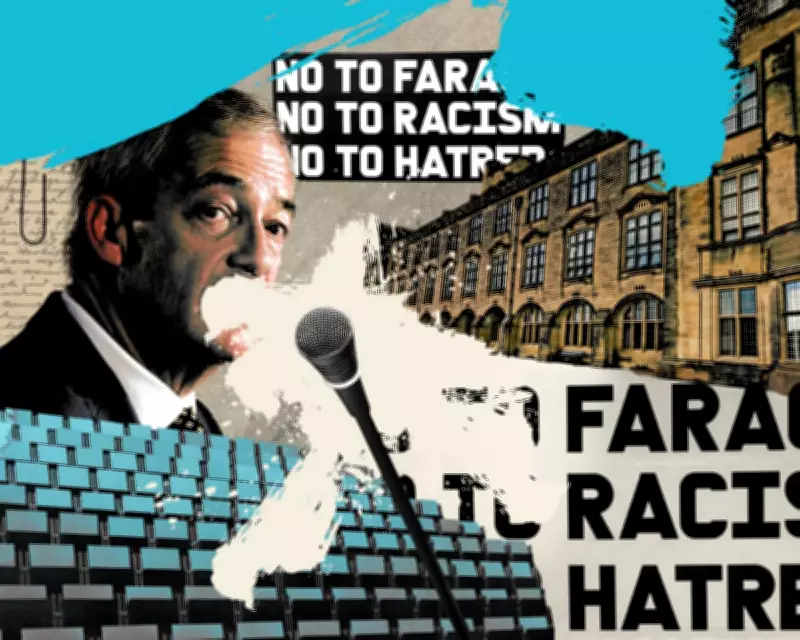
Reform UK's Authoritarian Response to University Snub
When Bangor University's debating society declined an invitation to host Reform UK figures Sarah Pochin and Jack Anderton, the political party's reaction revealed troubling authoritarian tendencies. The society cited "zero tolerance for any form of racism, transphobia or homophobia" as their reason for refusing the speakers, prompting Reform's head of policy Zia Yusuf to threaten the university's £30 million in taxpayer funding.
The Campus Tour That Failed to Ignite
Jack Anderton's "A New Dawn" campus tour, modeled after American right-wing activist Charlie Kirk's confrontational style, had been struggling to gain traction across British universities. In Cambridge, only about 30 students attended his event where he argued migrants were taking part-time jobs from students. Similar low turnouts occurred in Exeter and York, with the Cambridge livestream attracting just 177 views.
Bangor's refusal provided exactly what the tour had been lacking: controversy that could generate media attention. GB News and the Daily Telegraph quickly picked up the story, while Yusuf's threat to withdraw all state funding under a Reform government escalated the situation dramatically.

Financial Intimidation as Political Tool
The threat to bankrupt universities that don't accommodate political speakers represents a dangerous shift toward autocratic tactics. This approach mirrors developments in Donald Trump's America, where pro-free speech Republicans have shown remarkable intolerance toward dissent. The implications extend far beyond higher education to potentially affect the BBC, charities, cultural institutions, and schools that receive public funding.
Although a Reform spokesperson later claimed Yusuf's comments weren't official party policy, his position as head of policy and Reform's previous advocacy for defunding universities that restrict free speech suggest this wasn't an isolated remark. The party has previously advocated removing funding from institutions that don't protect free speech.
Universities as Targets for Populist Politics
Academia represents a natural target for populist right-wing movements because it traditionally serves as a wellspring of resistance and liberal thought. Students often lead protests, while graduates typically hold more socially liberal views than those who left school at 18. England's higher education system faces particular vulnerability due to its ongoing financial crisis.
Government restrictions on foreign students, who pay substantially higher fees than domestic students, have already pushed some smaller institutions toward financial collapse. A Reform government pursuing near-zero immigration could devastate universities by cutting student visas, potentially hitting post-1992 institutions in Reform's heartlands hardest.
The Fragile State of Academic Freedom
When Trump froze millions in research funding to universities that resisted his demands on admissions, hiring, and campus protests, only the wealthiest institutions could afford legal challenges. While UK law currently protects university autonomy in research and teaching, laws can always be repealed by a determined government.
Recent research from the Higher Education Policy Institute reveals complex student attitudes toward free speech. While 69% of students believe universities should never limit free speech (up from 60% in 2016), a third still support banning Reform speakers from campus, and 16% would ban Labour speakers. Nearly half of universities surveyed by Universities UK believe students now better understand free speech principles after Conservative government initiatives.
The Reality of Earning an Audience
Anderton's tour has successfully visited five universities, with an Edinburgh event scheduled despite a previous cancellation. Crucially, each successful visit resulted from invitations by right-wing student societies. In Bangor, by contrast, he requested a platform but found no takers.

While Charlie Kirk transformed political debate into compelling spectator sport that spawned imitators across the political spectrum, Anderton's experience demonstrates that British politicians must still earn their audiences rather than compel them. His value to Reform lies in his ability to capitalize on Gen-Z trends faster than mainstream parties, but generating genuine engagement proves more challenging than creating controversy.
The Bangor incident underscores that free speech doesn't guarantee a free audience. Whatever their message, politicians cannot force people to listen. In a healthy democracy, politicians must persuade rather than threaten, engage rather than intimidate. That fundamental principle of earned attention, not compelled hearing, represents the essence of true academic and political freedom.