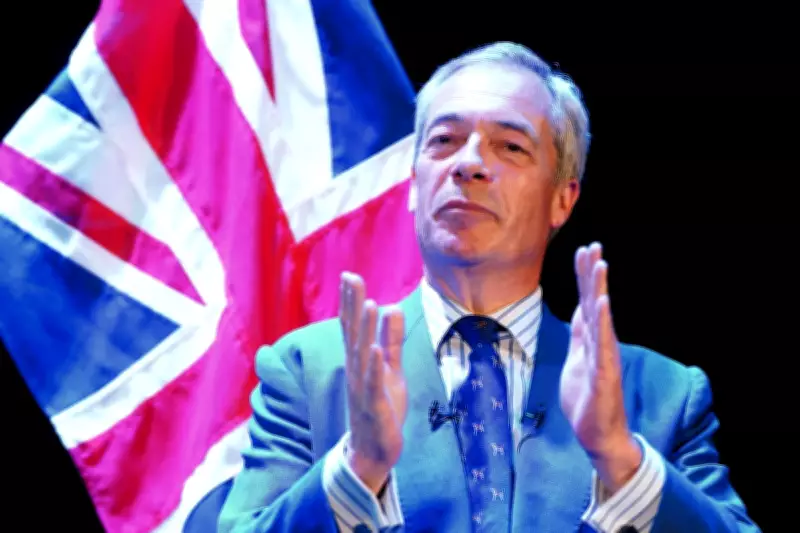
Racism Surges in UK Schools Amid Political Rhetoric: Is Farage a Factor?
In an era of heightened public discourse, racist incidents in British schools are escalating at an alarming rate. Chloe Combi engages with educators and students to uncover how racism is becoming normalised in playgrounds, where taunts such as "go home" and offensive monkey noises are now commonplace occurrences.
Disturbing Incidents and Institutional Responses
Before the holiday break last year, Archie*, a 17-year-old student, contacted the author in a state of shock. He awoke to find cotton wool scattered around his bed at his elite boarding school, an incident mirrored among other Black students in different houses. Despite his typically philosophical outlook, Archie felt the school prioritised covering up the event over investigating it thoroughly. When questioned about racial issues, he noted a significant shift in recent years, with increased anti-immigrant language and open support for figures like Nigel Farage and Donald Trump among younger students.
Political Climate and Its Impact on Youth
The normalization of racist rhetoric is evident in broader society. Recently, Donald Trump posted a racist video depicting Barack and Michelle Obama as monkeys, while Manchester United co-owner Jim Ratcliffe apologised for comments about immigrants "colonising" the UK, which Farage publicly supported. Students like Thea*, 16, from London, express fear over this regression, citing personal experiences of racist abuse that echo past decades.

Statistics reveal Reform UK's growing influence among younger demographics, with 10% of 18-24-year-olds and 19% of 25-49-year-olds aligning with the party. Will*, 16, who plans to vote for Reform, cites economic frustrations rather than overt racism, highlighting divisions in schools based on beliefs and racial lines.
Educational Settings as Microcosms of Society
Teachers report worsening conditions in schools. Jannelle*, a secondary school teacher in Essex, describes the last three years as among her worst, linking racial tensions to local migrant hotel protests. Iain*, a primary school head in Hertfordshire, notes a 220% increase in suspensions for racist abuse, with children echoing phrases like "get back on the boat" learned from families.
Farrah*, a teacher who moved from a mixed to an all-girls school, observes that boys are more exposed to extremist content, such as that from American talk-show host Nick Fuentes, whose shows promote the "Great Replacement" theory. Russell*, 19, a university student, embraces these ideas, reflecting a trend of growing openness about conservative, traditional values on campuses.
Broader Societal Trends and Polarisation
Schools serve as indicators of wider societal issues. Comments from figures like Robert Jenrick about integration in Birmingham have sparked controversy, while polling shows a rise in the belief that being "born British" is essential for national identity. Lawrence*, a teacher at a private school, laments the polarisation that stifles necessary debates on topics like immigration.
A coalition of organisations, including the Diana Award and the Centre for Mental Health, is urging the Department of Education to treat racism as a safeguarding issue, arguing it harms both individuals and school cohesion. Young people broadly agree that the UK is moving in the wrong direction, with 70% of Britons feeling the country is less tolerant and united than a decade ago.
The Rise of Extreme Politics and Its Consequences
Extreme political behaviours are on the rise, driven by a "do something" mentality among youth who favour decisive leaders like Farage or Trump. However, this trend exacerbates divisions, with children in playgrounds becoming targets of abuse based on skin colour. The article concludes that while political rhetoric may fuel racism, the ultimate victims are the students facing daily hostility in educational environments.
*Names have been changed to protect identities.