NYC Mayor Launches Free Childcare in Affluent Upper East Side Neighbourhood
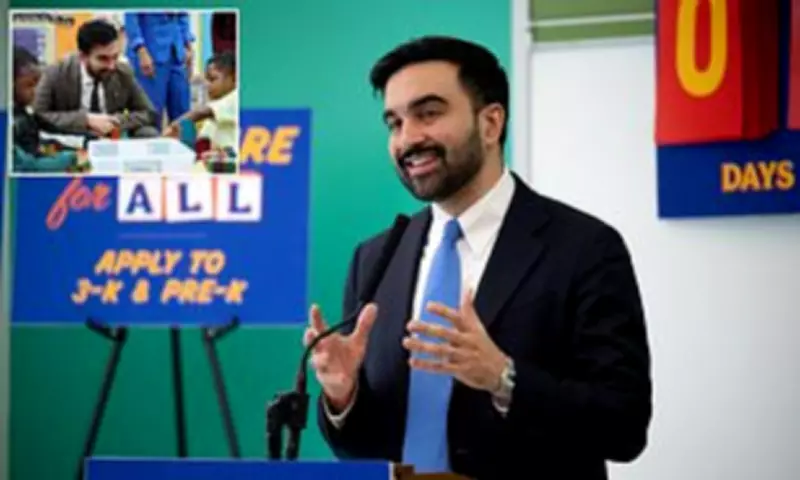
New York City's socialist mayor Zohran Mamdani has announced the opening of a free city-run childcare centre in Manhattan's wealthiest neighbourhood, the Upper East Side. The facility, located on East 65th Street, will accommodate 72 local four-year-olds and 60 three-year-olds, providing early childhood education at no cost to families.
Budget Concerns Spark Debate Over Taxpayer Funding
The announcement comes as New York City faces a substantial $5.4 billion deficit, forcing the Mamdani administration to make difficult decisions about which of the Big Apple's 8.4 million residents receive free services. This financial pressure has ignited controversy over whether taxpayer money should fund free childcare for wealthy families who could potentially afford private alternatives.
Reihan Salam, director of the conservative Manhattan Institute thinktank, criticised the move on social media, stating: 'Unlimited welfarism for the near-rich won't pencil out.' Critics argue that offering free services to affluent New Yorkers might divert resources from more vulnerable communities who need them most.

Educational Experts Question Priorities
Bruce Fuller, a retired professor of education at the University of California, Berkeley, told The New York Times: 'It's nice if we use tax dollars for wealthy Upper East Side families, but there's a tradeoff there.' Fuller emphasised that free childcare typically proves most effective when prioritised for low-income children first, with middle-class families accessing services through sliding-scale fees.
'The mayor is so laser-focused on the affordability pitch that he's yet to face these tradeoffs,' Fuller added, highlighting the tension between universal access and targeted support for disadvantaged communities.
Administration's Strategy and Universal Vision
The Mamdani administration appears to believe that extending universal childcare promises to wealthy New Yorkers will build broader support for proposed tax increases on residents earning over $1 million annually. These additional tax revenues would then help finance expanded childcare services, including more seats for children under three years old.
Dora Pekec, the mayor's spokeswoman, defended the policy, stating: 'City government's job isn't to decide who deserves dignity - it's to guarantee it for everyone.' She compared childcare to other essential public services like emergency response and waste collection, arguing it should be treated as a fundamental public good available to all residents regardless of income.
Wealthy Neighbourhood Demographics and Educational Landscape
The Upper East Side represents one of America's wealthiest neighbourhoods, with over 40 percent of households earning more than $200,000 annually. Its public schools rank among New York City's highest-performing institutions, supported by parent-teacher associations that raise over $1 million each year.
Research indicates preschool programs generally achieve better quality outcomes in wealthier areas, with children from low-poverty neighbourhoods comprising a larger share of preschool enrolment than those from high-poverty districts, according to 2022 Independent Budget Office data analysis.
Community Perspectives and Practical Needs
Some Upper East Side residents acknowledged their neighbourhood might not seem the most obvious location for universal preschool expansion. Valerie Mason, chair of Community Board 8, told The Times: 'Nobody in my neighbourhood was saying we should come ahead of really needy neighbourhoods. But in my book, universal means universal.'
Local advocates highlight practical childcare challenges even in affluent areas, where private options can cost up to $50,000 per child annually - more than double the citywide average of $23,000. City Council speaker Julie Menin, representing the Upper East Side, noted: 'I can't tell you the number of parents who personally contacted our office over the years who said they left New York City over the high cost of living and because childcare has not been an option.'

Mayor's Commitment and Expansion Plans
Mayor Mamdani unveiled the new 30,000-square-foot childcare centre, constructed within a converted parking garage, emphasising that Upper East Siders had long requested early childhood resources that previous administrations neglected. 'Today, we are righting that wrong,' the mayor declared during the announcement.
Schools Chancellor Kamar Samuels reinforced this commitment, stating: 'Every child deserves access to high-quality early childhood education, regardless of their zip code or circumstances. Early childhood education is the foundation for lifelong learning and success.'
The administration has simultaneously announced new childcare seats in several low-income neighbourhoods, including provisions for children as young as two. The Upper East Side facility will also serve residents across District 2, encompassing diverse areas from wealthy enclaves like Hudson Yards and the West Village to socioeconomically mixed communities including Roosevelt Island and parts of Chinatown.