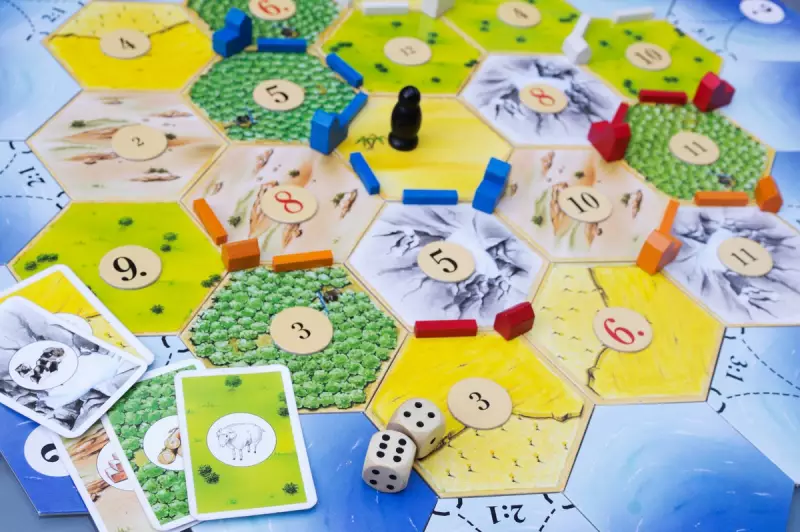
For generations, board games have been a beloved fixture of family nights and social gatherings, offering fun and occasional friendly disputes. Now, compelling new research highlights a powerful, lasting benefit for the brain derived from this classic pastime.
Significant Boost to Early Numeracy
A comprehensive analysis from the University of Oregon has found a striking correlation between board game play and improved mathematical ability in young children. The research, published in January 2026, examined 18 separate studies focusing on number board games and early maths skills in children from preschool up to second grade (Year 3).
The key finding was that there is a 76 per cent chance that playing such games will enhance numeracy skills, particularly when players move pieces along a straight, numbered path.

Lead author Gena Nelson emphasised the importance of the study, stating: "We selected this topic because early math skills are a powerful predictor of children’s later success in school, and number board games are easy to use and affordable." She confirmed that brief sessions with linear-number board games can meaningfully improve foundational skills like counting, number recognition, and understanding quantity.
Cognitive Benefits Extend to Adults
The advantages are not confined to childhood. Brain and cognition expert Natalie Mackenzie, who has two decades of experience, explains that board games offer substantial benefits for adult brains as well.
"These games activate and use a number of brain areas and systems at once," she told The Independent. The prefrontal cortex, responsible for executive functions like planning and decision-making, is engaged during play. Simultaneously, the hippocampus, central to memory and learning, works on recalling rules and patterns.
Mackenzie notes that games support attention spans, exercise working memory, and sharpen problem-solving abilities. The structured rules and goal-oriented play provide rewarding mental stimulation and valuable social connection. "Cells that fire together, wire together," she added, highlighting how repeated play strengthens neural connections long-term.
New Adaptable Games for Diverse Learners
Building on their meta-analysis, researchers Dr. Nelson and Dr. Marah Sutherland are now developing and testing original resources. They are creating a suite of number games, maths-themed storybooks, and conversational prompts designed for parents of three- to five-year-old children with disabilities.
The team aims to integrate the most effective features from existing number board games into their new design, incorporating different difficulty levels and optional maths challenges. Dr. Sutherland said: "Something that we learned... was the need for early math activities to be highly adaptable based on children's readiness." The response from parents using these adaptable activities at home has been overwhelmingly positive.
This research underscores that beyond simple entertainment, board games are a potent tool for cognitive development across ages, making game night a smart investment in brain health.