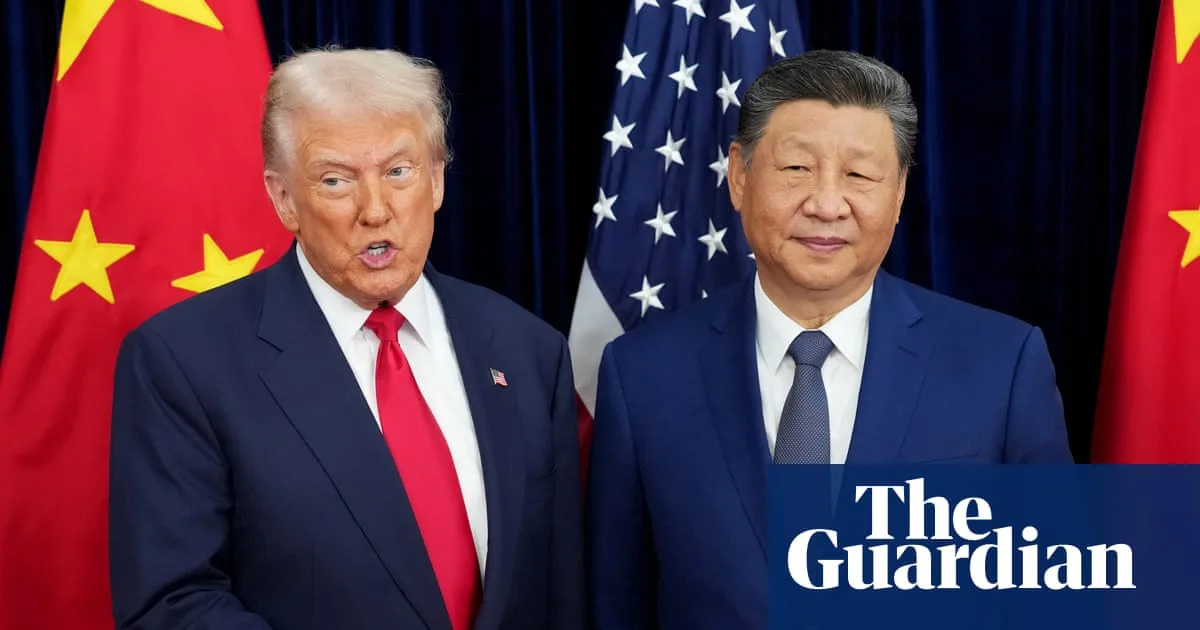
A new global survey conducted by the European Council on Foreign Relations (ECFR) suggests that Donald Trump's 'Make America Great Again' agenda is inadvertently enhancing China's global standing. The poll of nearly 26,000 respondents across 21 countries found that majorities in almost every territory expect China's influence to grow over the next decade, while perceptions of the United States as a reliable ally have declined.
In countries such as South Africa (83%), Brazil (72%), and Turkey (63%), overwhelming majorities anticipate China's rising influence. Even in the US (54%), the UK (50%), and EU states (53%), more than half of respondents share this view. Many also see China as a necessary partner or ally, particularly in South Africa (85%), Russia (86%), and Brazil (73%), with the EU's view remaining stable at 45%.
By contrast, the status of the US as an ally has fallen sharply across almost all countries. Only in India does a majority still see America as an ally. Among EU citizens, just 16% consider the US an ally, while 20% view it as a rival or enemy. The survey also found that expectations of Trump himself have dropped, with fewer people believing his re-election benefits US citizens, their own countries, or global peace.
Perceptions of Europe are also shifting. Russians now see the EU as more of an adversary (51%) than they did last year (41%), while fewer view the US as an enemy (37%, down from 48%). Ukrainians, meanwhile, are more likely to see Europe as an ally (39%) than the US (18%). In China, 61% see the US as a threat, but only 19% say the same of the EU, and a majority (59%) consider the EU a great power.
Despite these positive views abroad, Europeans themselves are pessimistic. A plurality (46%) do not believe the EU can deal on equal terms with the US or China, up from 42% in 2024. Many also worry about Russian aggression (40%) and the prospect of a major European war, reflecting deep uncertainty about the future.