WHO Issues Dire Warning as Middle East Conflict Intensifies
The World Health Organization has declared the Middle East is facing an "unprecedented" catastrophe that could "spin out of control" into chemical, nuclear or radiological warfare. This stark warning comes as the United States, Israel and Iran unleash their heaviest exchange of fire since the regional conflict erupted, with devastating consequences across multiple countries.
Unprecedented Multi-Country Escalation
Dr Hanan Balkhy, director of the UN health agency, expressed grave concerns about the rapidly deteriorating situation during an interview in Beirut. "This is a multi-country, multi-region escalation that is taking place," she told The Independent. "It can spin out of control and lead to even more damage through a chemical, nuclear or radiological war, which will have an unprecedented, long lasting impact on the environment and on people that will go beyond the countries involved."
The WHO is now actively preparing for chemical, radiological, nuclear and biological risks as the conflict shows no signs of abating. Dr Balkhy emphasized the urgent need for diplomatic solutions, stating: "We really need to call upon everyone to go back to diplomacy, negotiations and discussions, and to refrain from war and from attacks, whether on health care or on the environment."

Heavy Strikes Across the Region
The conflict has seen intense military action across multiple fronts:
- United States and Israel continued pounding Iranian targets, including oil facilities, with US Defense Secretary Pete Hegseth calling it "our most intense day of strikes"
- Iran retaliated with missiles and drones targeting Israel and Gulf states, including a US base in Kuwait
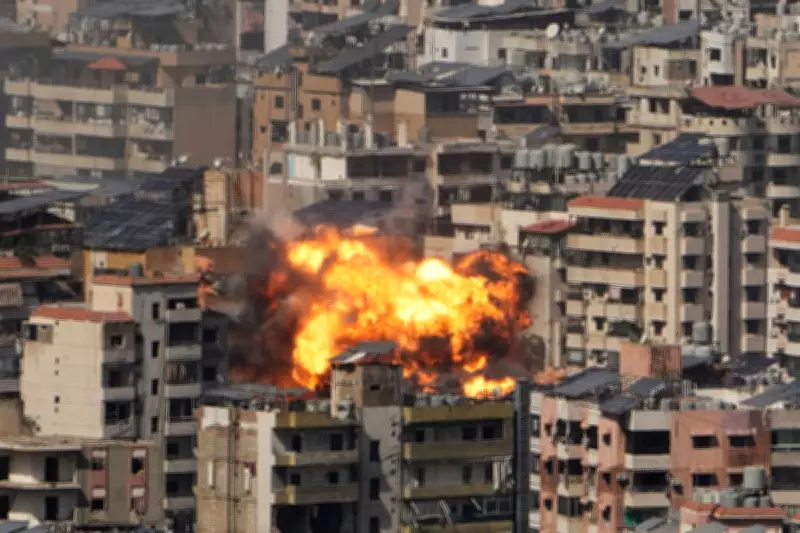
- Israel conducted overnight strikes on suburbs and central Beirut, with Lebanon reporting at least seven people killed in heavy strikes on the city's Corniche seaside promenade
Despite former President Donald Trump repeatedly signaling that the US bombing campaign against Iran might end soon, telling Axios there was "practically nothing left" to target, the military action has continued unabated.
Environmental and Humanitarian Catastrophe
The conflict has already created severe environmental damage and humanitarian crises:
- Black Rain Phenomenon: The WHO received multiple reports of oil-laden "black rain" in Iran after Tehran was choked in black smoke when an oil refinery was hit
- Mass Displacement: Lebanon's health minister reported more than 800,000 people displaced and over 600 killed, with five hospitals forced to close
- Global Economic Impact: Iran has choked shipments through the Strait of Hormuz, the world's most important oil artery, affecting global markets
- Health System Collapse: Lebanon's health system was already struggling from the aftermath of the 2024 war with Israel and an unprecedented financial collapse
No Safe Areas Remain
On the ground in Beirut, the situation continues to deteriorate. Israel launched fresh waves of strikes against southern suburbs and residential districts, with one resident, Faysal, describing being thrown from his bed when an Israeli strike blasted out the side of a neighboring building at dawn. "We saw everything on the ground here collapse," he said, standing on a street strewn with destroyed building chunks, glass and crushed cars. "Everyone was running, people carrying their children and running through the destroyed streets. It was a terrifying sight. There are no safe areas any more."
Veteran British-Palestinian plastic surgeon Ghassan Abu Sittah, currently treating gravely wounded children in Lebanon, expressed deep concern about the health system's capacity. "My fear is that the Israelis will do what they were doing in Gaza, and what they did in the previous war, which is start to take out one hospital after another to increase the pressure by reducing the capacity of the health system."

The situation is compounded by the fact that regional countries that previously provided assistance are now unable to do so as they face their own conflicts. "In the previous war the Qatari Red Crescent Society stepped in. The Kuwaiti Red Crescent Society stepped in," Abu Sittah noted. "Now everybody is involved in their own problems, and we are at a point where you rarely hear of anything coming in."
Lebanon's health minister Rakan Nassereddine made an urgent appeal from a school in central Beirut that had been converted into a displacement camp: "We need specific medication, like surgical kits and first aid kits, from the international community. The main call is to stop attacking civilians and to stop attacking the medical services, medical sector and ambulances."
As the conflict enters a dangerous new phase, the WHO's warning about potential nuclear, chemical or radiological escalation adds an alarming dimension to an already catastrophic situation that shows no signs of resolution.