War Severely Disrupts Life on Iraq-Iran Border, Cutting Off Families and Trade
Warfare and heightened Iranian security measures along the Kurdish border between Iran and Iraq are profoundly disrupting daily existence, severing familial bonds and bringing cross-border commerce to a standstill. These stark realities emerge from extensive interviews conducted by The Associated Press with residents, exiles, and activists in the region.
A Desperate Wait for Connection
Yaser Fattahi, a trained nurse who fled to Iraq in December fearing arrest for aiding wounded anti-government protesters in Iran, now lives in a state of anxious suspension in Sulaymaniyah. His only lifeline to his mother inside Iran is a precarious arrangement involving a cousin who must travel near the border to capture a fleeting cellular signal.
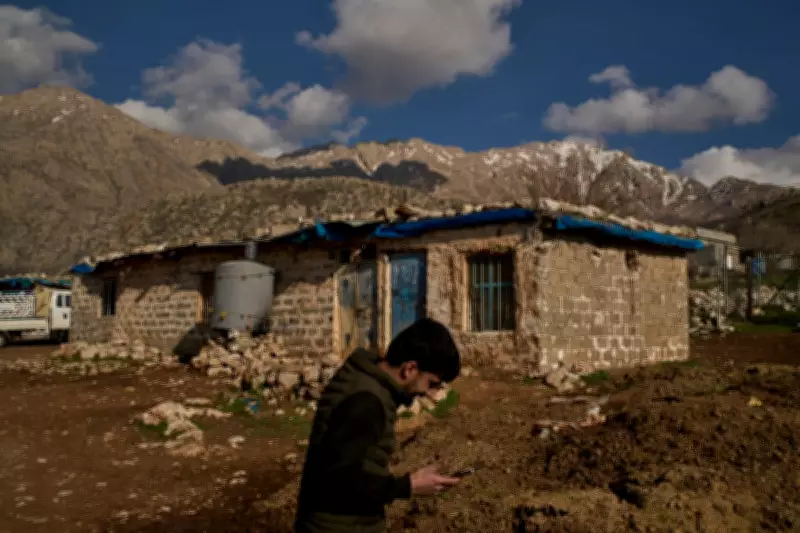
"The calls last a minute or two," Fattahi explained. "She tells me to take care of myself, and that they are okay." The calls, conducted via WhatsApp using two phones with different SIM cards, are often muffled by static. Four days had passed without contact at the time of reporting, leaving Fattahi constantly glancing at his phone, worried for his mother's safety amid U.S. and Israeli bombardment.

A Historic Crossroads Now Closed
The border between Iran and northern Iraq's Kurdish region has historically been porous, sustained by deep family ties, vibrant trade, and smuggling networks. This fluidity has been utterly choked off. Iranian forces have massively increased their presence to prevent incursions by Iranian Kurdish militant groups, disrupting telecommunications and concentrating troops along the frontier.
Nyan Fayaq, a 25-year-old law student in Iraq's Byara district, embodies this separation. Preparing a Ramadan iftar meal surrounded by family, her thoughts were with relatives in Saqqez, Iran, whom she has been unable to contact for over a month. "They have electricity, gas and water, but everything has become very expensive because of America," she said, highlighting the war's economic toll.
The Smuggler's Trade Grinds to a Halt
The conflict has paralyzed the work of kolbars, the porters who traditionally carried goods like cigarettes, electronics, and clothing across the mountainous border, operating in a legal gray zone. For 25-year-old Bilal Osman, this trade is a family legacy. "Our life is hard, but this is how we make money to feed our families," he stated.
Now, he waits in vain near Halabja for word from Iranian counterparts. "The kolbars simply can't cross. We are always ready, but the borders are tightly controlled," Osman reported. He described a dramatic security buildup: "Iranian forces have brought cameras for each spot, increased soldiers from five to thirty at each location, and now even place soldiers between checkpoints." A kolbar on the Iranian side confirmed business had virtually stopped.
Heightened Danger and Communication Blackout
Activists report that approaching the border to pick up an Iraqi cell signal now carries the risk of being shot, with Iranian forces suspecting individuals of being spies. Shiwa Hassanpour, an activist with the Hengaw Organization, said obtaining information from inside Iran has become exceedingly difficult.
- Locals rely on expensive Virtual Private Networks (VPNs) to report events, with news trickling out slowly.
- Hassanpour herself has been unable to contact her family for over 20 days.
- Using a VPN costs about $25, while communicating with relatives abroad can cost up to $50—sums most cannot afford.
- People also pay steep prices for smuggled Starlink connections.
She detailed further repression: Iranian authorities have targeted Iraqi cell towers near the border and order security forces to shoot anyone approaching. "Authorities have also arrested anyone caught with a VPN app on their phone, accusing them of spying for Israel or the U.S," Hassanpour added.
The Islamic Revolutionary Guard has deployed large numbers of troops across Iran's Kurdish cities, a response that intensified after Iranian Kurdish opposition groups announced a coalition. This has led to a sharp rise in mobile checkpoints, vehicle searches, and violence against civilians.

A Fragile Thread of Contact
For those like Yaser Fattahi, the connection to loved ones remains fragile, conducted through wind and static. "It's hard to hear her," he said of his mother's voice on those brief, arranged calls. "But it's enough." For now, that minimal contact is the sole thread tethering divided families across a border transformed by war into a fortified, silent frontier.