US President Donald Trump has reimposed a naval blockade on Iran and renewed his threat to take control of the Strait of Hormuz, demanding a 20 per cent tariff on all cargoes shipped through the waterway. In a post on his Truth Social platform, Trump declared the strait open and suggested the US should be known as the “Guardian of the Strait of Hormuz”.
The US Navy-led Joint Maritime Information Centre said the blockade, covering all of Iran’s ports, oil terminals and coastal areas, would be enforced from 20.00 GMT on 14 July for all vessel traffic regardless of flag. Any vessel suspected of entering or departing the blockaded area without authorisation is subject to interception, diversion and capture, and non-compliant vessels may be compelled with force. Neutral transit through the strait to or from non-Iranian destinations will not be impeded.
Iran’s Islamic Revolutionary Guard Corps (IRGC) accused the US of jeopardising global oil and gas supplies by interfering in the strait. IRGC spokesperson Hossein Mohebi said Washington had “seriously endangered the security of the world’s oil and gas supply” and that Tehran would “continue to exercise sovereignty over and management of the strait of Hormuz”.
The International Maritime Organization (IMO) said it stood firmly against charging fees for passage through straits used for international navigation, noting there was no legal basis for mandatory tolls simply to transit through a strait. This stance was echoed by US Secretary of State Marco Rubio, who said last month that no country is allowed to charge tolls or fees on an international waterway.
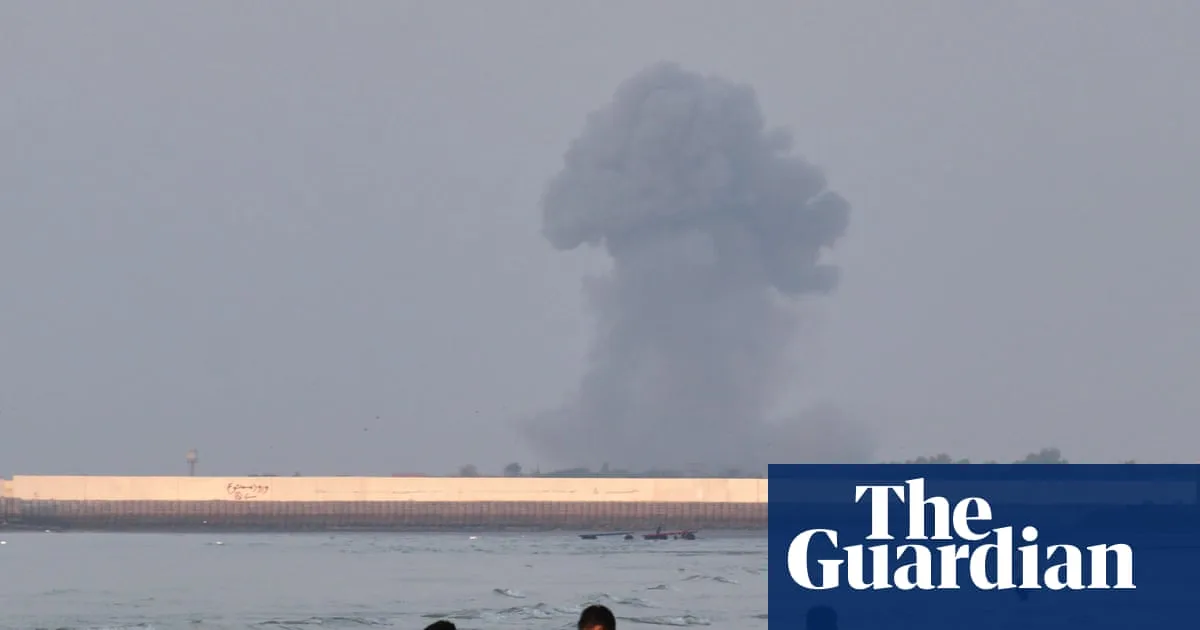
Heavy exchanges of drone and missile attacks continued between the US and Iran. The US military said it had struck Iranian air defence systems, coastal radar sites, missile and drone capabilities and small boats using aircraft, naval vessels and drones. The IRGC said it had targeted US military facilities in Bahrain and Kuwait, destroyed radar systems in Oman, and hit fuel tanks and ammunition depots at Prince Hassan airbase in Jordan.
Trump said the US would probably take over the strait and should be reimbursed for controlling the waterway. “We’re going to keep the strait, and we’ll probably run it … We’ll become the guardian of the strait. Maybe we’ll call it the guardian angel of the strait. And we should be reimbursed for that,” he said in a phone interview on Fox News.