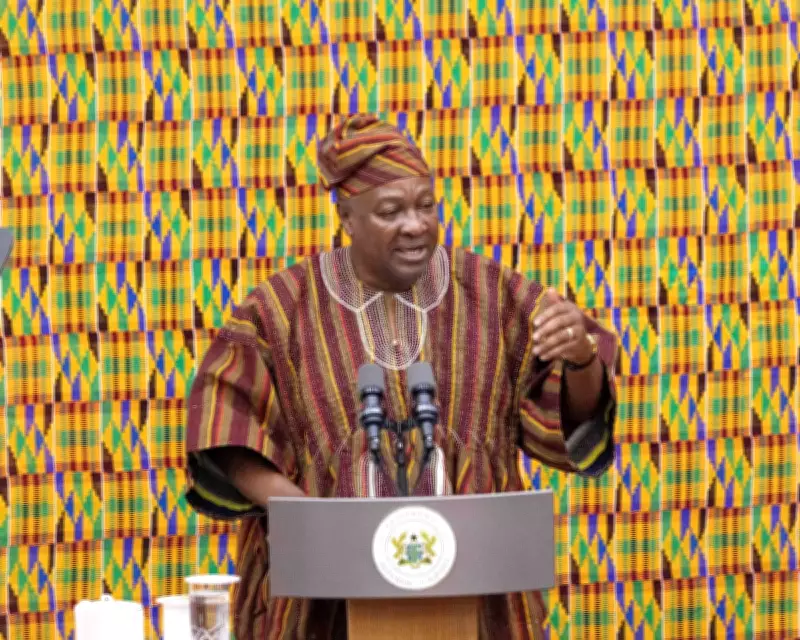
In a historic move at the United Nations General Assembly, a resolution declaring the transatlantic chattel slave trade as "the gravest crime against humanity" has been passed with a decisive majority. This landmark decision, championed by Ghana's President John Mahama, is energising the African Union's long-standing fight for reparations, despite significant opposition from Western nations.
A Global Divide on Historical Atrocities
The vote, held at the end of last month in Accra, saw 123 states in favour, including most of Africa, Asia, the Caribbean, Latin America, and the Arab world. Russia notably supported the resolution, calling it a "long overdue recognition." However, the abstentions from Australia, Canada, the United Kingdom, and European Union states, along with outright opposition from Argentina, Israel, and the United States, reveal a world still deeply divided over acknowledging the gravity of enslaving more than 15 million people over 400 years.
Western Resistance and Legal Arguments
Human rights advocates argue that the collective objection to this non-binding resolution stems from fears it could open the door to reparation payments. Before the vote, EU representatives expressed concerns about retroactive application of international law, while the Vatican's observer criticised the resolution as a "partial narrative," ironically omitting papal edits that facilitated slavery. The US ambassador, Dan Negrea, emphasised that Washington "does not recognise a legal right to reparations for historical wrongs that were not illegal under international law at the time they occurred."

African Union's Decade of Reparations
With the African Union declaring 2026-36 its "decade of reparations" and naming President Mahama as its reparations champion, the focus now shifts to creative strategies for achieving justice. An African Union committee of experts is already developing a framework for reparatory justice, engaging descendants of enslaved people worldwide. Mahama, poised to become union chair in 2027, remains confident, stating in his UN speech, "We travel this long road, each step guided by a desire to be better and to do better."
What Lies Ahead for Global Accountability
UN Secretary General António Guterres has called for "far bolder action" in the wake of the vote. The resolution, born from months of consultations across the continent and diaspora, symbolises a growing momentum. As the African Union leverages this victory to push for reparations, the international community watches closely, with many believing that, despite stonewalling from the West, this is an idea whose time has come.