Berehove's Hungarian Community Grapples with Orbán's Political Shadow
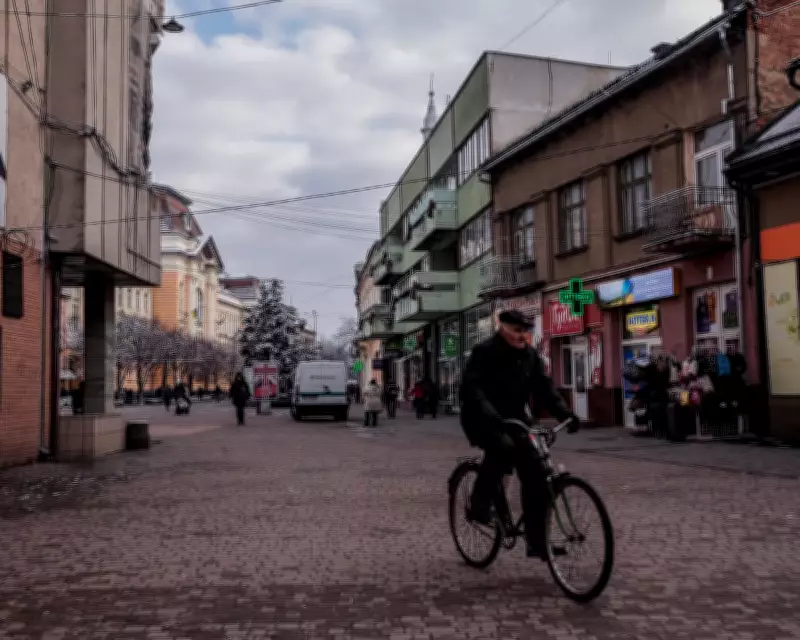
In the small Ukrainian town of Berehove, nestled in the Zakarpattia region with a population of approximately 30,000, the sounds of Hungarian and Ukrainian languages intertwine daily. This linguistic blend reflects a deep-seated cultural connection, as ethnic Hungarians form the majority here, shaping everything from education to media consumption in ways that tie closely to neighbouring Hungary.
Election Tensions and Local Loyalties
As Hungary's parliamentary election unfolds, much of Ukraine watches with hope for a change in leadership, particularly given Viktor Orbán's Kremlin-friendly stance and opposition to Kyiv. However, in Berehove, the sentiment is more nuanced. Some residents, speaking anonymously, express support for Orbán's Fidesz party, citing his advocacy for ethnic Hungarians abroad.
"Orbán is not perfect, but he cares about Hungarians everywhere," said one local, László, outside the Hungarian consulate, where he collected documents to vote. He praised Orbán for providing passports, financial aid, and defending language rights, despite Ukraine's technical prohibition on dual citizenship. Budapest has established voting stations at consulates in the region, facilitating this cross-border political engagement.

Criticism and Claims of Discrimination
Orbán has long positioned himself as a protector of ethnic Hungarians in Zakarpattia, alleging widespread discrimination and forced assimilation in Ukraine. Critics, including analysts like András Rácz of the German Council on Foreign Relations, argue that Orbán exaggerates these grievances to justify hostility towards Kyiv and its Western allies. "Orbán's rhetoric made the situation seem much worse, and with that, he turned domestic Hungarians against Ukraine," Rácz noted.
Tensions have escalated, with Hungary blocking a €90 billion EU financial package for Ukraine and hindering Kyiv's EU accession bid. In a leaked call, Hungary's foreign minister, Péter Szijjártó, told Russia's Sergei Lavrov that persecution of Hungarians in Ukraine influenced Budapest's stance.
Everyday Realities and Community Harmony
Despite the political friction, many Berehove residents describe a harmonious coexistence. "We live alongside Ukrainians like brothers and sisters," said Erika, an employee at the local Hungarian theatre, where clocks show both Hungarian and Ukrainian time. She emphasized no discrimination in daily life and noted her allegiance to Ukrainian President Volodymyr Zelenskyy.
Natália, attending a Catholic church with Hungarian-language services, echoed this sentiment: "Hungarians and Ukrainians live together and pray together. We celebrate both Orthodox and Catholic Easter, and we like it this way." She expressed frustration over Ukraine becoming a political tool in Hungarian discourse.
Historical Context and Economic Factors
Berehove, also known as Beregszász, has a history of shifting borders, having been part of Hungary, Czechoslovakia, and Soviet Ukraine before joining independent Ukraine in 1991. This legacy has left the town relatively underdeveloped. Orbán's government has invested in local infrastructure, such as schools and community centres, which some credit for his support.
Boris Vashkeba, a lawyer and Hungarian community leader in Vynohradiv, explained: "People see tangible results from him, and that's why they tell me he has their vote." However, Vashkeba expressed disappointment over Orbán's pro-Moscow turn.
Media Influence and Wartime Perceptions
Timbur Tomba, head of the Hungarian community in Kyiv, blamed Orbán's popularity on Hungarian state media, claiming it distorts reality. "Most Hungarians in Ukraine still watch state propaganda. These people are just being fed lies from the television," he said.
Orbán has exploited wartime sentiments, accusing Ukraine of disproportionately sending ethnic Hungarians to fight. Yet, Tomba and Vashkeba refuted this, noting thousands have served in Ukraine's armed forces, with about a hundred casualties. Berehove's memorial to fallen soldiers underscores this contribution.

Looking Ahead: Hopes for Reconciliation
In a symbolic move, Zelenskyy recently visited Zakarpattia, meeting Hungarian community leaders to promote unity. Vashkeba hopes the election could reset Hungary-Ukraine relations: "We need a restart in relations; it can't go on like this. When Ukraine and Hungary, two nations that have both suffered at the hands of Russia, are set against each other, it is Moscow that ultimately benefits."
As the election results loom, Berehove remains a microcosm of broader geopolitical struggles, where local identities and international politics collide, shaping the future of cross-border ties in Eastern Europe.