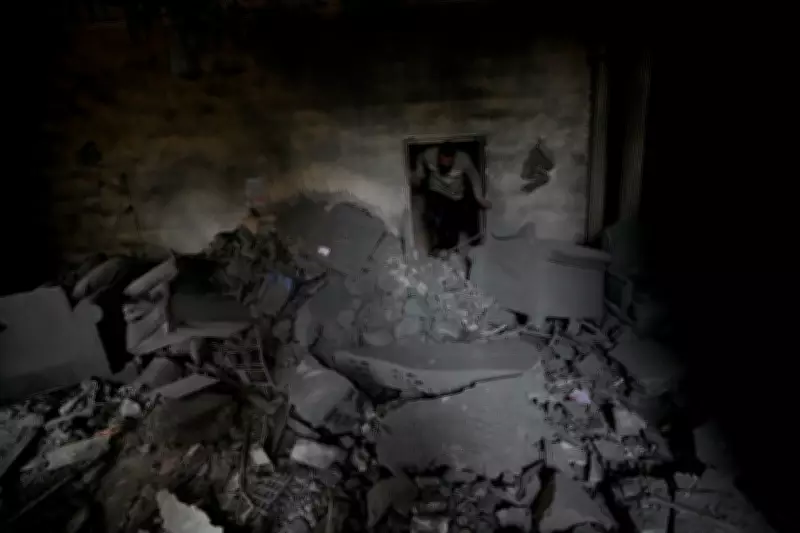
The historic coastal city of Tyre in southern Lebanon, once celebrated for its ancient Roman ruins and pristine white sandy beaches, has transformed into a desolate ghost town following Israel's intensified offensive. Abandoned dogs wander through vacant streets, past apartment buildings shattered by recent Israeli airstrikes, as the city largely emptied last week when Israel escalated attacks against the Iran-backed militant group Hezbollah.
Evacuation Orders and Infrastructure Destruction
Israel issued sweeping evacuation orders for all areas south of Lebanon's Litani River, including Tyre. In recent days, Israeli airstrikes have destroyed most bridges over the Litani, severing wide swaths of the country from the rest of Lebanon and isolating cities like Tyre. This renewed conflict between Israel and Hezbollah, set against the backdrop of the wider regional war involving Israel, the United States, and Iran, has forced over one million people in Lebanon to flee their homes.
Displacement and Defiance
Many displaced individuals have crowded into relatives' homes further north or set up makeshift camps in sprawling tents along Beirut's rain-slick streets. However, several thousand residents linger in Tyre, refusing to be expelled from their land. Fishermen, who say they cannot afford to abandon their livelihoods, cast lines into the Mediterranean, complaining that strict curfews and a scarcity of customers mean their daily catch yields only a pittance.

"To avoid being displaced and suffering on the streets, we prefer to stay in our homes," said 52-year-old fisherman Joseph Najm, highlighting the grim choice faced by many.
Seeking Safety and Defiance
Families from nearby towns have crammed into Tyre's Christian district, hoping Israel will spare it, as Hezbollah's main support base is in the Shiite community, and Christians in southern Lebanon have largely sought to remain outside the conflict. Yet, across the rest of Tyre, particularly in areas where profound faith merges with Hezbollah's militant politics, the roar of Israeli airstrikes has instilled a palpable sense of foreboding, fear, and defiance.
Residents say their determination to stay put has only intensified as Israeli leaders hint at a long-term occupation, modeled on the country's devastating conquest of much of Gaza after Hamas's October 7, 2023, attack.
"This is our land — where would we go? We won't abandon our homes, even when they're destroyed," said Jihan Salama, 55, surveying the rubble of her family's apartment, destroyed by an Israeli airstrike on Tuesday. Her neighbor, Nader al-Ashqar, 60, described waking to thunderous airstrikes and fleeing with his family, lamenting, "Everything is gone. But God told me to stay here."
Conflict Origins and Casualties
The latest war between Israel and Hezbollah began on March 2, when the Lebanese militant group launched a barrage of rockets across the border, two days after attacks by Israel and the U.S. on Iran sparked the ongoing Middle East conflict. Since exchanges of fire started, at least three Israeli soldiers have died in ground combat, and two Israeli civilians have been killed by rockets, including a man in Nahariya on Thursday. In Lebanon, at least 1,116 people have been killed, including 42 medical workers, such as paramedic Ahmed Ibrahim Deeb, who died in an airstrike on his motorcycle while heading to treat patients near Tyre.
Accusations and Aftermath
Salman Harb, Hezbollah's chief spokesperson in southern Lebanon, conducted a press tour of Tyre's ruins on Thursday, pointing out numerous ambulances damaged by Israeli fire. Israel has accused Hezbollah of using ambulances as cover for militant activities, though without providing evidence. As residents like Salama comb through the flattened wasteland of cinder blocks, they contemplate their futures, with some vowing to set up tents and remain on their land, defiant in the face of destruction.