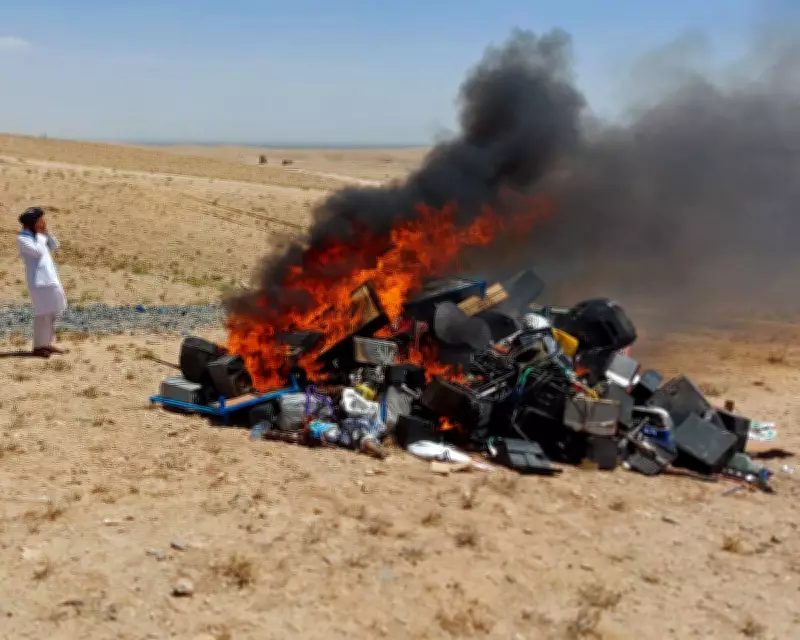
Taliban's Cultural Purge: Musical Instruments Burned in Herat as Morality Police Enforce Silence
The Taliban morality police have ignited a pyre of musical instruments on the outskirts of Herat, Afghanistan, in July 2023, as part of a systematic campaign to eradicate what they deem 'moral corruption'. This act of cultural destruction, reported on Afghan National Television, involves burning hundreds of items, including traditional tablas and harmoniums, as well as modern keyboards and amplifiers, targeting the very foundations of Afghanistan's unique classical music heritage.
An Assault on Afghan Culture and History
Since their return to power in 2021, the Taliban have waged a relentless war on music, outlawing its performance and even listening, under the guise of preventing moral decay. This silencing of musical culture represents a humanitarian nadir, as musicians in the country face discrimination, humiliation, torture, imprisonment, and even death, with women particularly vulnerable to sexual violence. The burning of instruments is not merely an attack on art but an attempt to create a sharia-compliant, music-free nation with no historical precedent, erasing the sounds of Afghan history and imperiling traditions passed down through generations.
The bravest musicians, such as the women of the Zohra orchestra from the Afghanistan National Institute of Music, now based in Portugal, continue to fight for 'musical rights' despite the threats. Their work blends western orchestral and traditional instruments like the Afghan rubab, a lute-like treasure of world music, sustaining these traditions only in exile due to the Taliban's oppressive regime.

Global Response and the Power of Listening
In the face of this cultural emergency, the global community can help by keeping Afghan music alive through active listening. Pieces like Dawn by Meena Karimi, composed for International Women's Day 2021 and dedicated to Afghan women's struggles, or performances by rubab virtuosos such as Homayoun Sakhi and Ustad Rahim Khushnawaz, offer cries of hope and resistance. This radical act of listening renews a practice that is illegal within Afghanistan, highlighting the urgency of what is arguably the planet's most pressing musical crisis.
Meanwhile, the legacy of sonic pioneers like Eliane Radigue, who died at 94, reminds us of the profound power of listening. Her work, from synthesiser-based compositions to acoustic pieces in the Occam Ocean series, explores the infinite possibilities of sound, teaching us to engage deeply with our sonic environments. In a time when music is suppressed, such reflections underscore its essential role in human expression and connection.
Broader Context of Taliban Atrocities
This cultural assault occurs alongside other horrors of Taliban rule, including new laws that effectively legalise domestic abuse, leaving every woman in Afghanistan under threat of state-sanctioned violence. The world's silence in the face of these atrocities compounds the tragedy, making the destruction of cultural life seem a smaller catastrophe, yet it is equivalently devastating. The Taliban's fundamentalist zealotry targets not just individuals but the very soul of a nation, stripping away its artistic and historical identity.
As we witness this erasure, it is crucial to amplify Afghan voices and support initiatives that preserve their musical heritage. The burning of instruments in Herat is a stark reminder of the Taliban's broader mission to impose a rigid, joyless order, but through global solidarity and continued engagement with Afghan music, we can help ensure that these traditions endure beyond the flames.