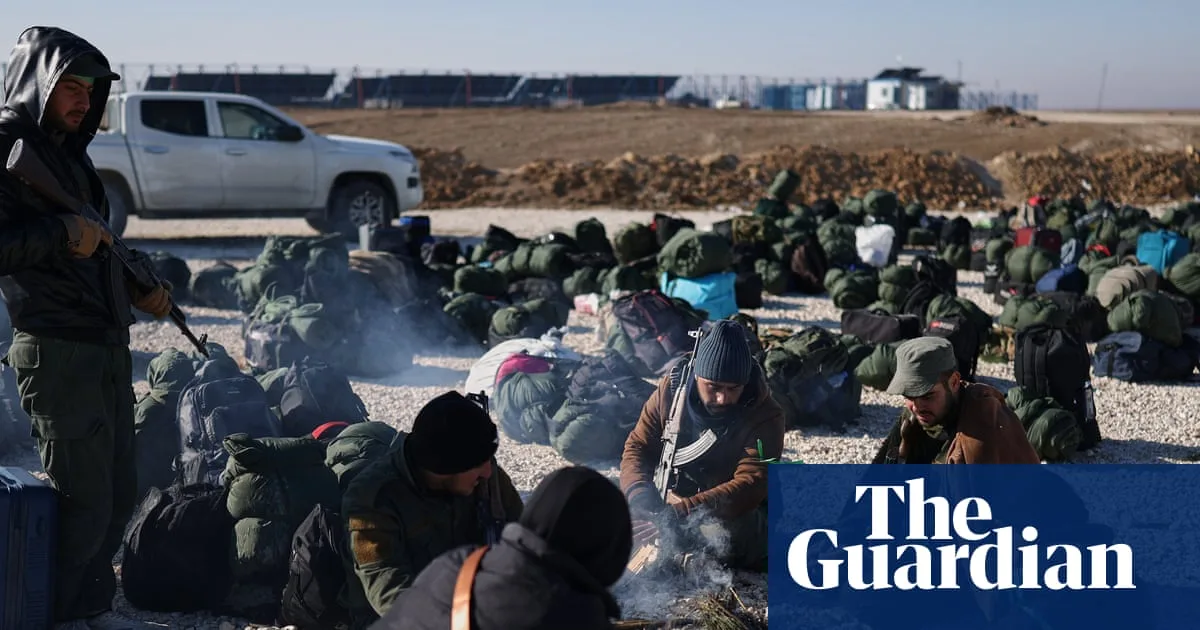
Syrian government forces have reportedly entered the notorious al-Hawl detention camp in north-east Syria, following the withdrawal of Kurdish forces who previously managed the facility. This significant development occurred on Wednesday, as soldiers opened the camp's metal gate and entered while others guarded the entrance, according to an Agence France-Presse journalist present at the scene.
Strategic Withdrawal and Security Transition
Kurdish forces announced on Tuesday that they had been compelled to withdraw from al-Hawl camp to defend cities in Syria's north, which were threatened by the advancing Syrian army. This move preceded a ceasefire announcement, marking a pivotal shift in the region's security dynamics. The camp, located in a desert region of al-Hakah province, holds approximately 24,000 people, including 15,000 Syrians and about 6,300 foreign women and children from 42 different nationalities.
Historical Context of al-Hawl Camp
Al-Hawl is the largest camp established by Kurdish forces for suspected jihadists and their relatives. Kurdish groups spearheaded the fight against Islamic State with support from an international coalition over the past decade, before IS was largely defeated in Syria in 2019. The camp has been a focal point for managing the aftermath of the conflict, housing thousands of individuals linked to the extremist group.
The Syrian defence ministry stated on Tuesday that it was ready to take responsibility for al-Hawl camp and all IS prisoners. This announcement coincided with remarks from the US envoy to Syria, Tom Barrack, who suggested that the original purpose of Kurdish forces as the primary anti-IS force had largely expired, indicating a shift in international perspectives on the region's security framework.
Broader Military Deployment and Agreements
The Syrian army deployed across vast parts of northern and north-east Syria on Monday, following the withdrawal of Kurdish forces from these areas. An agreement between the two sides stipulates that the Syrian state becomes responsible for IS prisoners and that the Kurdish administration be integrated into Syrian state institutions, potentially reshaping governance in the region.
Syria's interior ministry has declared that it is taking necessary measures to maintain the security of al-Hawl camp, ensuring stability amid this transition. This move is part of a larger strategy to consolidate control over detention facilities holding former jihadists, including many westerners, in seven prisons, while tens of thousands of their family members reside in two camps established by Kurdish forces in northern Syria: al-Hawl and Al-Roj.
Implications for Regional Security
The entry of Syrian forces into al-Hawl camp raises questions about the future management of detainees and the broader security landscape in north-east Syria. With Kurdish forces redirecting their efforts to defend urban centres, the Syrian government's increased involvement could lead to changes in how IS-affiliated individuals are handled, impacting international relations and humanitarian concerns in the Middle East and North Africa region.