The Blue Origins of St. Patrick's Day
St. Patrick's Day today evokes vibrant green celebrations, but historically, the colour blue dominated this solemn feast. For centuries, blue was the traditional hue associated with Ireland and its patron saint, a fact that often surprises modern observers accustomed to green shamrocks and attire.
St. Patrick's Early Legacy and Blue Tradition
St. Patrick, born Maewyn Succat in fifth-century Wales, was captured by Irish pirates and enslaved before returning as a missionary to convert pagans to Christianity. By the 10th century, he was revered in Ireland, and in the early 1600s, Irish priest Luke Wadding established March 17 as a Catholic feast day. Celebrations were quiet, involving Mass and home dinners, with blue as the commemorative colour. In 1785, the Dublin Evening Post described patriots marching "in true blue" during Dublin ceremonies.
Constance Markievicz, a leader in the 1916 Easter Rebellion, affirmed blue as "the old colour of Ireland," using it for the Irish Citizen Army's flag. Politician W.T. Cosgrave echoed this in 1934, stating blue aligned with tradition and St. Patrick's memory.
The Rise of Green and Irish Nationalism
The shift from blue to green began with the 1798 United Irish rebellion against British rule. Led by Protestants and Catholics, they adopted "wearing of the green" to symbolise Irish nationalism and resistance to imperialism. Although the rebellion failed, green became linked to the growing nationalist movement.
Throughout the 19th century, as Ireland became more sectarian, nationalism intertwined with Catholicism, and green gained prominence due to its association with the United Irish. This was reinforced by mass Irish immigration to America after the 1840s Great Hunger, where Catholic immigrants faced discrimination and used St. Patrick's Day to assert pride and call for Irish independence.
American Influence and Global Green Dominance
In America, St. Patrick's Day evolved from early banquets in 1737 Boston to annual parades in New York by the 1760s. Irish nationalist groups like the Fenians and Clan na Gael participated in these events, wearing green to show solidarity with past movements. This diaspora influence helped cement green as the global symbol of Ireland and St. Patrick's Day.
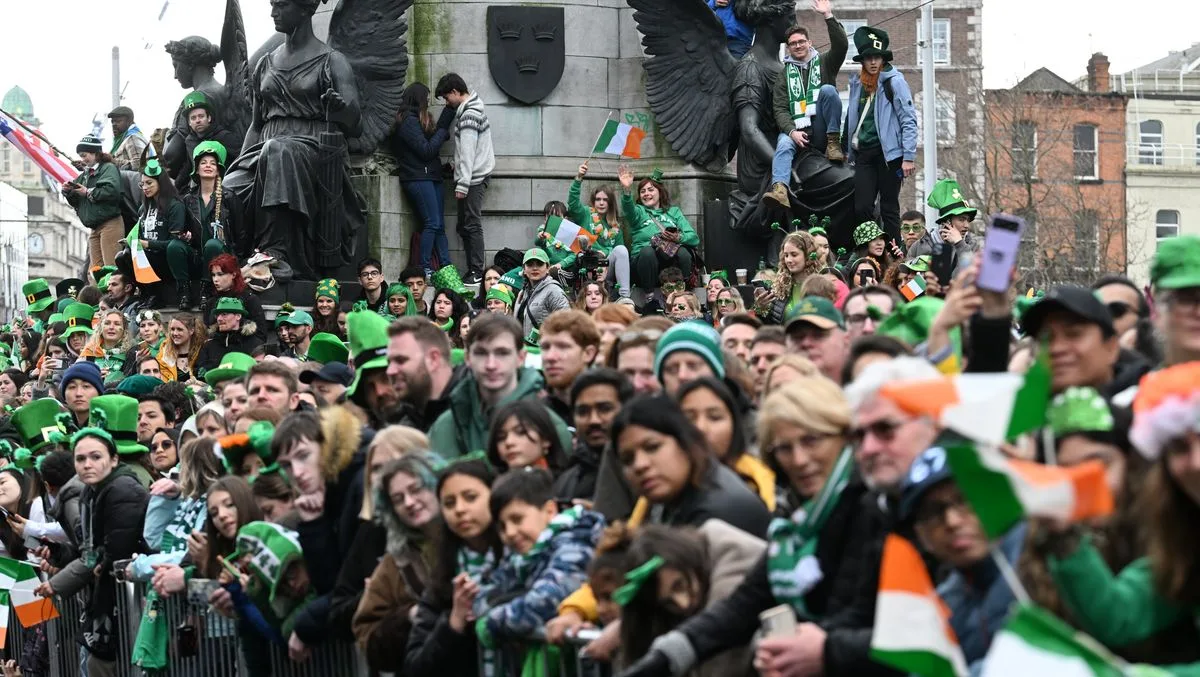
Meanwhile, in Ireland, the day remained solemn until the 20th century; pubs were closed on March 17 until 1961, and the first Dublin parade wasn't held until 1931. The tricolor flag, adopted in 1922 with green for Catholics, orange for Protestants, and white for peace, further solidified green's association with Irish identity.
Blue's Enduring Symbolic Role
Despite green's dominance, blue retains symbolic importance in Ireland. Since 1945, the president's flag features a gold harp on a dark blue background, known as St. Patrick's blue, preserving a historical link to the feast's origins. This duality highlights how colours reflect Ireland's complex history of tradition, rebellion, and cultural evolution.