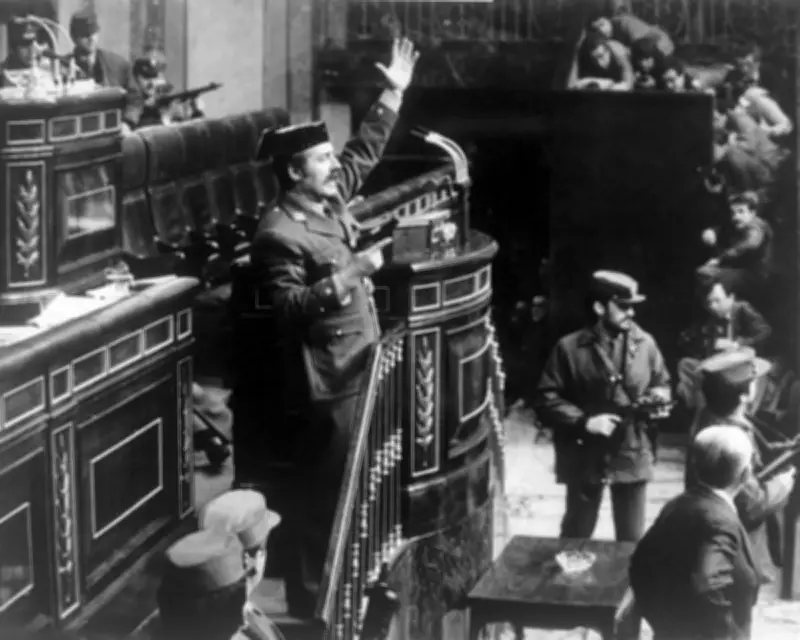
Antonio Tejero, the former Spanish Civil Guard officer who infamously led the failed coup attempt in 1981, has died at the age of 91. His passing coincides with the declassification of government documents related to the dramatic events of February 23, 1981, when Tejero stormed the Spanish Congress of Deputies with armed guards in an effort to overthrow the nascent democracy.
Historical Context of the 1981 Coup Attempt
The coup, often referred to as 23-F, was a pivotal moment in Spain's transition to democracy following the death of dictator Francisco Franco. Tejero and his co-conspirators aimed to halt the democratic process and restore authoritarian rule, but the attempt ultimately failed due to lack of broader military support and King Juan Carlos I's televised address defending the constitution.
Impact of Document Declassification
On the very day of Tejero's death, Spanish authorities declassified a trove of documents pertaining to the 1981 coup. These papers, which include intelligence reports, military communications, and government memos, are expected to shed new light on the extent of the conspiracy and the responses of key institutions. Historians and political analysts anticipate that the release will fuel ongoing debates about Spain's democratic consolidation and the lingering shadows of its authoritarian past.

The timing of Tejero's death alongside the document declassification has sparked intense public and media interest, with many viewing it as a symbolic closure to a turbulent chapter in Spanish history. While Tejero was convicted and served time for his role in the coup, he remained a controversial figure, with some far-right groups still venerating him as a patriot.
This development underscores the enduring significance of the 1981 coup in Spain's collective memory and its implications for contemporary political discourse.