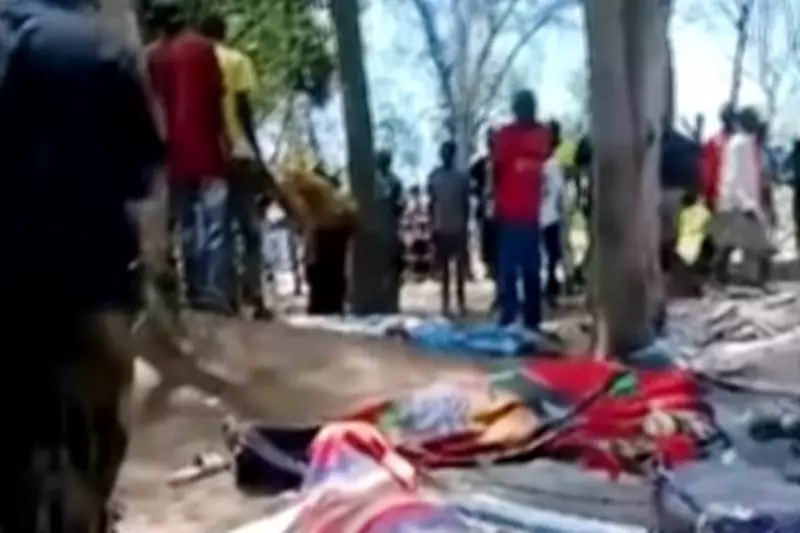
In a brutal attack that has shocked the nation, gunmen have killed more than 70 people in South Sudan following a dispute at a gold mining site near the capital, Juba. The massacre occurred over the weekend at the Jebel Iraq mining area in Central Equatoria State, with police confirming the devastating death toll on Monday.
A Scene of Carnage Captured Online
A disturbing video showing dozens of bodies lying on open ground has been circulating online, providing grim evidence of the scale of the violence. According to local journalists, many additional victims are believed to have fled into nearby bushes during the attack, with the full extent of casualties potentially even higher than currently confirmed.
Police Confirm Attack Details
Police spokesperson Kwacijwok Dominic Amondoc stated that unknown gunmen attacked the Jebel Iraq gold mine, resulting in more than 70 deaths and numerous injuries. "All I know is that unknown gunmen attacked Jebel Iraq at a gold mine. There are more than 70 dead and many more injured," Amondoc said, adding that he would share more information once additional details become available.

Opposition Groups Blame Government Forces
The Sudan People's Liberation Movement/Army – In Opposition (SPLM/A-IO) has strongly condemned the attack and directly blamed government forces, known as the SSPDF, for the massacre. In an official statement released on Monday, the opposition group asserted that Jebel Iraq lies within a zone exclusively controlled by SSPDF forces.
"Jebel Iraq lies within a zone that is entirely under the exclusive control of the SSPDF. Consequently, full responsibility for the massacre rests with the SSPDF forces that control the area," the opposition statement declared. When approached for comment, an army spokesperson told the Associated Press that he could not comment on the incident.
Long History of Mining Violence
The Jebel Iraq gold mining site has a documented history of violent clashes involving illegal miners, reflecting broader issues within South Sudan's largely unregulated gold mining sector. State governments typically operate their mining sectors independently of national authorities, creating governance gaps that have frequently led to conflict over valuable resources.
Human Rights Organizations Respond
The Nile Institute for the Study of Human Rights and Transitional Justice, a local civil rights group, has condemned what it describes as a "horrific act" representing "a grave violation of the fundamental right to life." The organization emphasized the vulnerability of civilians in areas affected by weak security presence and unregulated resource exploitation.
In their statement, the group called for "effective governance and oversight in resource-rich areas" to prevent similar tragedies in the future.
Activist Calls for Government Intervention
Prominent human rights activist Edmund Yakani has urged authorities to address the dangerous trend of communities competing for natural resources, which frequently escalates into violence. "My appeal is to the government to intervene and stop this culture of illegal gold mining across the country," Yakani stated, highlighting the urgent need for regulatory reform and security improvements in mining regions.
The massacre represents one of the deadliest incidents in recent South Sudanese history related to resource conflicts, raising serious questions about security, governance, and the regulation of natural resource extraction in the young nation.