South Sudan Conflict Escalates, Creating Dire Humanitarian Crisis for Displaced Civilians
As fighting spirals in South Sudan, a devastating humanitarian crisis looms for displaced survivors, with renewed violence threatening a fragile peace established eight years ago. The conflict has reignited in Jonglei state, forcing hundreds of thousands from their homes and overwhelming already strained aid resources.
Civilian Suffering Amid Renewed Hostilities
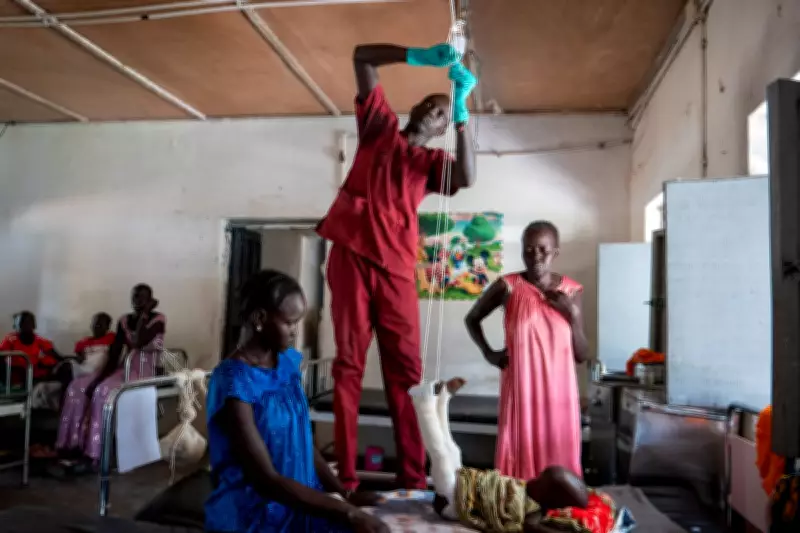
Kool Gatyen Pajock, an 18-month-old infant, lies in a South Sudan hospital with bandages wrapped around his legs by a physiotherapist, under the watchful eye of his grandmother, Nyayual Chuol. According to Chuol, government forces shot the baby in the leg and killed his parents during an attack. She carried him 130 kilometers to a hospital in Akobo, in South Sudan's northeastern region near Ethiopia, from their village to the west.
They are among approximately 280,000 people displaced over the past two months by renewed conflict between the government army, known as the South Sudan People's Defense Forces, and the Sudan People's Liberation Movement In Opposition. "I have nothing in my hand now to take care of this baby," Chuol said. "I'm worried about my four children who ran in different directions when the attack took place. I don't know where they are now."

Fragile Peace Agreement Collapses
The fighting further jeopardizes a fragile peace reached in 2018 after a five-year civil war. Opposition leader Riek Machar was appointed first vice president alongside President Salva Kiir under a 2020 power-sharing agreement. However, Kiir placed Machar under house arrest following new outbreaks of violence in March. Machar was subsequently charged with treason in September, along with seven opposition members linked to an attack on government forces.
The conflict escalated significantly in December when opposition forces seized government outposts in Jonglei. Since January, the government has conducted a counteroffensive involving aerial bombardments and ground assaults, despite official commitments to the peace agreement.
Civilians Bear the Brutal Consequences
Nyankhiay Gatluak Jock, 28, escaped from her village of Walgak after a government attack in early February. "They bombed us from the gunship helicopter, and after that the soldiers came with their cars and started shooting," said Jock, who is among 42,000 displaced people sheltering in Akobo under United Nations Mission in South Sudan protection.
"We want to ask the president to tell his army to differentiate between the combatants and the civilians," Jock stated while breastfeeding two children in a church alongside other displaced women and youth.
After government forces bombed a hospital operated by Doctors Without Borders on February 3, Nyaphan Nyang Lual fled to Akobo with her husband, daughter, and one-month-old granddaughter. During the journey, her husband was shot and her daughter was abducted by armed youths. Lual reached Akobo with her granddaughter, Bhan Tut Mut, but found no food assistance and worried for the infant who developed diarrhea. "We took her to the clinic but there is no medicine there, and I cannot afford to buy from the pharmacy," Lual explained.
Humanitarian Services Severely Disrupted
Humanitarian services have not been spared from the violence. The United Nations Office for the Coordination of Humanitarian Affairs reported that 13 health facilities in Jonglei were "looted or partially destroyed." Additionally, reports of widespread sexual violence have emerged, compounding the crisis.
Funding cuts and government-imposed restrictions on humanitarian organizations have resulted in critical shortages of resources and supplies. Aid workers expressed frustration over their inability to provide necessary assistance levels. "We have nothing ... no feeding, no medication," said Susan Tab, a reproductive health officer in Akobo with Nile Hope, a South Sudanese organization. "The only thing we can provide to help these displaced people is psychosocial support."

International Response and Neglect
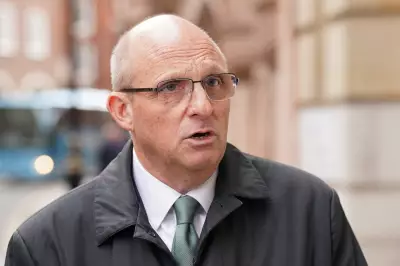
United Nations humanitarian chief Tom Fletcher visited Akobo on February 21 during a tour of South Sudan's conflict-impacted areas. Against the backdrop of nearly three years of civil war in Sudan to the north and conflicts in nearby Horn of Africa countries, Fletcher declared South Sudan has become "one of the most neglected crises in the world right now."
"I want to make this crisis more visible to the public. And I want them to demand change. To demand funding. To demand political engagement to end this war," Fletcher emphasized. He was greeted in Akobo by thousands of displaced women and children who remained uncertain about their safety and future. Some held posters with handwritten messages, including one with the blunt statement, "They killed everyone."
"Help is coming," Fletcher assured the survivors, though the scale of need continues to outpace available resources as the conflict shows no signs of abating.