Somalia's Humanitarian Emergency Intensifies as World Diverts Attention
At the onset of 2026, Somalia teetered on the brink of an extreme hunger and water crisis, a dire situation exacerbated by significant reductions in international aid. A series of relentless climate shocks have pushed the nation into a precarious state, with millions now grappling with severe shortages. The ongoing conflicts in Iran and Lebanon pose a substantial risk, threatening to undermine any fragile progress and leaving Somalia vulnerable to future catastrophes.
Daily Struggles in Displacement Camps
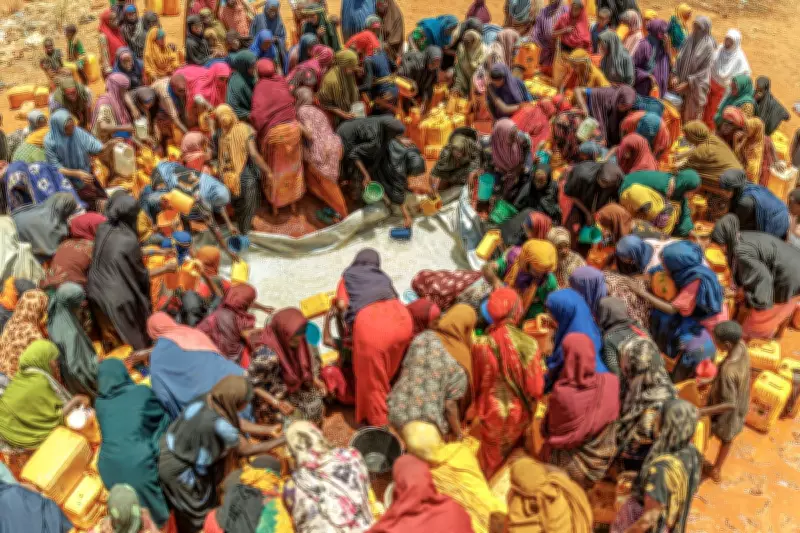
In Madina Camp, located near Baidoa in Somalia's South West State, residents endure daily hardships. Adan Adan Abdi, a sub-camp leader overseeing approximately 50 individuals, highlights an "urgent need" for both food and water. Thousands have migrated from rural areas to such camps following a catastrophic drought that has devastated the region. "The situation across these camps is the same: The hardship is severe, and people are extremely hungry and thirsty," Abdi explains. Families often go without food to cook, relying on collecting firewood from the bush for meager income. A recent water delivery from the Juba Foundation, a local NGO, sparked fierce competition among residents, underscoring the scarcity of assistance.
Climate-Driven Disaster and Rising Hunger
This year, Somalia has been swept by a climate-driven humanitarian disaster, triggered by two consecutive failed rainy seasons. An estimated 6.5 million people now face "crisis" levels of hunger or worse, marking an increase of 1.7 million since January. While Somalia has historically been water-scarce, the current pattern of droughts occurring every two to three years is unprecedented. Abdiaki Ainte, director of climate and food security in the Somali Prime Minister's Office, notes, "Drought has become a persistent pattern in Somalia over the past 30 years, eroding the resilience of communities and institutions. In the past, drought was concentrated in certain regions. Today, it is spreading across much larger parts of the country, including areas that were not traditionally drought-prone."

Personal Tragedies Amidst the Crisis
For 22-year-old Nurta Sidow Qasim, the crisis has resulted in profound personal loss. Her infant daughter, Khadija, succumbed to malnutrition despite hospital admission and treatment. "The staff gave me tablets, syrup and rehydration salts," Nurta recounts. "But before I could start the treatment, she passed away." She now fears for her surviving twin, Mohamed, who remains weak and is fed black tea and powdered milk due to food shortages. "The children are in very difficult conditions," she says. "We are in urgent need of assistance. We need everything."
Aid Cuts and International Neglect
Funding cuts from international partners have severely worsened the crisis, with only 29 percent of humanitarian funding requirements met last year. The UK government has excluded Somalia from its list of countries with "protected" aid, leading to further reductions. Similarly, the US provided a mere $3 million in humanitarian aid during the first three months of 2026, compared to $462 million in the same period in 2025. Ali Mohamed Omar, Somalia's State Minister for Foreign Affairs, expresses concern: "Aid cuts are deeply concerning at a time when vulnerability remains high. The Somali government is strengthening national disaster response systems and expanding social protection. But the scale of climate shocks means continued international partnership remains essential."

Middle East Conflicts Exacerbating Challenges
Although famine is currently avoided due to forecasted late Spring rains and coordinated efforts, experts warn that wars in Lebanon and Iran are turbocharging Somalia's aid challenges. Practical impacts include supply chain delays from the closure of the Strait of Hormuz and Oman's Salalah Port, disrupting aid flows to a country that imports 70 percent of its food. While these routes have reopened, recovery will take months, with fuel costs doubling and staple cereal prices rising by up to 40 percent. Delays in nutritional, medical, and sanitation consignments, along with a 30 percent dependence on Gulf fertiliser imports, add to the strain. Mercy Corps CEO Tjada D'Oyen McKenna cautions, "Conflicts like this don't stay contained. When fuel and fertiliser markets are disrupted, the ripple effects move quickly through food systems — and the people who feel it first are families in fragile countries who were already struggling to put food on the table." In Baidoa, rice prices have increased from $0.75/kg to $1/kg.
Global Priorities Shifting Away from Somalia
With multiple global crises, Somalia risks slipping further down funding priorities. Sources indicate that Arab states now prioritize crises sequentially, with Iran and Lebanon first, followed by Palestine and Sudan, leaving Somalia lower on the list. Minister Omar argues, "Global crises inevitably compete for attention, but Somalia's strategic importance remains clear. Stability in Somalia contributes directly to maritime security, counter-terrorism efforts, and regional economic connectivity." Ironically, while humanitarian needs are overlooked, Somalia has gained attention in other areas, such as Israel's recognition of Somaliland, criticized by many as compromising regional stability.
Development Progress at Risk
Long-term efforts to build Somalia's self-sustainability are in jeopardy as donors turn away. Achievements include financial reforms reducing external debt from 64 percent of GDP in 2018 to less than 6 percent by 2023, anti-corruption legislation, and a growing middle class in Mogadishu. Minister Omar states, "Over the past decade we have rebuilt institutions, strengthened security cooperation, implemented economic reforms, and achieved historic debt relief. Somalia is at an important stage in its recovery: Sustained engagement now will help consolidate these gains and allow Somalia to move from crisis management toward long-term development." However, Olga Petryniak, senior director for resilience at Mercy Corps East Africa, warns that without a humanitarian safety net, progress could be undone, pushing Somalia back on its development plan.