Rojava's Feminist Revolution Under Threat as Syrian Forces Advance
Rojava's Feminist Revolution Faces Grave Danger

The Precarious Future of Rojava's Feminist Experiment

In the Kurdish-dominated north-east of Syria, known as Rojava, a remarkable social and political experiment that has championed gender equality for over a decade now stands on the brink of collapse. The autonomous territory, governed by the Democratic Autonomous Administration of North and East Syria (Daanes), faces a severe and escalating threat from the forces of the Syrian government under Ahmed al-Sharaa. This development not only endangers the lives and freedoms of the region's inhabitants but also represents a potential loss for progressive movements worldwide that have drawn inspiration from Rojava's unique model.

A Decade of Radical Governance and Gender Equality

For more than ten years, Rojava has operated independently from Bashar al-Assad's regime, establishing a system built on principles of secularism, decentralisation, and profound commitment to women's rights. Every institution created by the administration mandated power-sharing between men and women, embedding gender equality into the very fabric of its governance. Visitors to the region, including the author Natasha Walter who spent time there a year ago, witnessed a vibrant culture of feminist activism. Women from Kurdish, Arab, and Assyrian communities gathered at conferences, rallying crowds with the powerful chant "Jin! Jiyan! Azadi!" (Woman! Life! Freedom!), expressing optimism that this century would belong to women's liberation.

The Gathering Storm: Threats from Damascus and Beyond

Today, that optimism has turned to despair. Messages from women within Rojava speak of betrayal by Western powers and fear of impending slaughter. The Syrian government, led by al-Sharaa—a figure with alleged past links to al-Qaida and a desire for centralised control—is aggressively working to bring the entire country under its dominion. This represents the absolute antithesis of Rojava's secular, decentralised ideals. As government forces advance, the territory controlled by the autonomous administration has shrunk dramatically. Areas where Kurds are not in the majority have already been lost, and even core Kurdish regions are under direct threat. The Kurds rightly fear a repeat of the massacres of minorities, such as Alawites and Druze, witnessed elsewhere in Syria.

Military Resistance and Fading Hope

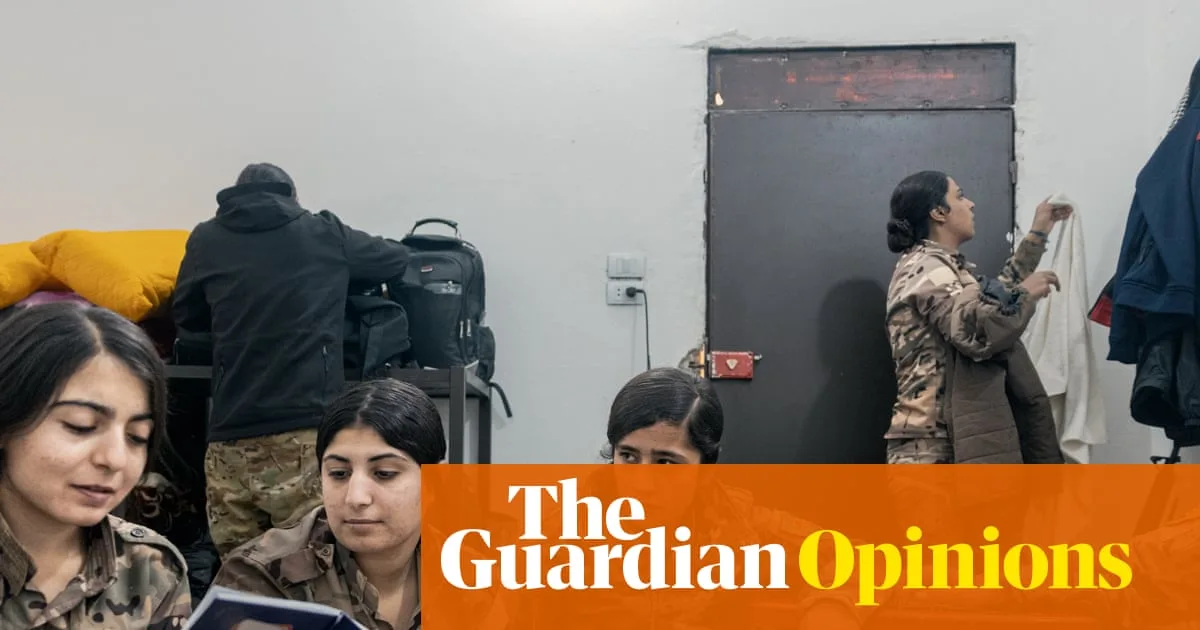
The region's military forces, including the Kurdish-led Syrian Democratic Forces (SDF) and the all-female Women's Protection Units (YPJ), have a proven record of resilience, having played a crucial role in the defeat of Islamic State. Despite a currently patchy ceasefire and ongoing negotiations aimed at preserving Kurdish and minority rights, the future appears increasingly bleak. The determination of Rojava's women remains steadfast, but the practical realities of the conflict are daunting. The administration's spokespeople continue to hope for a diplomatic settlement, yet there is no avoiding the grim outlook for the region's autonomy and its groundbreaking social policies.

Global Inspiration and Internal Complexities

Rojava's significance extends far beyond its geographical borders. For years, anarchists, socialists, and feminists worldwide have been galvanised by its attempt to create a bottom-up, decentralised political system. The administration's efforts in areas such as restorative justice and localised decision-making—from food distribution in displacement camps to legal reforms—demonstrated a transformative approach to governance. Its commitment to gender equality provided a powerful counterweight to patriarchal norms, with Kurdish women drawing on both ancient Mesopotamian traditions and modern feminist thought to forge a unique, practical feminism.

However, it is crucial to acknowledge that Rojava was not without its flaws. Reports of human rights abuses and repression of dissent persisted, and many Arab residents felt that power remained predominantly in Kurdish hands. The gap between radical rhetoric and on-the-ground reality was sometimes evident, reminding observers not to romanticise the experiment. Yet, where its ideals succeeded, they created tangible change, empowering women across all sectors—from soldiers and judges to factory workers and agricultural committee members.

A Call for Solidarity in the Face of Authoritarianism

The forces now threatening Rojava—embodied by regimes in Syria, Turkey, Russia, and the political climate in the United States—are characterised by a blatant disregard for both democracy and women's rights. As authoritarianism gains ground globally, the question of how to build effective resistance becomes ever more urgent. The people of north-east Syria have spent years grappling with this challenge, offering valuable lessons in grassroots organisation and feminist praxis. It now falls to those who admire their struggle to demonstrate solidarity. This can take multiple forms: pressuring governments to support women and minorities in the region, engaging with the principles of direct democracy that defined Rojava at its best, and fostering a more collective and confident feminism within our own societies. The potential loss of Rojava is not merely a regional tragedy; it is a setback for all who believe in equality, freedom, and the power of community-led change.