US Intelligence Reveals Khamenei's Opposition to Son's Leadership Bid
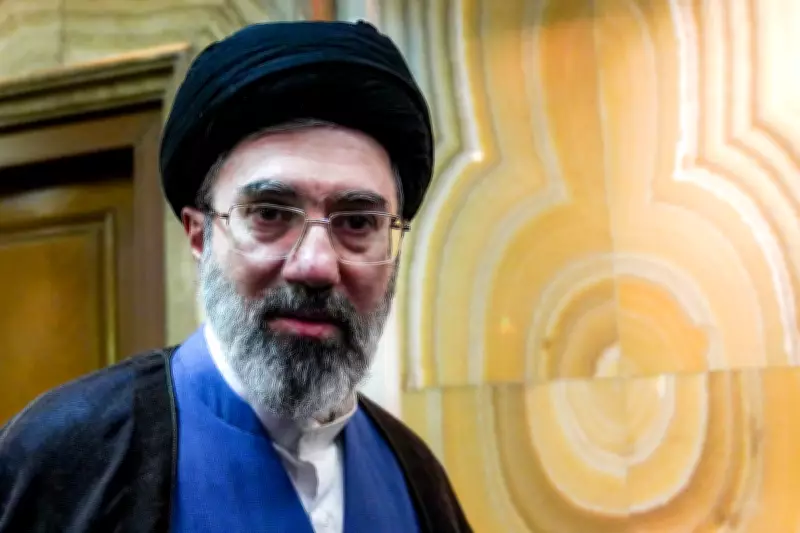
According to recent US intelligence assessments, the late Iranian Supreme Leader Ayatollah Ali Khamenei harboured significant reservations about his son Mojtaba assuming power. These findings, which have been circulated among senior White House officials, suggest that Khamenei perceived his son as "not very bright" and fundamentally "unqualified" for the role of Supreme Leader.
Personal and Political Factors Influenced Decision
The intelligence report, shared with CBS News, indicates that issues within Mojtaba Khamenei's personal life were also contributing factors to his father's reluctance. These revelations align with earlier assessments that Mojtaba failed to meet specific requirements decreed by his father for consideration as supreme leader, including the necessity of having held elected office.
Former President Donald Trump publicly alluded to these misgivings during a recent Fox News interview, stating, "Their leadership is gone. Their second leadership is gone. Now their third leadership is in trouble, and this is not somebody that the father even wanted."
Controversial Appointment Process
Despite these concerns, Mojtaba Khamenei was elevated to the position of Supreme Leader on 8 March, just eight days after his father was killed in an Israeli airstrike that reportedly also injured Mojtaba. According to Amwaj, a specialist Iran analysis news organisation, Mojtaba's appointment was reportedly pushed through by Hossein Taeb, a key ally and former intelligence head for the Islamic Revolutionary Guard Corps (IRGC).
Taeb is said to have pressured the 88-member Assembly of Experts, the body responsible for selecting a new supreme leader, to support Mojtaba's candidacy. Remarkably, none of the assembly members had met with Mojtaba since his father's death prior to this decision.
Geopolitical Implications and Internal Power Shifts
In private conversations with his inner circle, Trump reportedly dismissed the significance of these intelligence revelations, believing Iran to be practically leaderless and speculating that the new Supreme Leader might even be deceased. This perception of leadership vacuum aligns with recent erratic decision-making in Tehran, including President Pezeshkian's brief commitment to cease bombing Gulf states.
Some experts suggest that Trump's earlier characterisation of Mojtaba as a "lightweight" and "unacceptable" leader may have paradoxically motivated Tehran's decision-makers to select him. The intelligence report further indicates a decisive shift in Iran's power structure, with the IRGC now leading the country while traditional institutions like the council of experts, judiciary, and religious council have been significantly weakened.
Historical Context and Leadership Profile
Mojtaba Khamenei, aged 56, becomes Iran's third supreme leader since the 1979 revolution that established the Islamic theocracy. His appointment is particularly notable given that the revolution itself overthrew a hereditary monarchy, making this succession appear dynastic in nature.
Like his father, Mojtaba possesses a strong military background, having fought during the Iran-Iraq war and maintaining close links to the IRGC. Considered the most influential of Ali Khamenei's six children, Mojtaba is a hardline conservative cleric with connections to some of Iran's most powerful religious scholars.
Israeli intelligence reports suggest that Ayatollah Khamenei's funeral has been deliberately delayed to prevent Mojtaba from appearing in public, contrary to standard Shia burial practices. Mojtaba's first official address as Supreme Leader was read by a state television news anchor, further fueling speculation about his condition and capacity to lead.