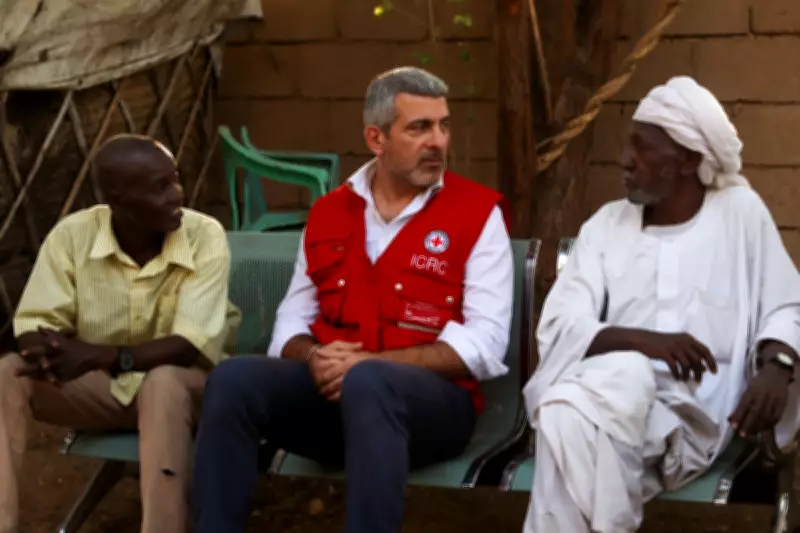
Red Cross Issues Dire Warning on Africa's Overlooked Wars Amid Aid Reductions
The International Committee of the Red Cross (ICRC) has delivered a stark warning that global aid cuts are exacerbating the plight of millions affected by escalating conflicts across Africa, at a time when international attention is waning. Patrick Yousseff, the ICRC's regional director for Africa, emphasized in an exclusive interview that the continent is grappling with a surge in violence, with 50 active conflicts recorded last year—a 45 per cent increase since 2020.
Forgotten and Neglected Crises Across the Continent
Yousseff highlighted that while some African nations like Rwanda, South Africa, and Kenya show economic progress, the devastating impacts of war in regions such as northern Mozambique, Cameroon, and Ethiopia are being ignored. He categorised crises into "forgotten" ones, like those in Central African Republic and Burkina Faso, which receive minimal media coverage, and "neglected" ones, such as Sudan, where despite significant UN attention, insufficient action is taken to address the suffering.
"In today's world, where every crisis is instantly accessible over your phone, tablet, or TV, we simply cannot consider the excuse that what is happening is not our problem," Yousseff stated, urging a shift in global focus towards these humanitarian emergencies.

ICRC's Role and Budgetary Strains
Established in 1863, the ICRC operates with a specific mandate to provide humanitarian support during wars, ensuring adherence to the Geneva Conventions and offering aid in conflict zones, including areas controlled by armed groups like al Shabaab in Somalia. However, the organisation faces severe financial challenges, having slashed nearly one-fifth of its annual budget and cut 2,900 jobs due to reduced funding from donor countries.
The UK, among other Western nations, is implementing real-term aid cuts of 40 per cent between 2025 and 2027, further limiting resources for African conflicts, which account for around 40 per cent of the ICRC's spending. Yousseff noted that meetings with the UK government likely did not result in increased support, exacerbating the crisis.
Compounding Threats: Climate Crisis and Legal Erosion
Many conflict zones in Africa are also severely impacted by the climate crisis, creating a "dual curse" that aid organisations struggle to address holistically due to funding shortages. Yousseff cited an example from Somalia, where anticipatory actions like flood warnings via local media were possible two years ago, but such responses are now unfeasible.
"In an ideal world, we would hope that aid discussions revolve around treating the root causes of problems, rather than just distributing food aid," he explained, lamenting that NGOs are increasingly limited to providing immediate food parcels instead of sustainable solutions.
Global Implications and Future Risks
Yousseff warned that threats to international humanitarian law, evidenced by civilian casualties and allegations of torture in conflicts like Sudan, Gaza, and Ukraine, pose risks to global stability and trade. The reduction in ICRC funding hampers its role as a neutral intermediary, crucial for initiatives like detainee releases in Gaza and Israel.
Additionally, the rise of drone warfare and the decline of mainstream media have fueled disinformation and hate speech, complicating humanitarian efforts. Despite reorganising for efficiency, Yousseff stressed that the ICRC cannot do more with less, predicting increased suffering as conflicts escalate amid budget declines.
"We cannot do more with less. It is less with less. That is unfortunately the motto of so many organisations like ours at the moment," he concluded, underscoring the urgent need for renewed international commitment to humanitarian aid in Africa.